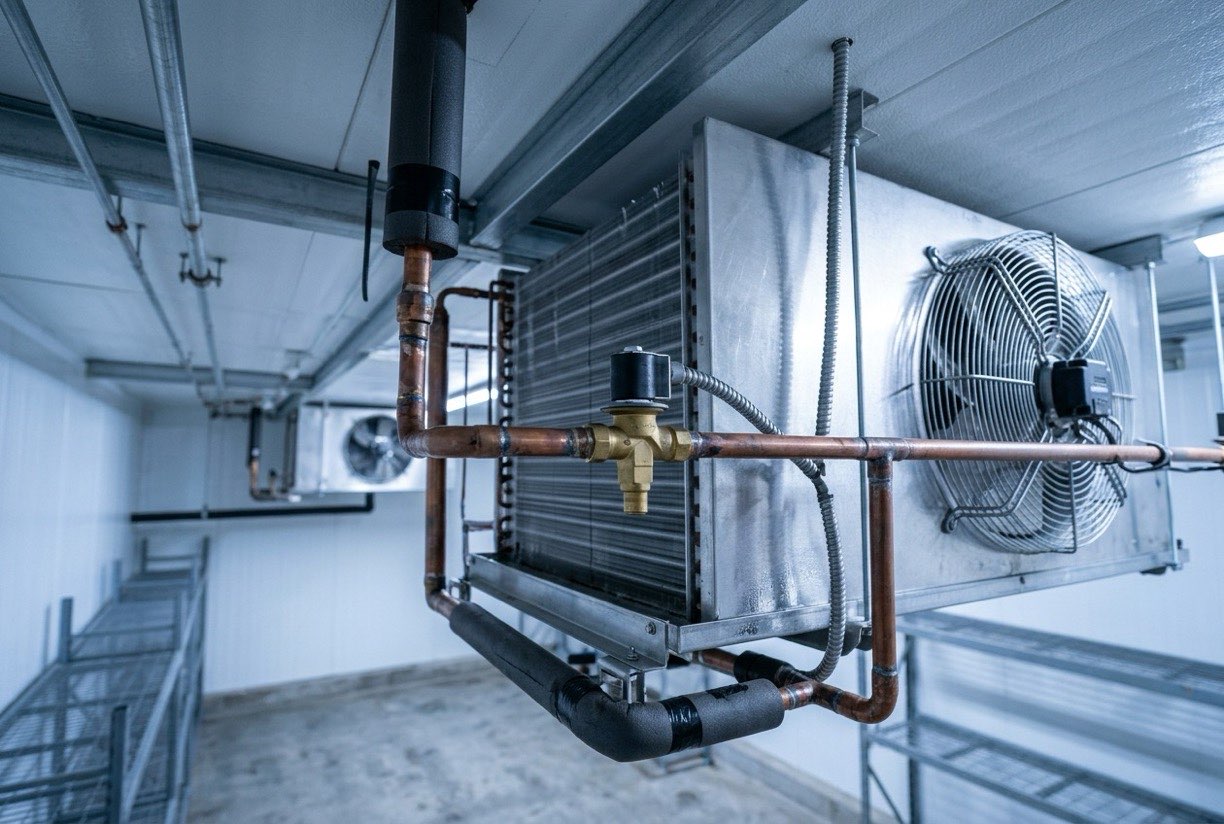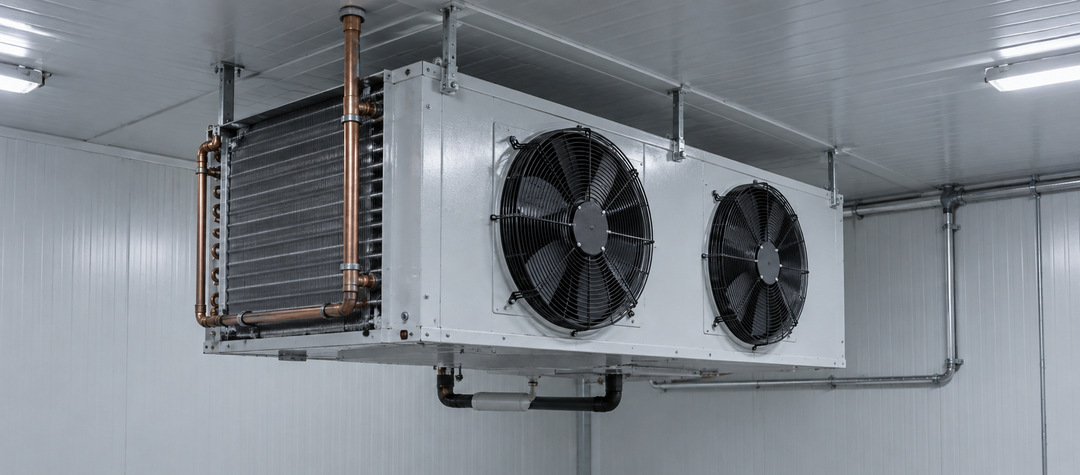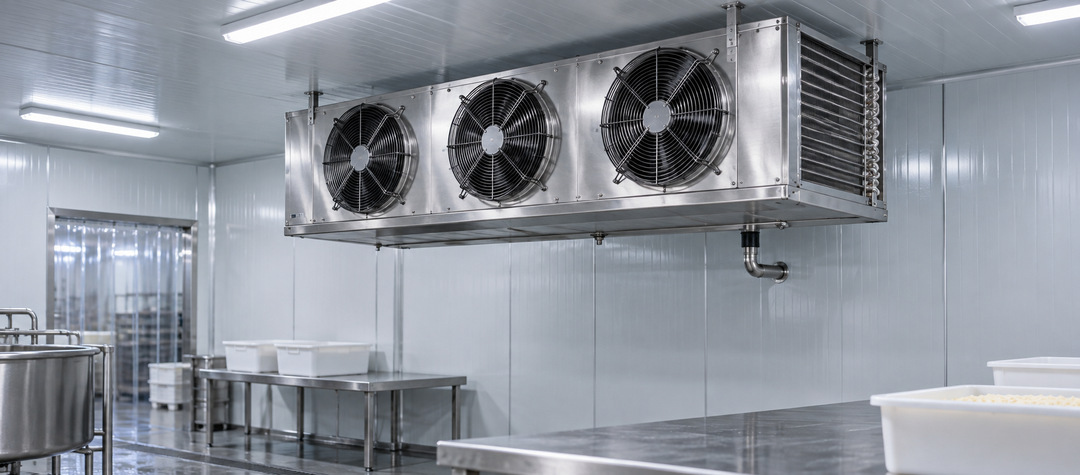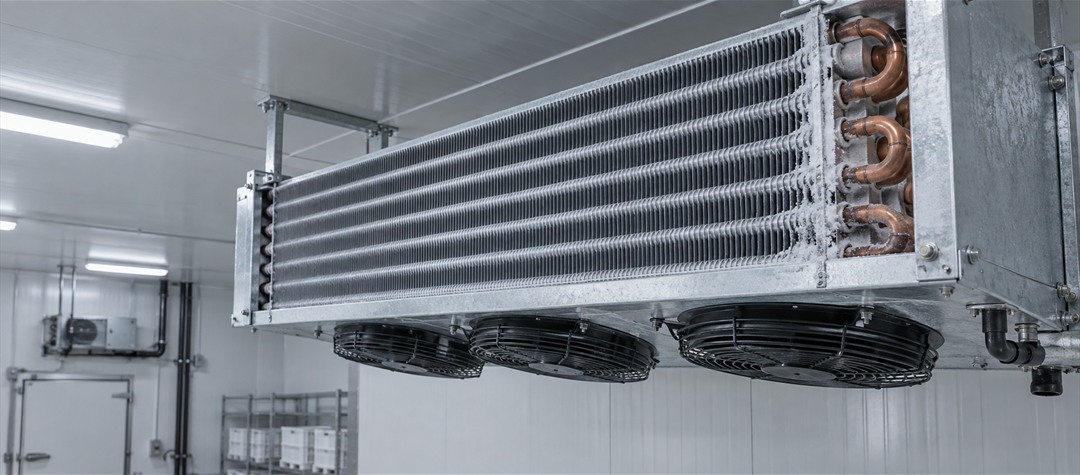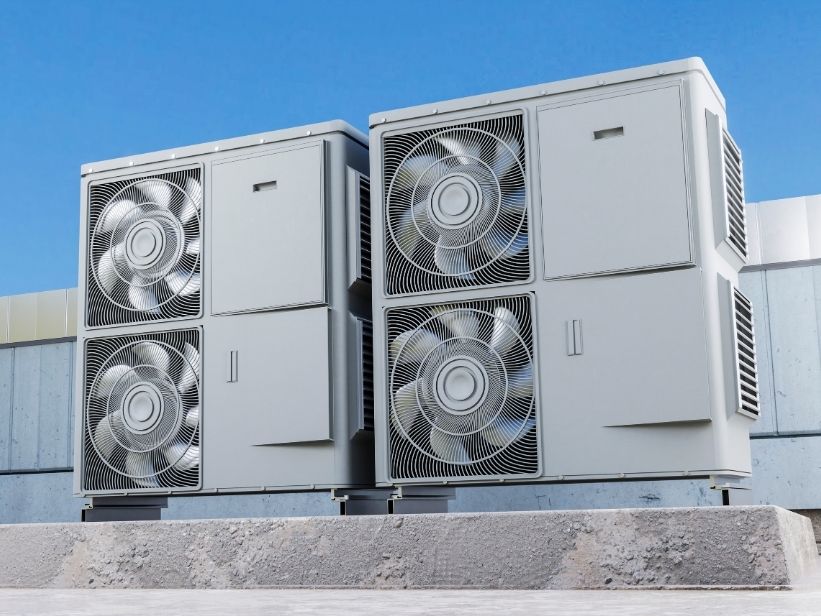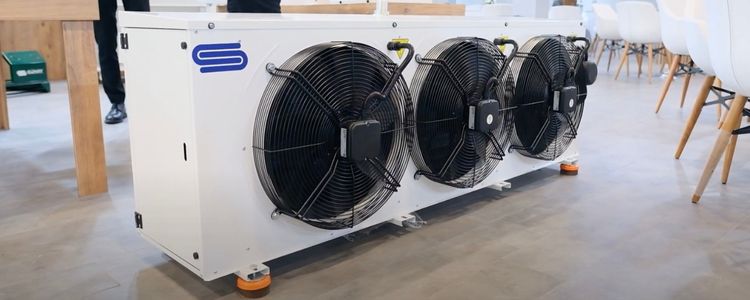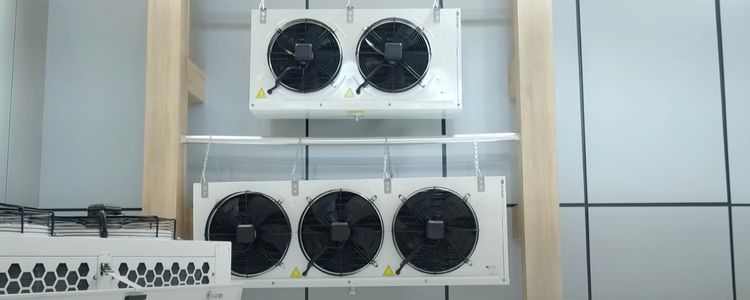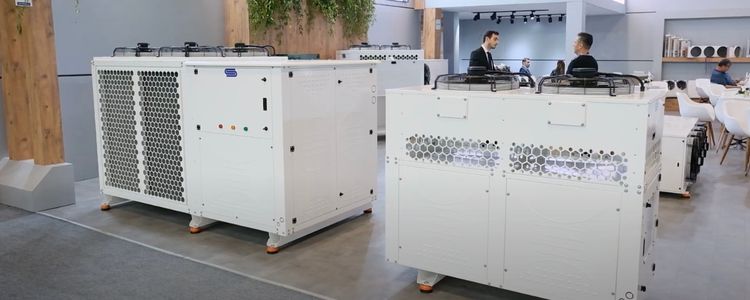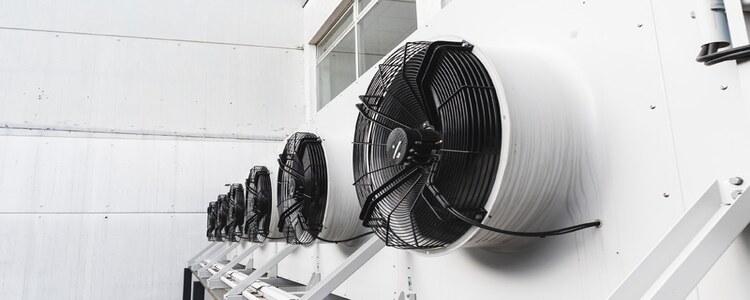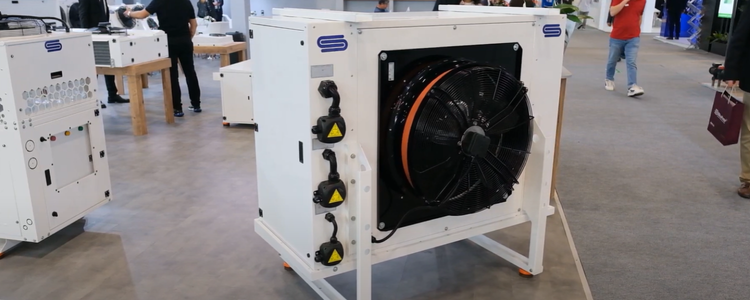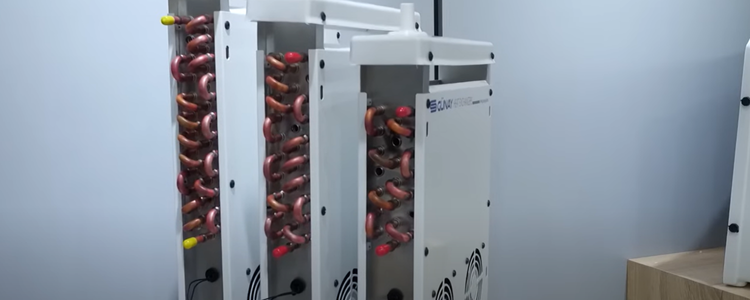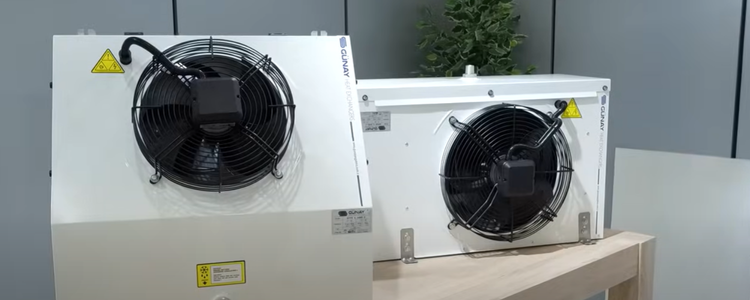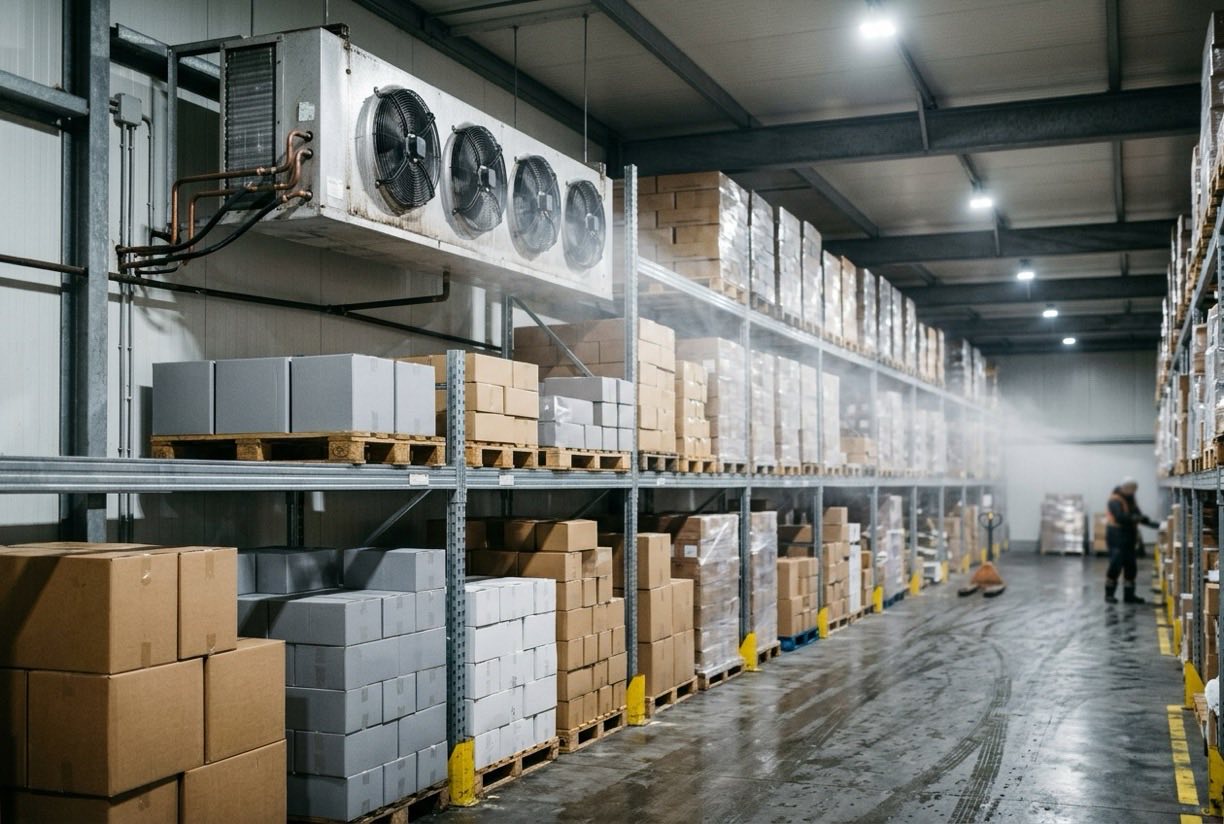
How far the evaporator fan throws the air, the air throw distance, determines whether an even temperature is reached at every point of the cold room. If the throw is too short, distant corners stay warm; if it is too long, the air can hit products directly and cause drying. This article explains why throw distance matters, how it is assessed, and what to consider when positioning the evaporator.
Table Of Contents
- What Is Air Throw Distance?
- What Problems Does A Short Throw Cause?
- What Problems Does A Long Throw Cause?
- How Is The Throw Distance Assessed?
- Which Obstacles Disturb The Airflow?
- Frequently Asked Questions
What Is Air Throw Distance?
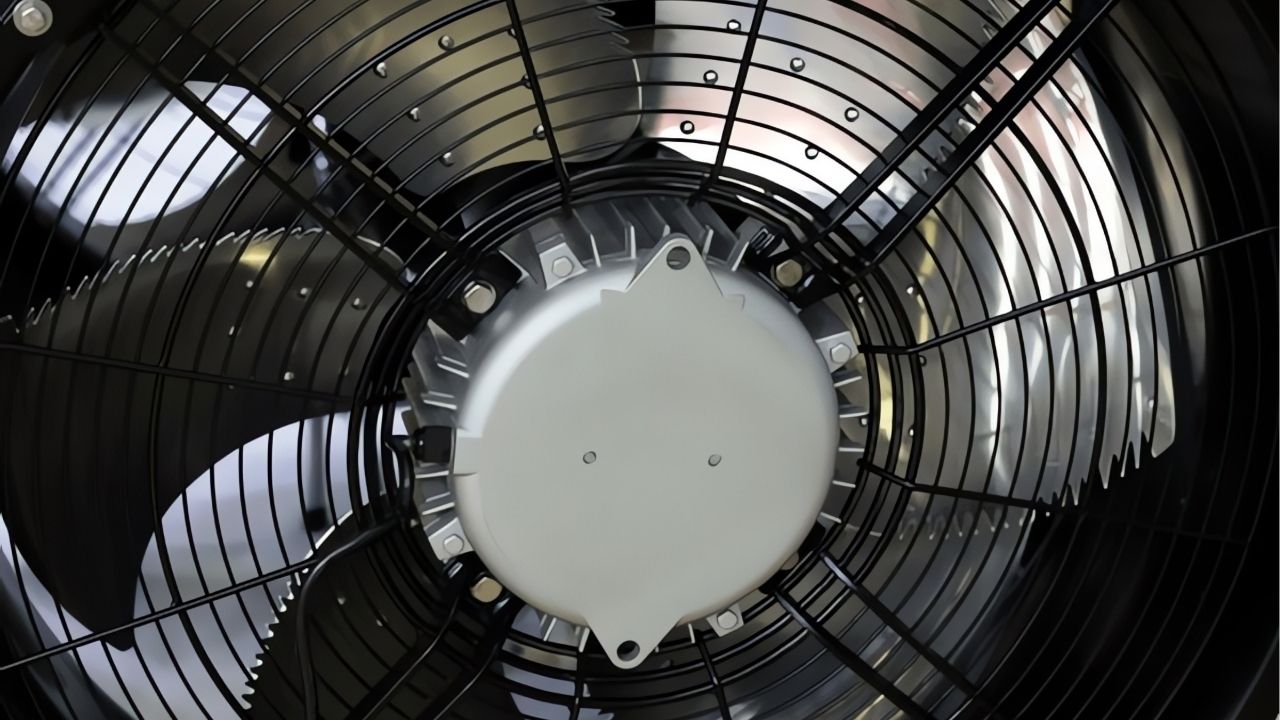
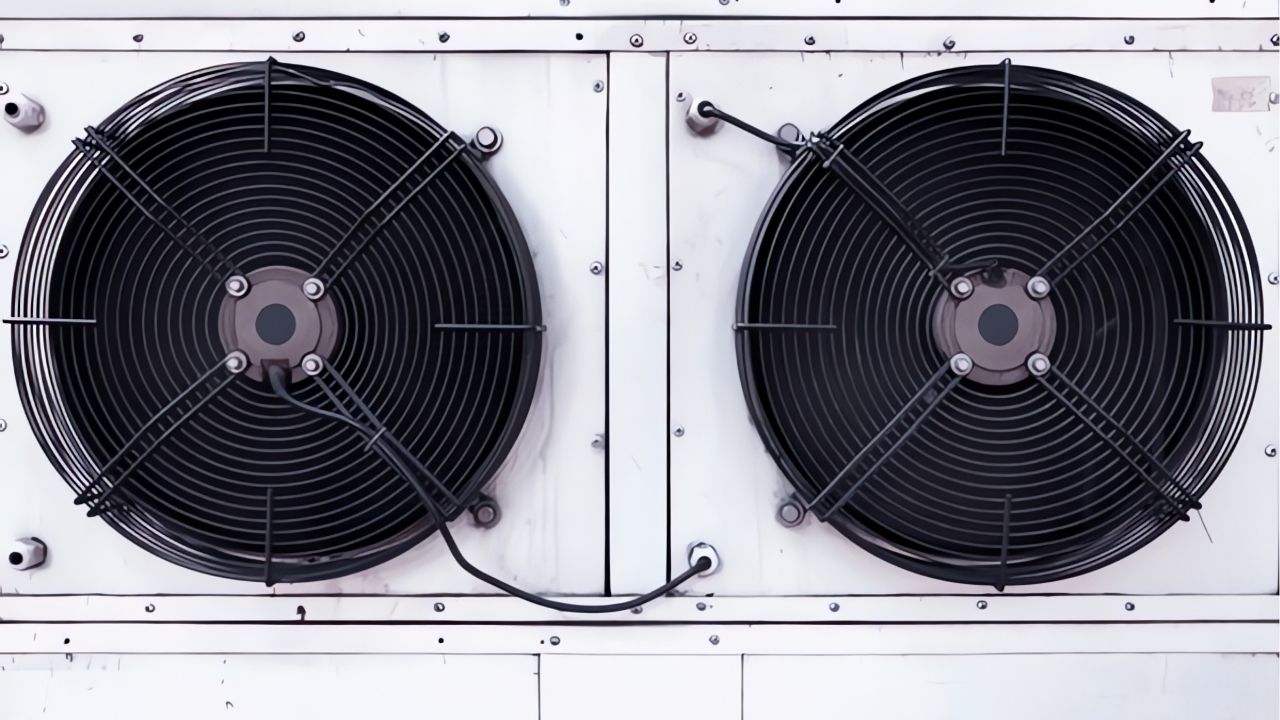
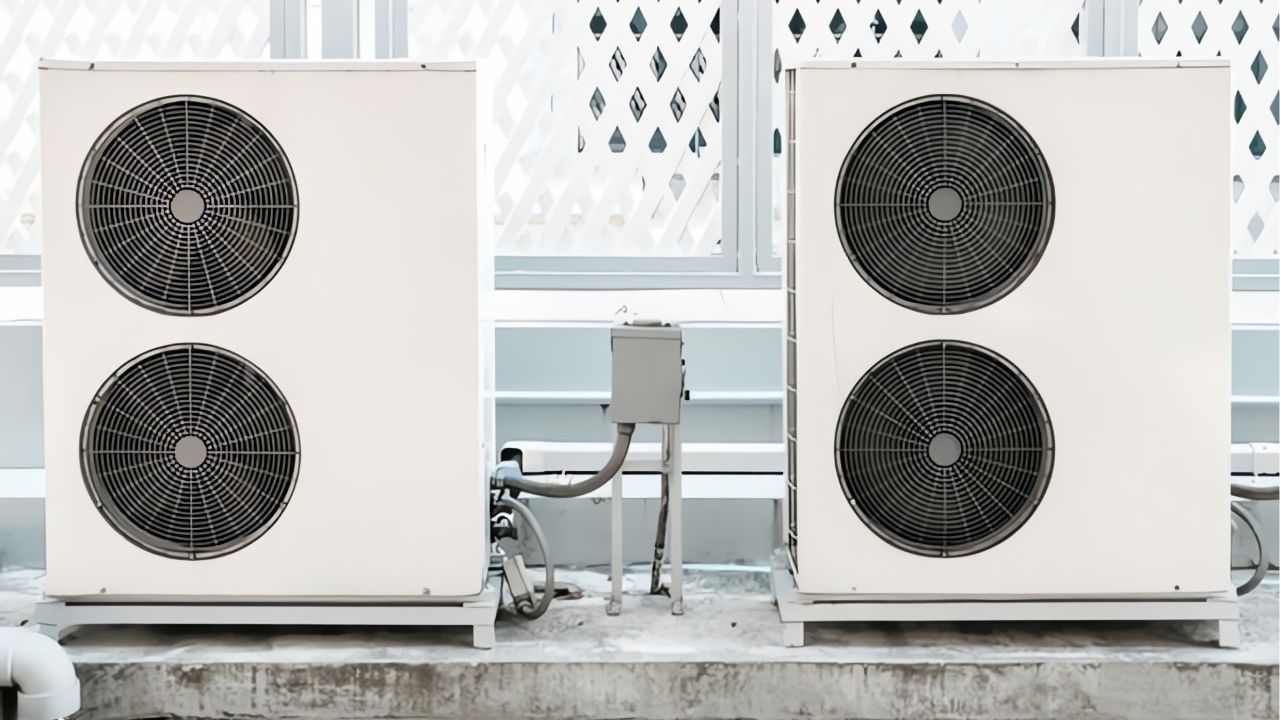
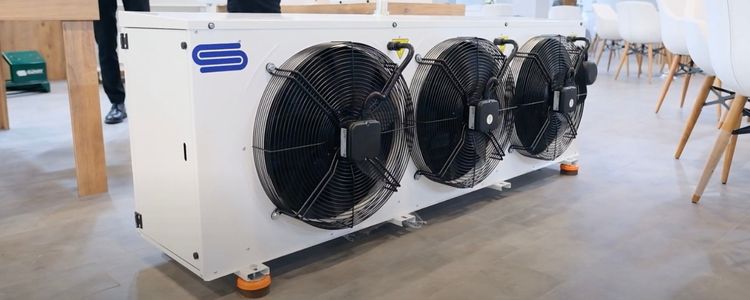
Air throw distance is the distance the air leaving the evaporator fan travels before it loses its speed. Manufacturers usually state this value in metres under a specific fan speed and air temperature condition.
The throw distance must be considered together with the evaporator position and the room size. The same unit can give very different results in rooms of different widths.
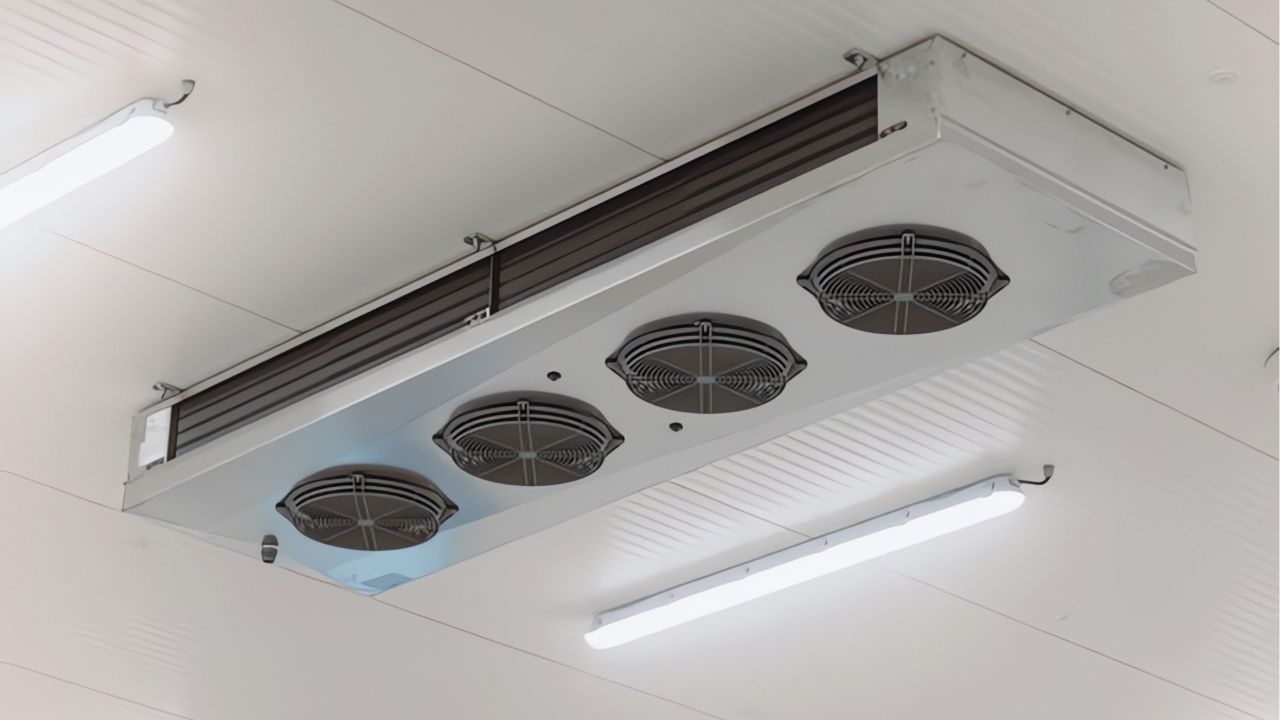
Air throw distance describes how far the air stream produced by the evaporator fan reaches with enough effect to influence the room. This value decides whether every corner of the cold room reaches the same temperature. For this reason the throw distance should be treated as a basic design parameter, not merely as a catalogue figure.
As the air stream moves away from the outlet it loses speed and its direction changes with the shape of the room. The throw distance therefore refers to the point at which the air still reaches a defined speed threshold, not to a point where it stops entirely. This threshold helps to understand the temperature distribution in the room.
The throw distance must be considered together with the evaporator position and the room size. The same unit can give completely different results in rooms of different widths. Comparisons made without knowing where and how the device is installed are misleading.
The conditions under which the throw distance was determined should also be taken into account. If the air temperature, humidity and fan speed differ from those under which the catalogue value was obtained, the result changes. The gap between the catalogue value and the real site condition should therefore be known.
Understanding the throw distance correctly is a first condition for stable operation. A room designed with a wrong throw distance may face problems in the following months. For this reason the value should be verified on site before commissioning.
Manufacturer data is obtained in a defined test environment, so these values do not reflect every condition of a real room. The product stacking, door openings and rack layout met on site change the value.
What Problems Does A Short Throw Cause?
When the throw is short, the air circulates near the evaporator and does not reach the far corners well. In those areas the temperature stays above target and products cool unevenly.
Uneven temperature can affect product quality and shelf life. The system then has to run longer to reach the target, and energy use increases.
When the throw distance is short, the air circulates near the evaporator and does not reach the far corners properly. In those zones the temperature stays above target and products cool unevenly. A short throw often shows itself first as temperature differences.
Uneven temperature can affect product quality and shelf life. The system then has to run longer to reach the target, and energy use increases. Moreover, a compressor kept at high load for a long time wears faster.
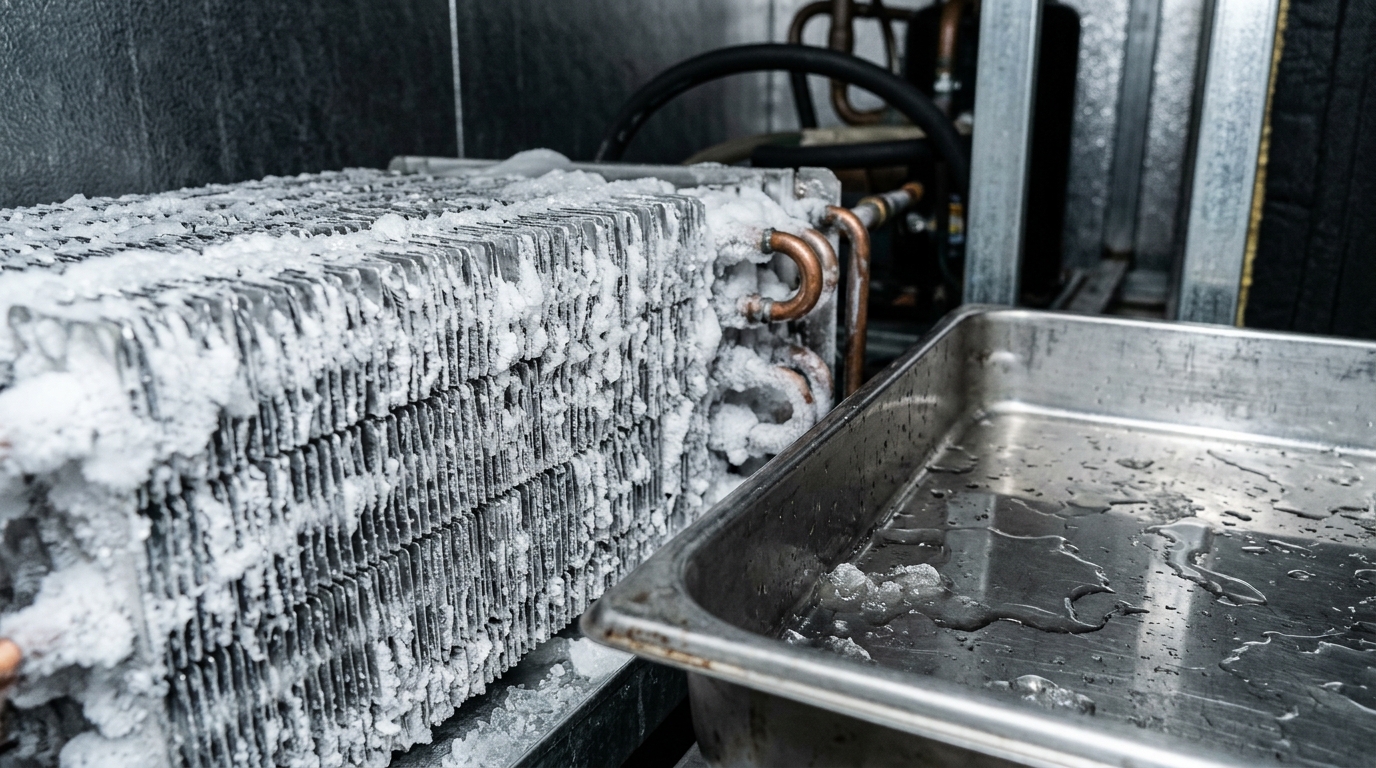
Another result of a short throw is air imbalance and ice formation around the evaporator. When air concentrates just in front of the evaporator, moisture gathers in that zone and ice builds faster. This increases the defrost frequency.
The problem is difficult to diagnose with a short throw, because the measurement is usually taken from a point close to the evaporator. Such a measurement does not reflect the general state of the room. Temperature should be measured at different corners of the room for diagnosis.
Solving a short-throw problem is not just a matter of raising the fan speed. A higher speed can create new problems such as noise and drying. The real solution is to review the evaporator position and the air path together.
The temperature difference caused by a short throw becomes more pronounced when combined with door openings. The diagnosis should therefore also be carried out during busy door-use hours.
What Problems Does A Long Throw Cause?
When the throw is longer than needed, the air hits the opposite wall, returns, and creates a complex flow inside the room. This can pull too much moisture from the product surfaces.
Cold air aimed directly at unpacked products can cause drying and surface damage. The throw distance should therefore be balanced according to the product type.
When the throw distance is longer than needed, the air hits the opposite wall, returns and creates a complex flow inside the room. This can pull too much moisture from the product surfaces. A long throw can be regarded as a mistake opposite to a short throw, yet its consequences are similarly harmful.
Cold air aimed directly at products can cause drying and surface damage on unpacked goods. This is especially visible with delicate surfaces. The throw distance should therefore be balanced according to the product type.
Air hitting the far wall can create a swirling vortex in the room. The vortex raises the air speed in some areas while leaving stagnant zones in others. Temperature imbalance appears in the stagnant zones, and icing increases locally.
The problem of a long throw should be observed together with temperature measurements. Signs of drying on product surfaces, condensation on packaging and complex air movement near the door can be indicators of a long throw. These signs help determine the direction of the solution.
To correct a long throw, the fan speed is sometimes reduced or the evaporator height is changed. These changes, however, also affect capacity. To find a solution without losing capacity, design and layout should be considered together.
Drying caused by a long throw can also lead to weight loss in products. Although this loss may not be noticed in the short term, within a few days it can turn into a material loss.
How Is The Throw Distance Assessed?
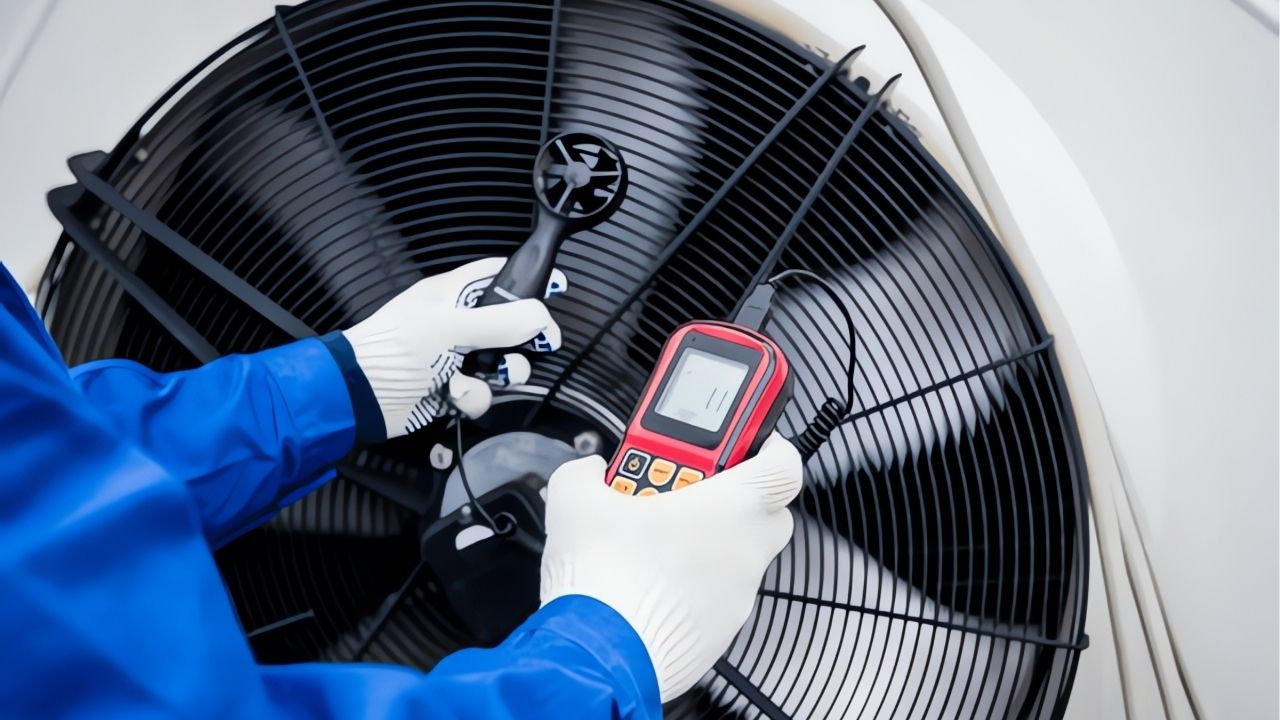
The assessment considers the length and width of the room, the mounting height of the evaporator, and the fan speed together. The throw value given by the manufacturer should be compared with the farthest point of the room.
- Room size: The distance to the farthest point must be determined.
- Mounting height: The airflow should pass above the racks.
- Fan speed: Speed affects both throw distance and noise.
The assessment is made by considering the length and width of the room, the mounting height of the evaporator and the fan speed together. The throw value given by the manufacturer is the starting information showing whether the air reaches the farthest point of the room. The calculation begins with this information but is completed with site conditions.
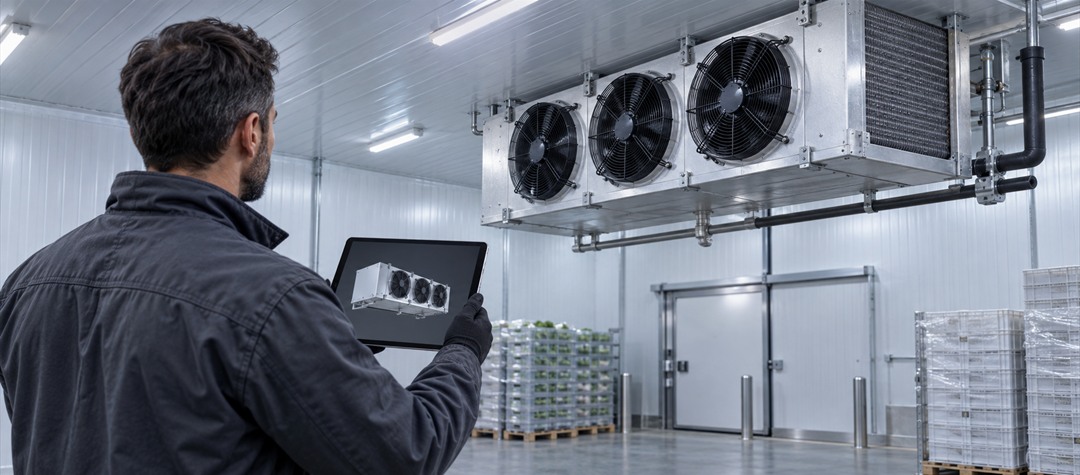
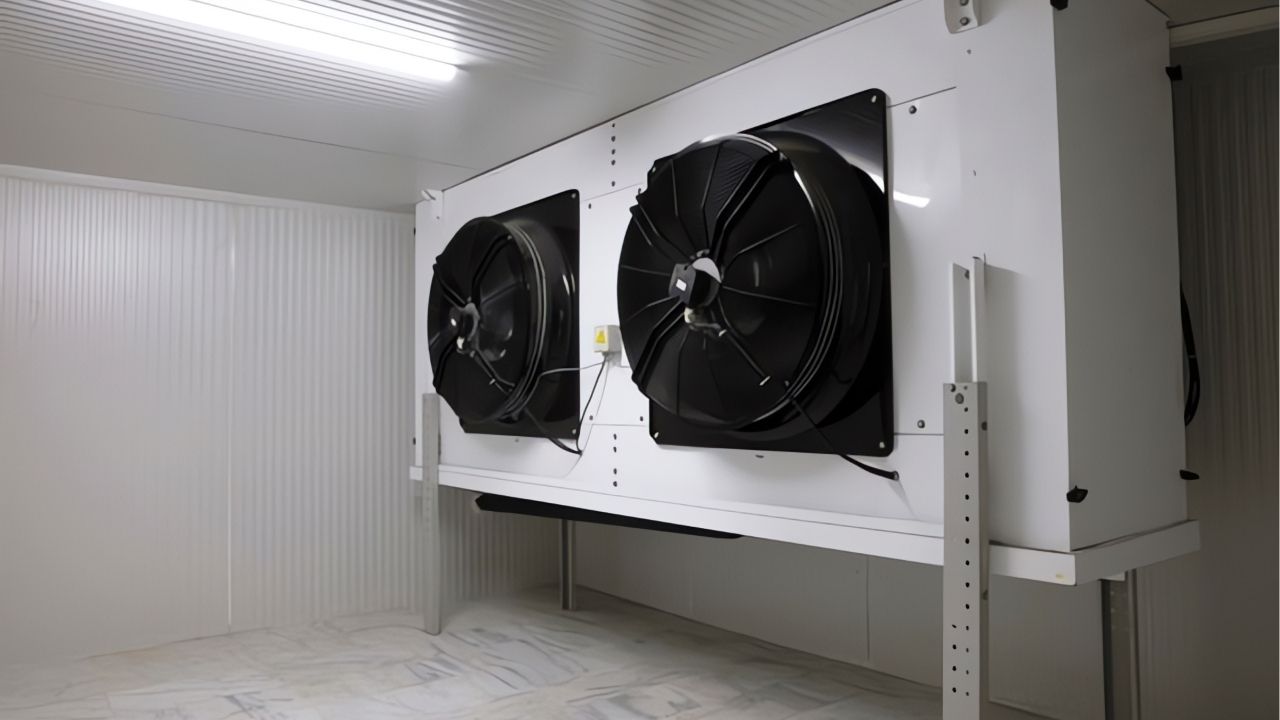
Mounting height directly affects the throw distance. If the evaporator is mounted too low, the air strikes the racks and cannot travel horizontally. If it is mounted too high, the air sticks to the ceiling and cannot move away. The right height lets the air flow above the product level.
The fan speed balances the throw distance against noise. Raising the speed lengthens the throw, but it can increase noise and the risk of drying on product surfaces. The speed setting should therefore be made considering both the throw and the product condition.
The shape of the room also affects the assessment. A long, narrow room and a square room show different air distribution at the same throw value. The geometry of the room should therefore be written into the drawing at the start of the assessment.
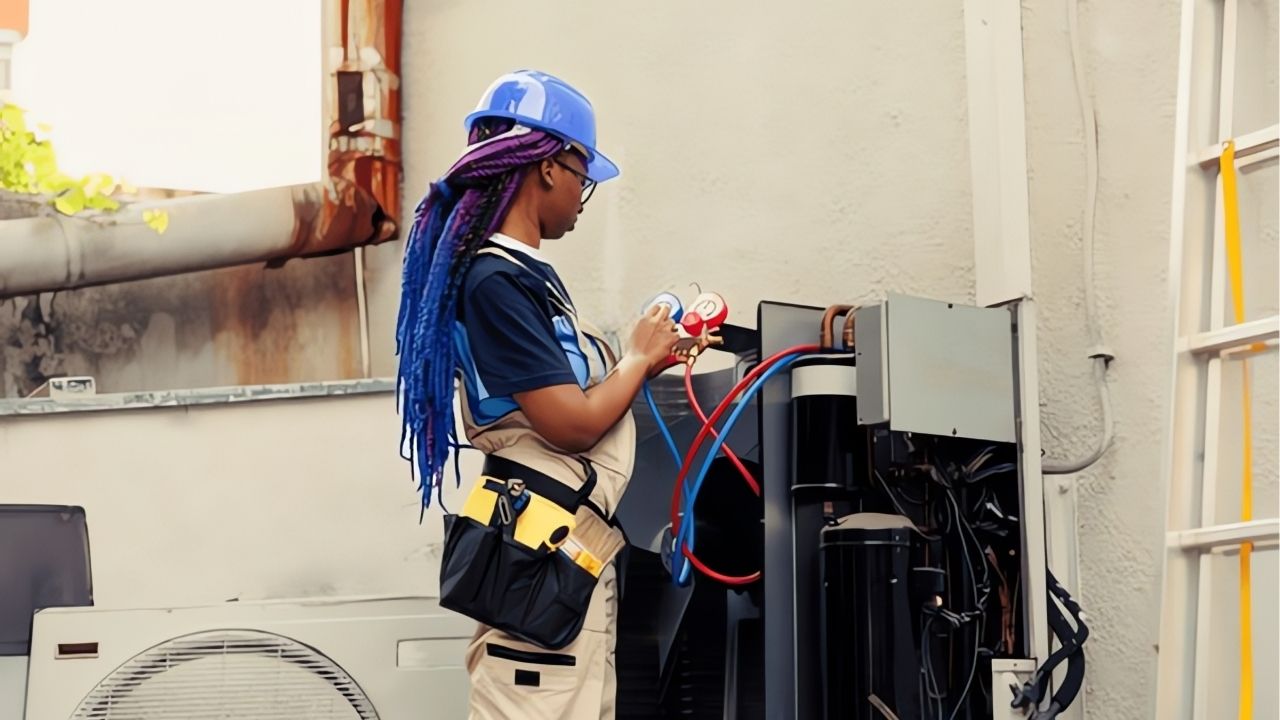
The result obtained at the end of the assessment should not be calculated only once. At commissioning, measurements should be made at different points of the room to confirm the result. If there is a deviation, the layout should be corrected on the basis of the site data.
The figures obtained during the assessment should be stated clearly in a design report. In this way, future changes can be made knowing which assumptions they rest on.
Which Obstacles Disturb The Airflow?
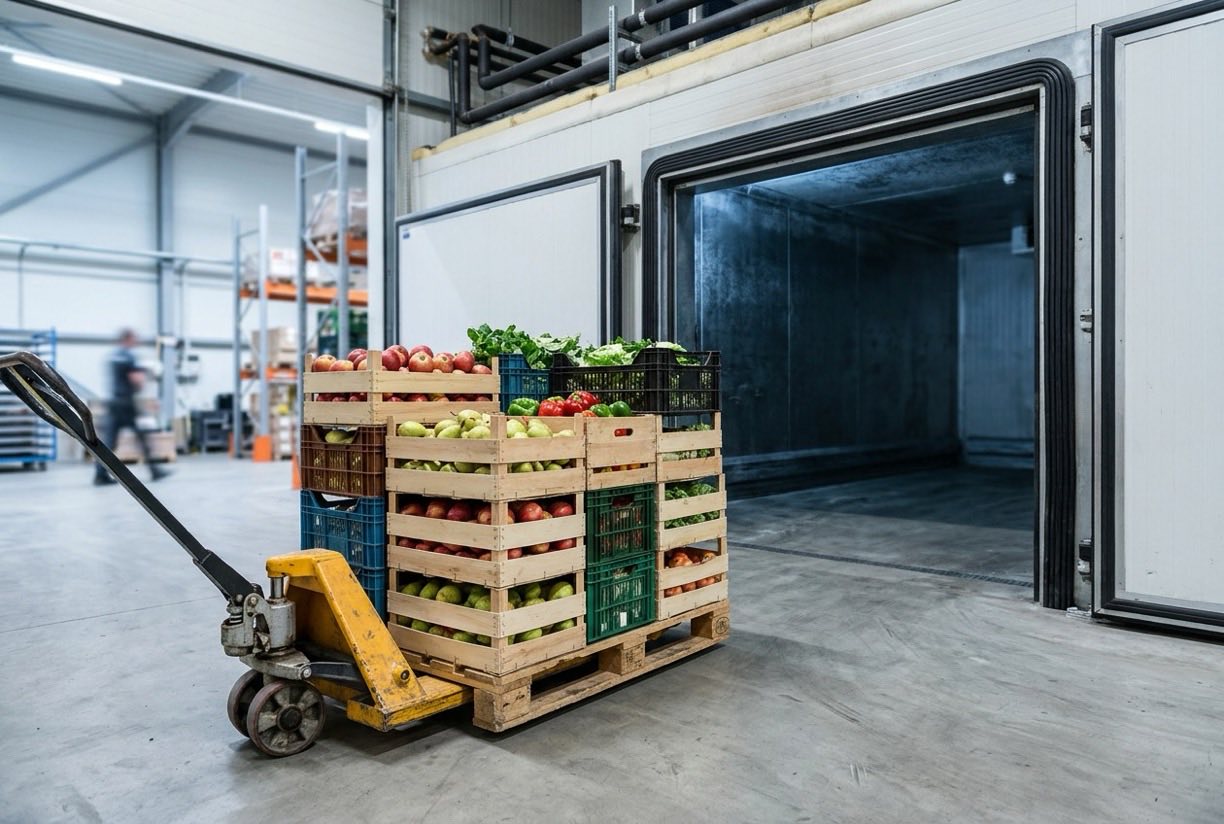
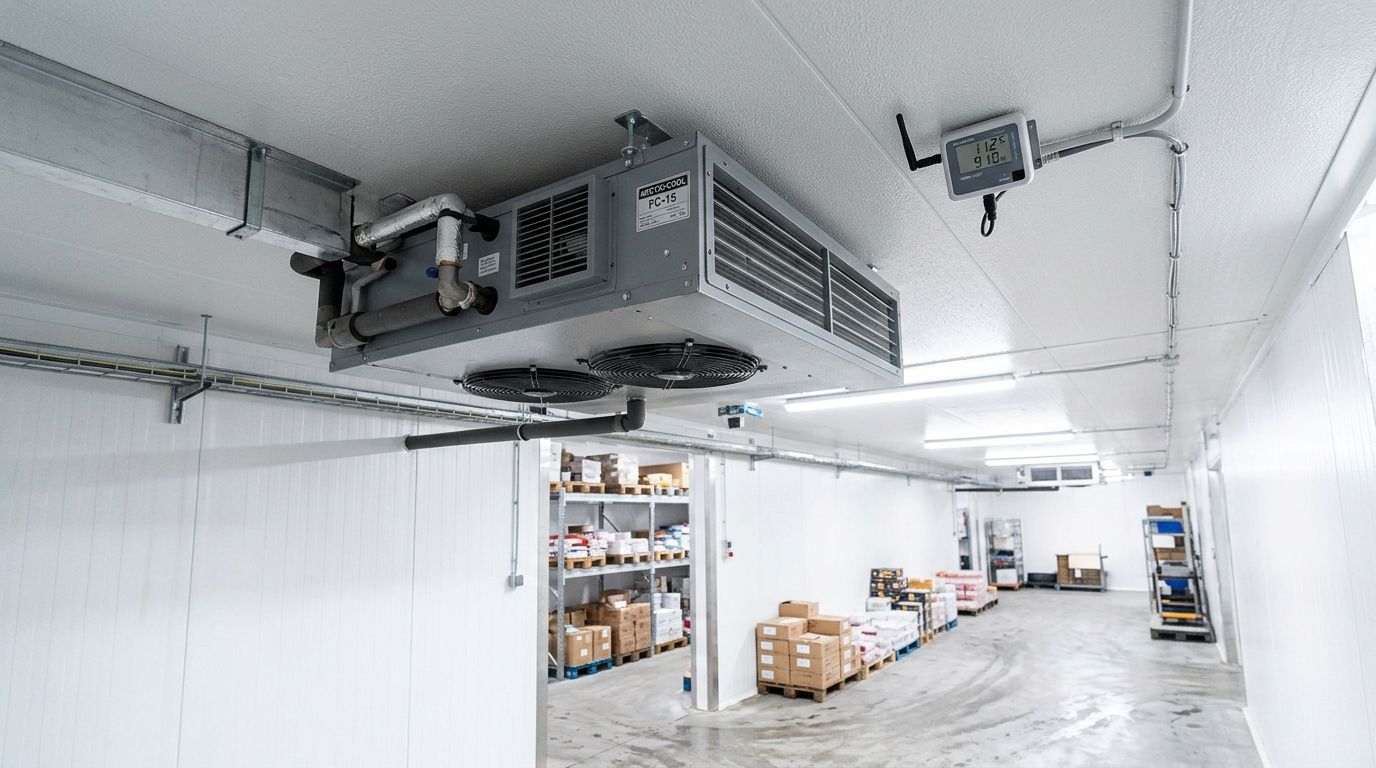
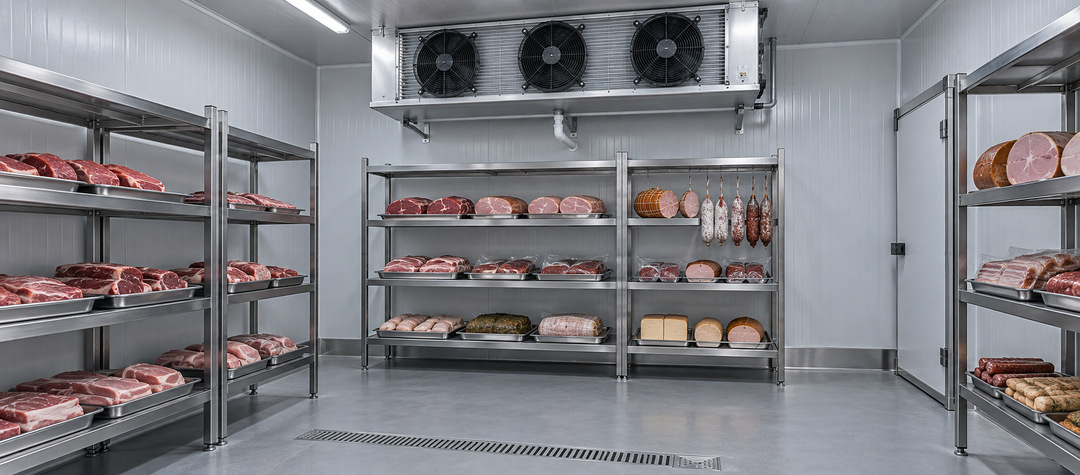
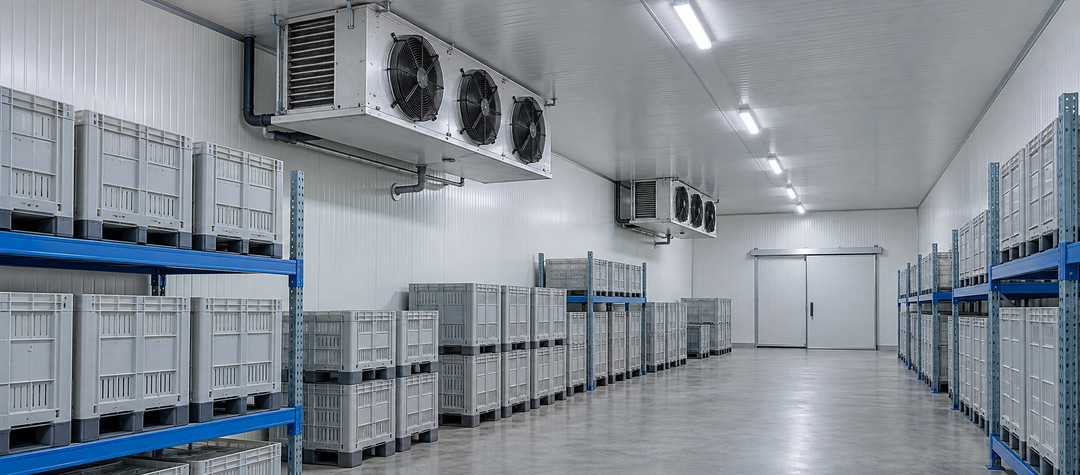
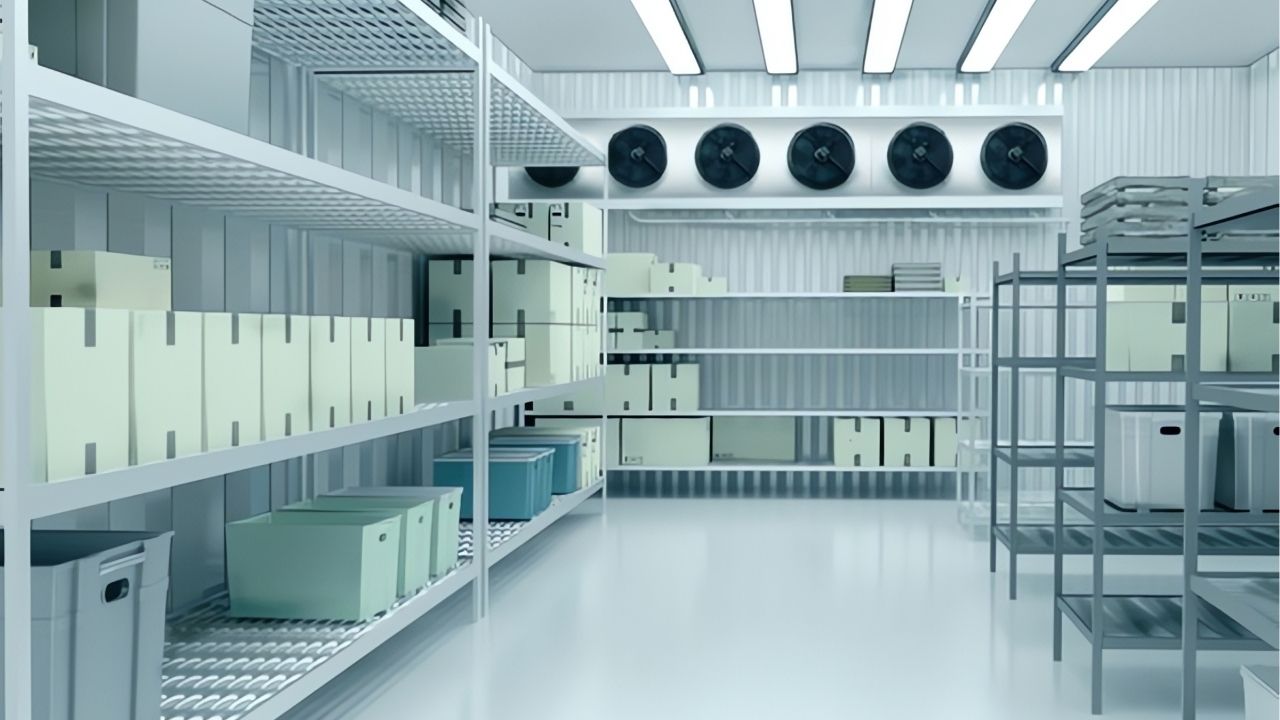
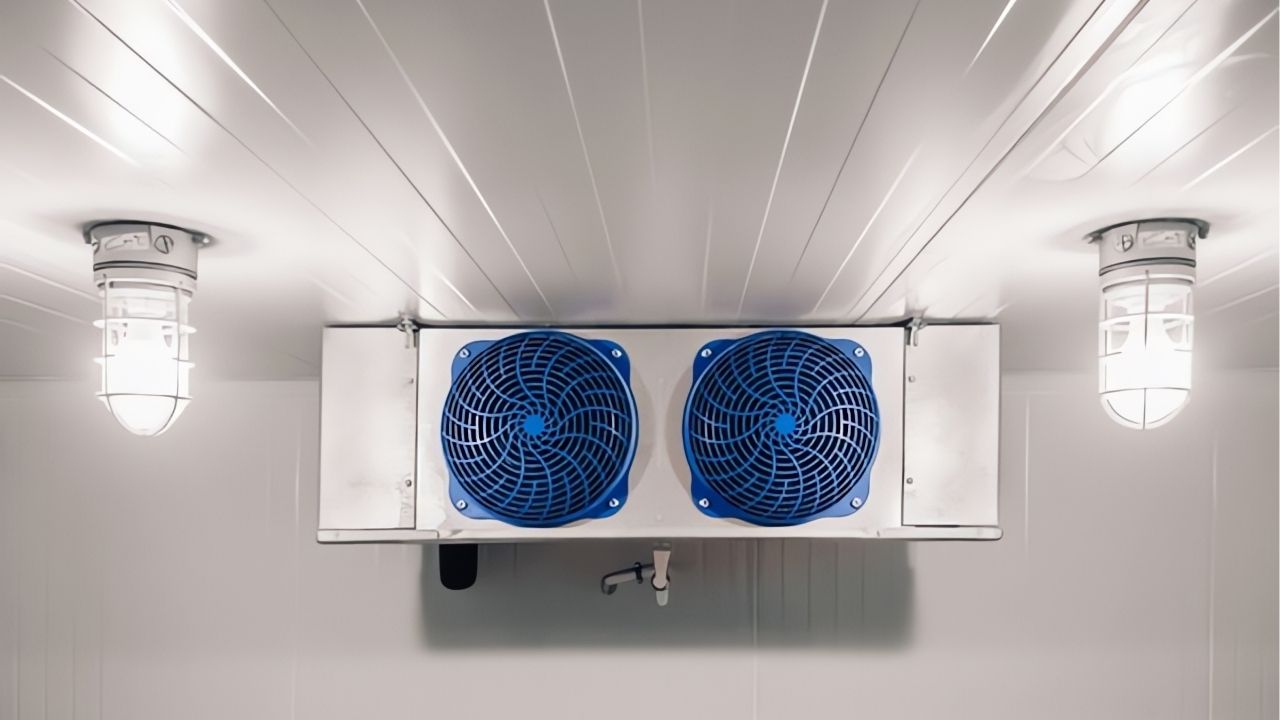
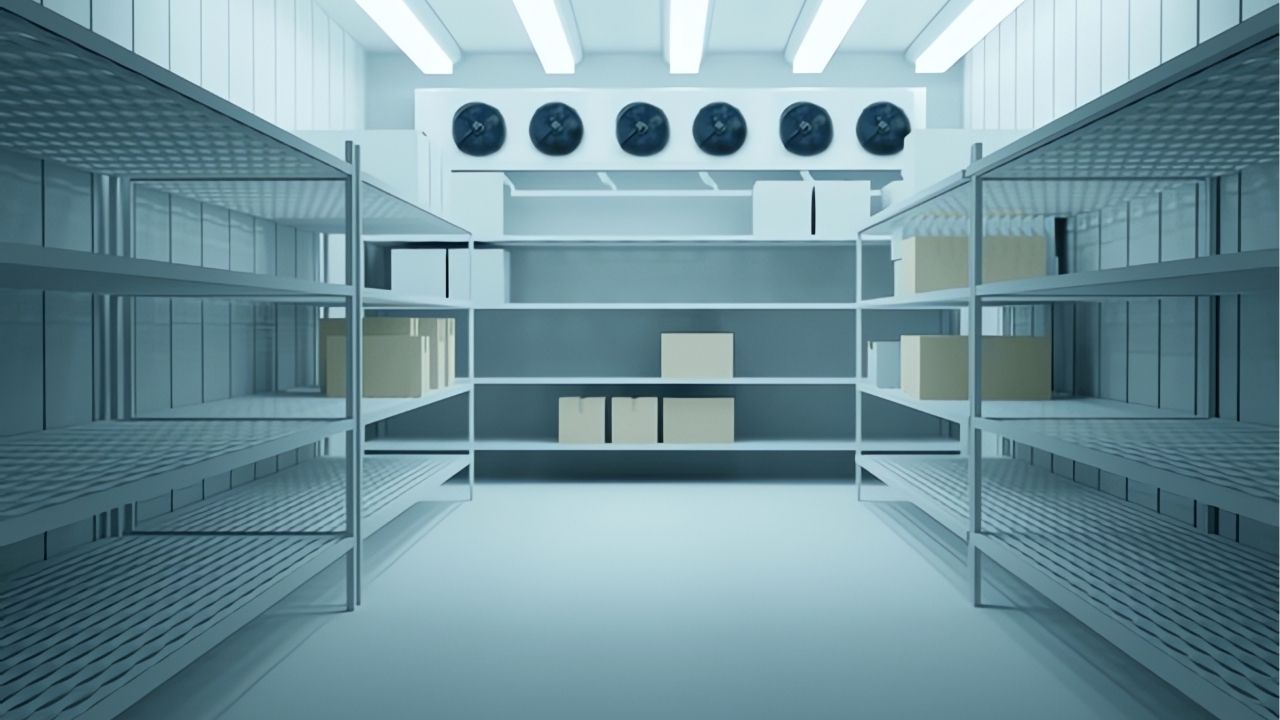
Racks, pallets, and goods stacked in front of the door interrupt the airflow. An obstacle effectively shortens the throw and deflects the air toward side walls. Products piled in front of the evaporator have the same effect.
The air path must be kept open when the layout is planned. The Günay Soğutma technical team can support the evaporator and layout decisions based on your project dimensions.
Racks, pallets and goods stacked in front of the door interrupt the airflow. An obstacle effectively shortens the throw and deflects the air towards the side walls. Products piled in front of the evaporator also block air intake and outlet and create a serious problem.
The air path must be kept open when the layout is planned. The gaps left between the racks, the arrangement of the pallets and the area in front of the door should be determined by thinking through the airflow in advance. A layout made without a plan creates problems that are difficult to solve later.
Elements mounted close to the ceiling, hanging equipment and cable trays also affect the airflow. Such obstacles can change the direction of the air jet and unexpectedly shorten the throw. The ceiling arrangement and the evaporator position should be planned together.
The packaging form of the products also affects the air path. Loose packs allow the air to pass through them, whereas tight stacks can block the flow completely. Layout rules should also cover whether the product stacking suits the airflow.
Layout changes affect the throw distance every time. Adding a new rack or changing the product arrangement can disturb the flow unexpectedly. After such changes, checking the airflow should become a routine practice.
Moving equipment during maintenance can also change the layout. After maintenance, it should be checked whether the previous arrangement has been restored.
Frequently Asked Questions
Why is the throw distance given in the catalogue?
It shows how far the evaporator can deliver air under specific conditions. The real value can change with the room layout and loading.
Is the throw distance enough on its own?
No. It should be assessed together with capacity, humidity load, product type, and door traffic.
Does the rack layout affect the airflow?
Yes. Racks and pallets can block the air path. It is recommended to check the airflow during the layout plan.
How does the fan speed relate to the throw distance?
As the fan speed increases, the air reaches farther, but the relationship is not linear and brings noise and the risk of drying with it. Lowering the speed, on the other hand, can shorten the throw. The speed should therefore be set by considering the throw, the product condition and the noise together.
How should several evaporators be arranged in one room?
With several evaporators, the throw area of each unit should neither overlap with another's nor leave a gap. Opposing throws can create air streams that collide in the middle of the room. The arrangement should be made considering the air volume of each unit and the shape of the room together.
How does the product type affect the throw distance?
Unpacked products with delicate surfaces need a softer air flow. For packed products the force of the flow can be higher. The throw distance and speed should be selected according to the product type so that drying and surface damage are minimised.