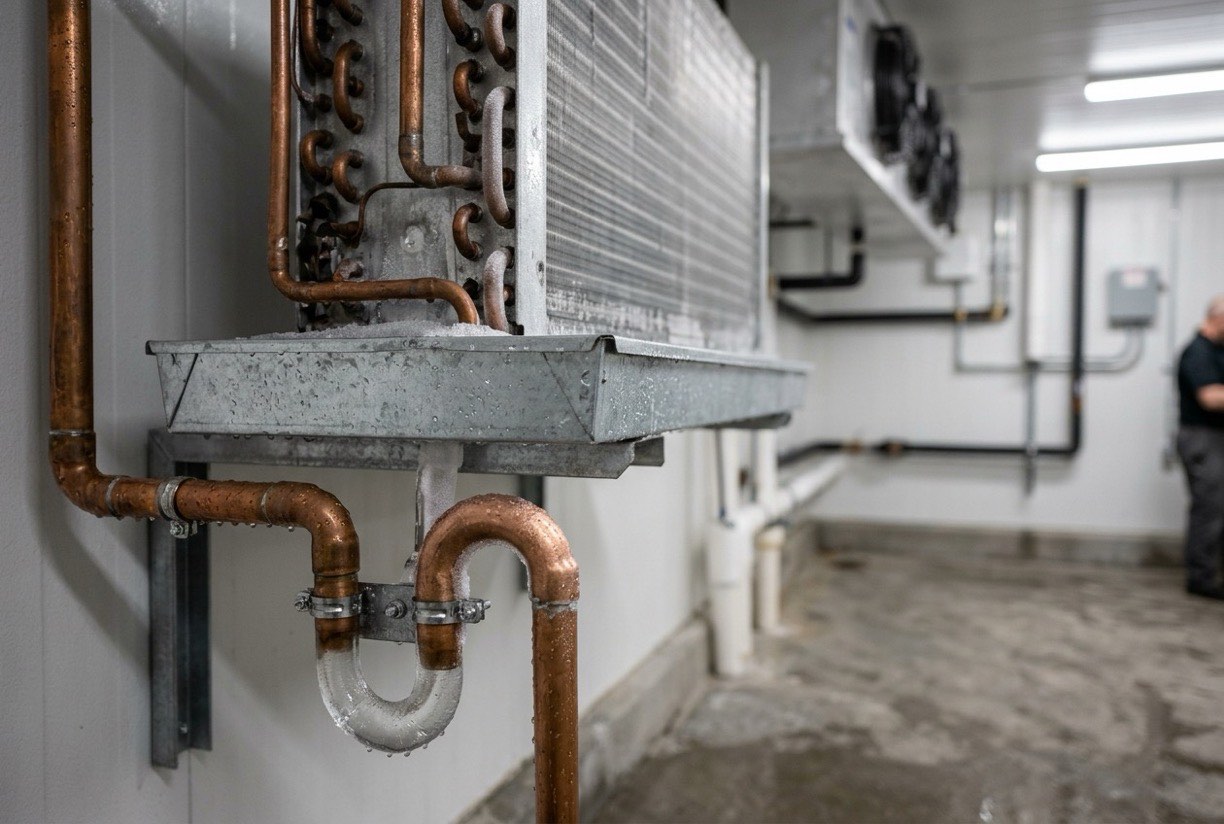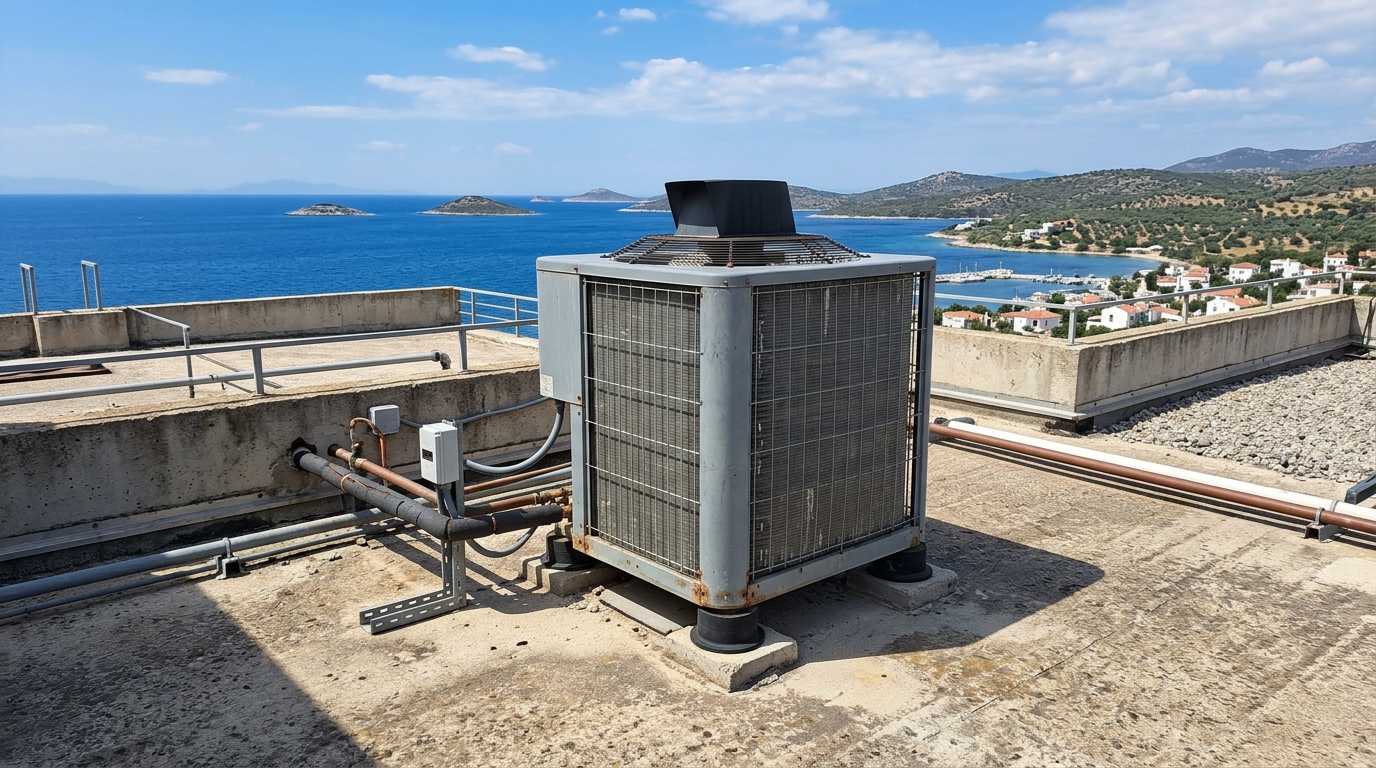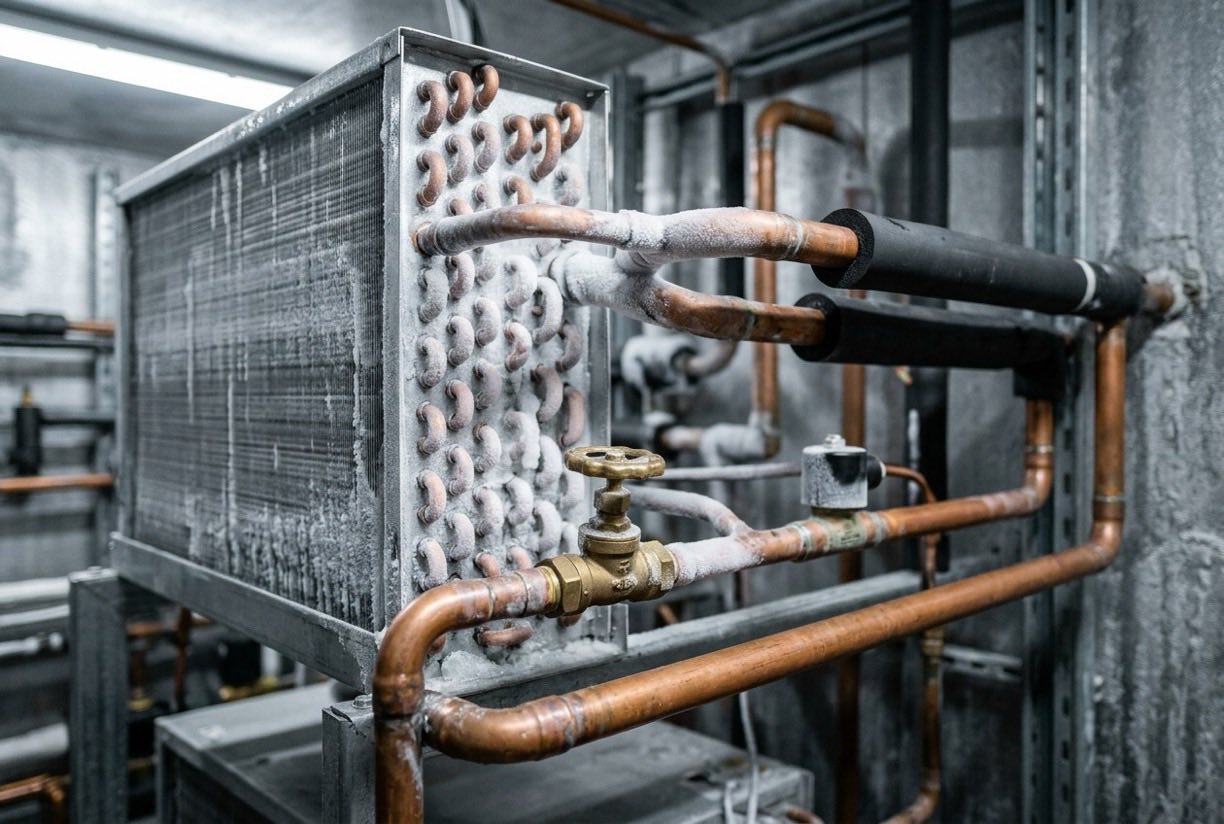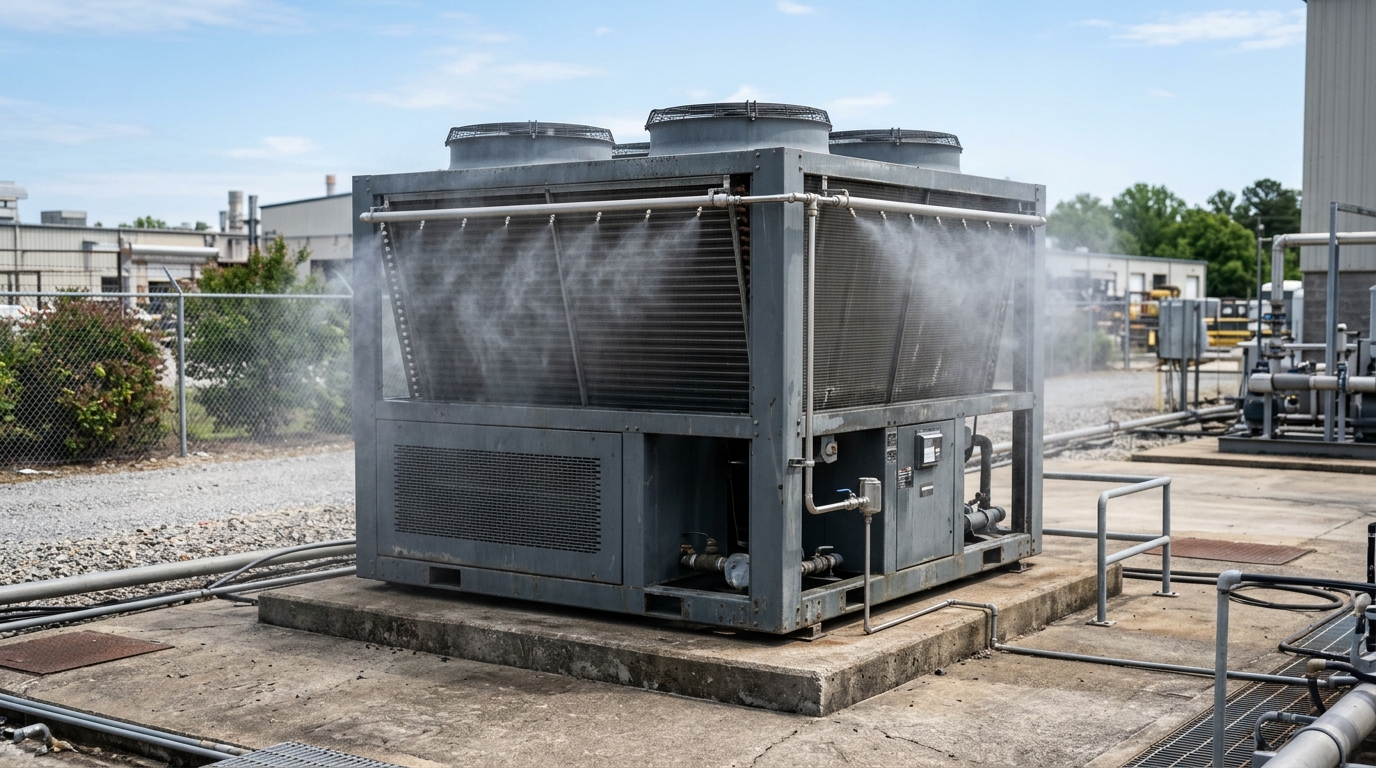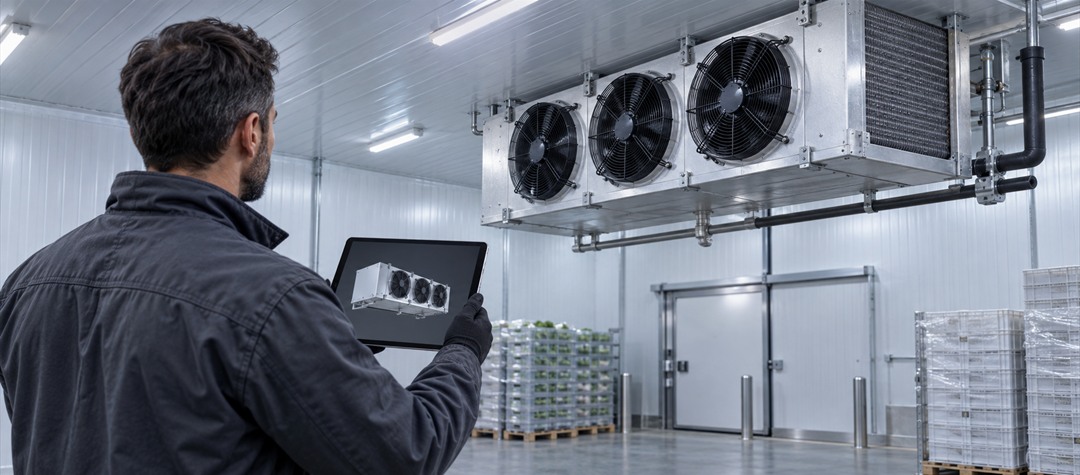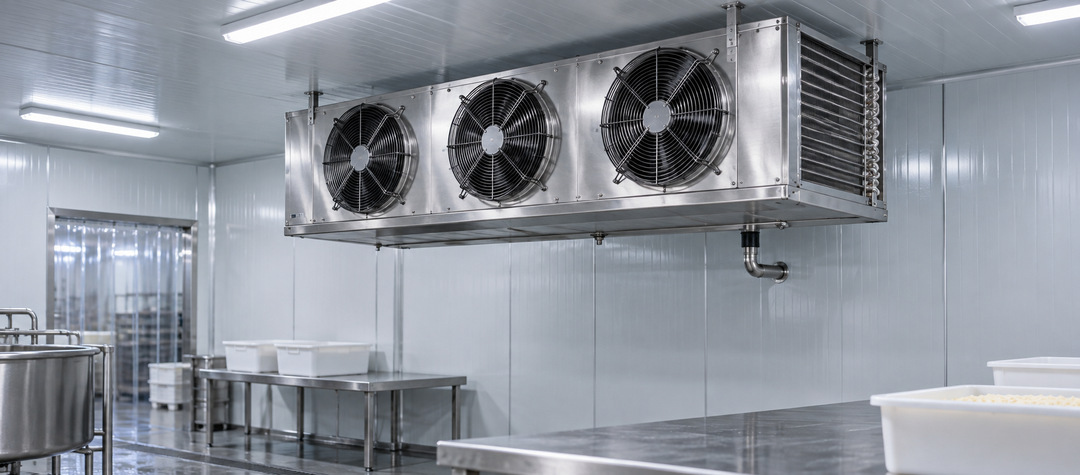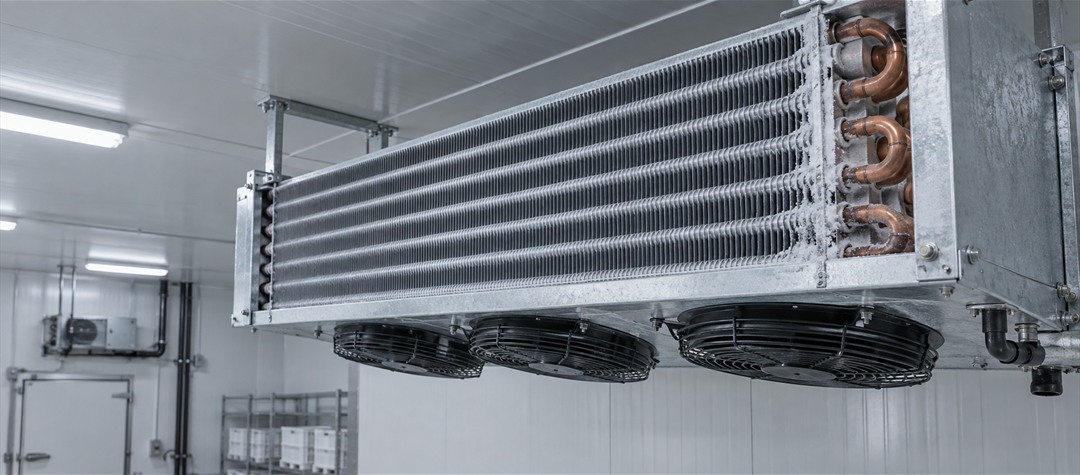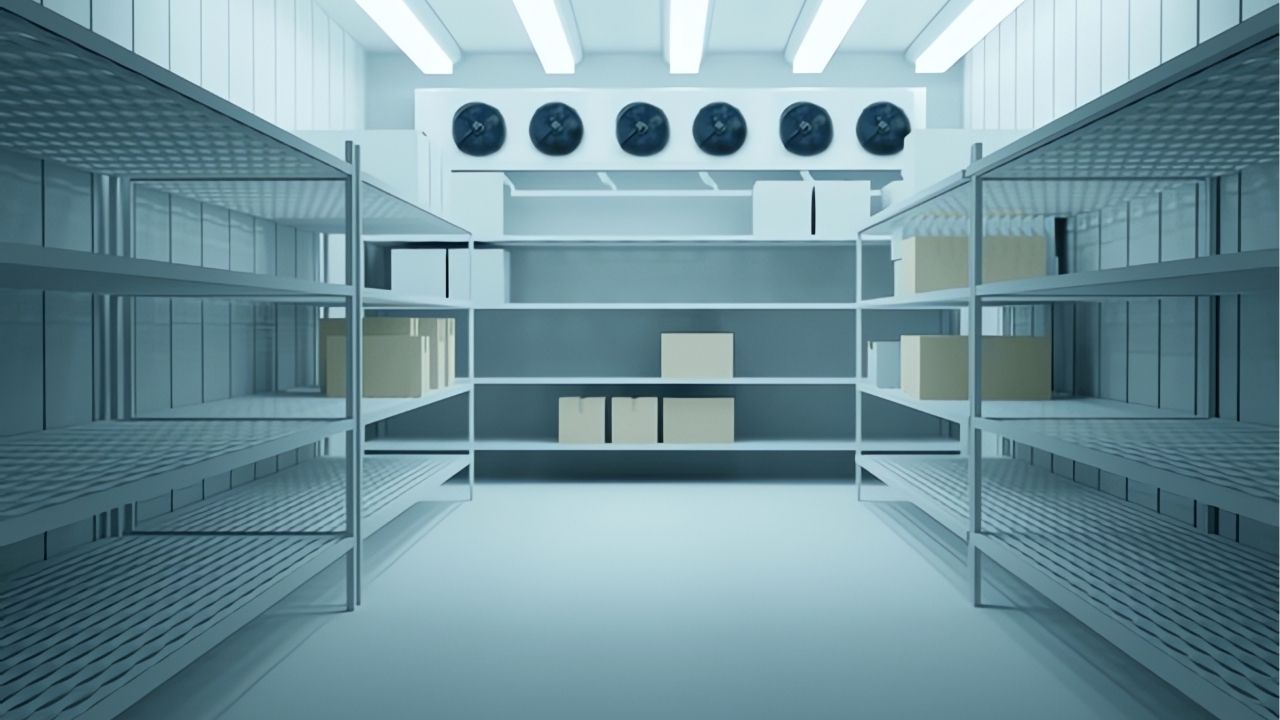
Products entering a cold room arrive at a temperature higher than the room or target temperature. Cooling them is a major part of the room cooling load and should be evaluated as a separate item in the capacity calculation. If this item is ignored, the evaporator is undersized and the room cannot reach its target during peak intake hours. This article explains how the product entry heat is calculated, which data are needed, and how the calculation affects the evaporator selection.
Table Of Contents
- Why Is The Product Entry Heat Calculated Separately?
- Which Data Are Needed?
- How Is The Product Entry Heat Calculated?
- What Is The Effect Of Packaging And Transport Containers?
- How Does The Calculation Affect Evaporator Selection?
- Frequently Asked Questions
Why Is The Product Entry Heat Calculated Separately?
The product entry heat comes from a different source than the heat entering through the walls and the door. Wall and door losses are continuous, while the product entry load is concentrated in specific hours. For this reason the two items should be calculated separately and then added together.
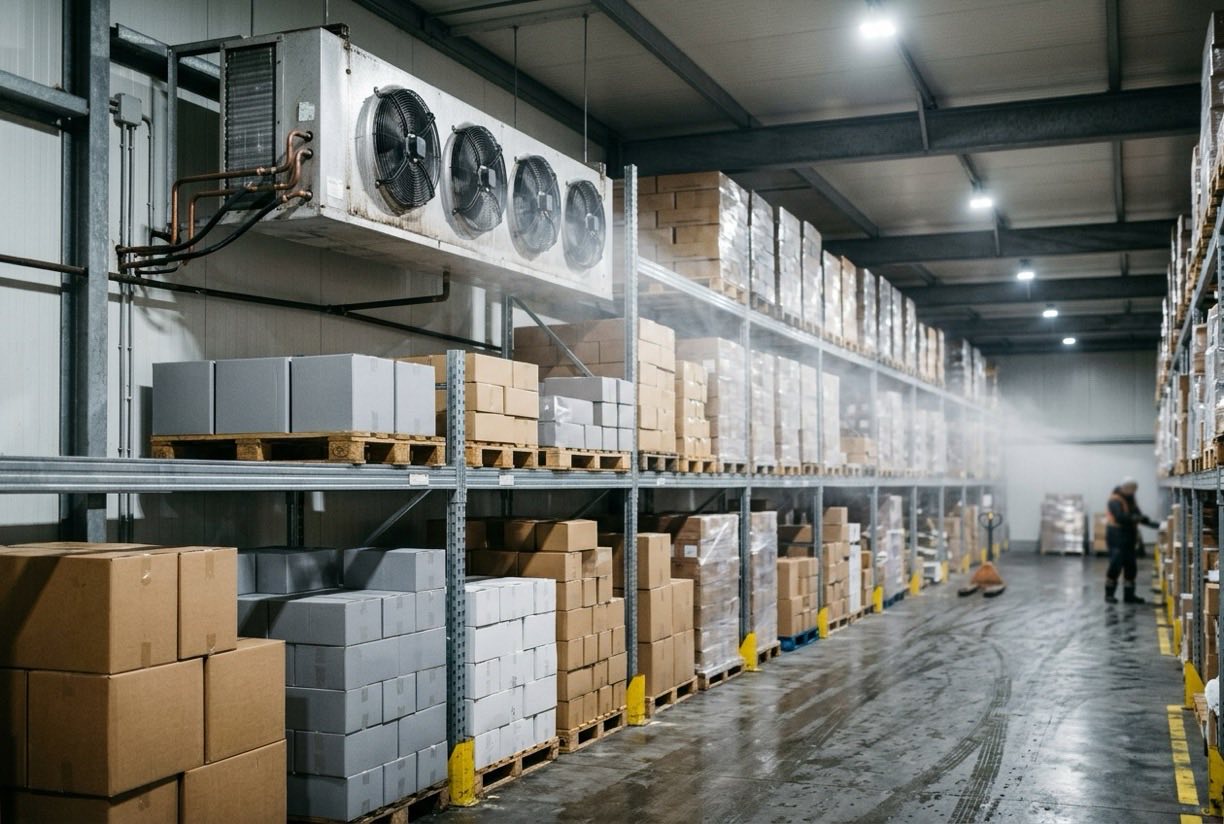
The entry load alone can make up a large part of the evaporator capacity. This effect is especially clear when large daily batches of product arrive.
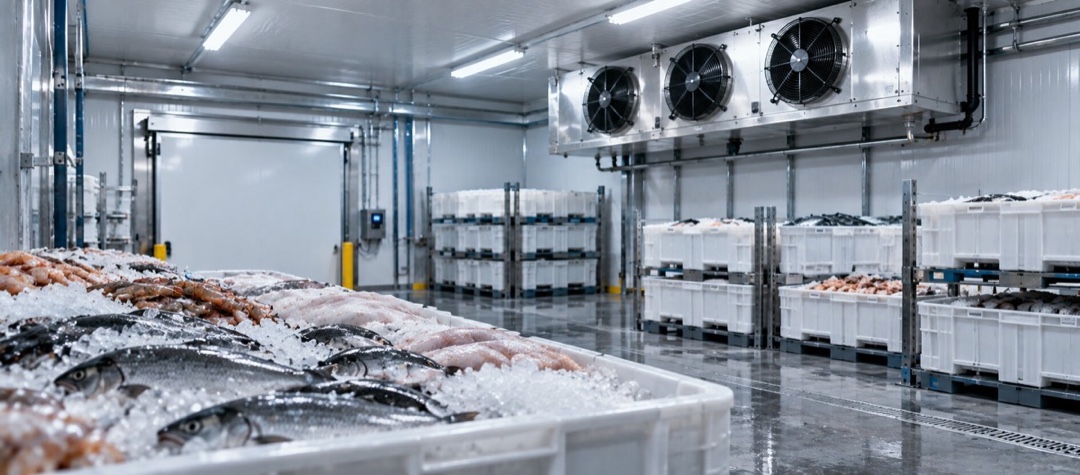
Product entry heat is the amount of heat that must be removed to cool a product brought into the room, and it is assessed separately from heat leakage through the door and insulation. This load can reach very high values in a short time, depending on when and how much product enters. It therefore needs a separate calculation.
Leakage and transmission loads usually follow a continuous and predictable pattern. Product entry, on the other hand, is an intermittent, intense and variable load. Showing these two loads as a single average hides the moment when the system is most stressed.
The product entry load directly affects whether the evaporator capacity is sufficient. During a period of heavy entry, the evaporator must work above its design load. This can delay the room from reaching its target temperature and can affect product quality.
Another reason for calculating the entry heat separately is the cooling requirement, which varies with the type of product. Fresh produce, frozen goods and packaged products each enter the room with a different heat content. This difference requires the calculation to be made by product type.
The calculation should be made together with the operating plan of the facility. Entry times, dispatch arrangements and production capacity determine how the product entry is spread over time. A calculation made without knowing this distribution can lead to a wrong capacity decision.
Product entry load is also a significant part of the running cost. Irregular entry makes the system run at high power for short periods. This kind of operation raises both energy consumption and wear on the equipment.
Which Data Are Needed?
The calculation needs the daily entry quantity, the entry temperature of the product, the target storage temperature, and the specific heat of the product. For frozen products, the latent heat released during freezing must also be included.
- Daily quantity: The total product entering during the day, in kilograms.
- Entry temperature: The temperature of the product at the moment it enters the room.
- Target temperature: The temperature at which the product will be stored.
The most important data for the calculation is the quantity of product entering the room each day. This quantity should be set according to the product type and the production plan of the facility. A realistic quantity rather than an estimate is essential for an accurate calculation.
The entry temperature of the product, the target operating temperature and the difference between these two values form the basis of the calculation. The temperature difference shows how much heat the product carries. An estimate made without measuring the entry temperature may be the weakest link in the calculation.
The specific heat of the product, meaning the energy needed to change the temperature of a unit mass by one degree, varies with the product type. Products with a high water content and dry products bring different heat loads at the same temperature difference. This value should be taken from manufacturer or reliable source data.
Whether the product enters above or below its freezing temperature affects the calculation. The latent heat released during freezing should be assessed separately from the normal cooling load. This distinction is especially important for frozen products.
The mass of the packaging, and auxiliary materials such as pallets and crates, should also be included. These materials enter the room with the product and carry their own heat load. Neglecting the packaging load leaves a missing item in the calculation.
Another data item needed is the time within which the product must be cooled. This time is determined by product quality and by the dispatch arrangement of the facility. As the cooling time gets shorter, the power the product requires also rises.
How Is The Product Entry Heat Calculated?
The heat to be removed is basically found by multiplying the mass, the specific heat, and the temperature difference: Q = m × c × ΔT. Here m is the product mass, c is the specific heat of the product, and ΔT is the difference between the entry temperature and the target temperature. For products that pass from above freezing to frozen, the latent heat of the phase change is added separately.
The result should be distributed over the busiest hours of the day to find the highest instantaneous load. An average value may not be sufficient during the intake hours.
The sensible heat calculation is made by multiplying the mass of the product, its specific heat and the temperature difference. The value obtained gives the total heat that must be removed within a given time. Dividing that time gives the average hourly load.
When the calculation is made, the heat load of the packaging and transport container must be added, not only that of the product itself. Although the mass of the packaging is usually smaller than that of the product, in some cases it can make up a large part of the total load. For this reason each item should be calculated separately.
Respiration heat arises in living products such as fresh fruit and vegetables. These products continue their vital activity even in a cold room, and during this they produce heat. The respiration load varies with the type and temperature of the product and should be added as a separate item.
For frozen products, the latent heat forms a separate part of the temperature drop. The energy needed for the water in the product to freeze at freezing temperature should be considered in addition to the normal cooling calculation. This part can significantly increase the calculation.
The result should include a peak load as well as the daily total load. The peak load is the value that the evaporator must meet at the time of heaviest entry. The evaporator should be selected so that it can handle this peak.
The results of the calculation should be supported by a safety margin. The margin is used to cover measurement uncertainties, unexpected entry fluctuations and changes in product range. Its size should be set according to the flexibility of the facility.
What Is The Effect Of Packaging And Transport Containers?
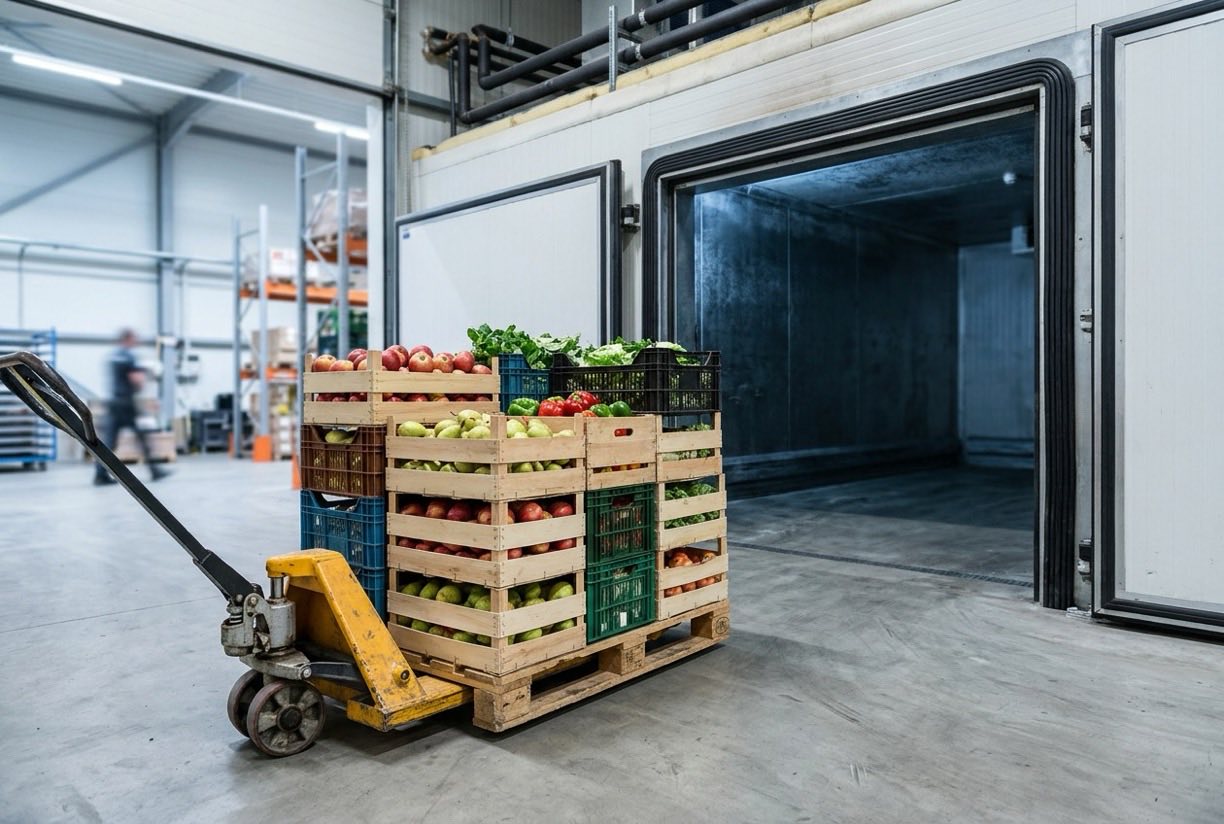
Packaging, pallets, and transport containers that enter the room together with the product also carry heat. A metal crate, a plastic crate, and a cardboard package have different heat capacities. These materials must also be cooled along with the product and should be included in the calculation.
The mass of the packaging may look small compared with the product, but metal pallets and crates can create a significant heat load.
Packaging is part of the heat load as well as a means of protecting the product. When the packaging material enters the room, it must bring its own temperature down to the cooling temperature. For this reason the mass and heat capacity of the packaging should be taken into account.
Crates, boxes and pallets are often brought into the room again and again with the product. This equipment must be cooled again each time it enters. The number and mass of the equipment used affect the total load noticeably.
The thermal conductivity of the packaging also matters. Insulated packaging reduces the heat the product takes from the outside and lowers the cooling load. However, leaving insulated packaging in the room for a long time can create a different effect on the heat balance over time.
How warm the transport container is before entering the room also affects the calculation. A crate that has been held outside brings more heat in when it enters. For this reason the holding time and condition of the container before entry should be checked.
The choice of packaging and transport containers should be made together with the operating plan. Assessing packaging in terms of lightness, ease of transport and heat load can bring significant savings in the long run. This decision should be taken by product and logistics teams working together.
Cleanliness and dryness of reusable transport equipment is also part of the calculation. A wet or dirty crate can bring extra moisture and load into the room. Equipment entering clean and dry protects both the load and the hygiene.
How Does The Calculation Affect Evaporator Selection?
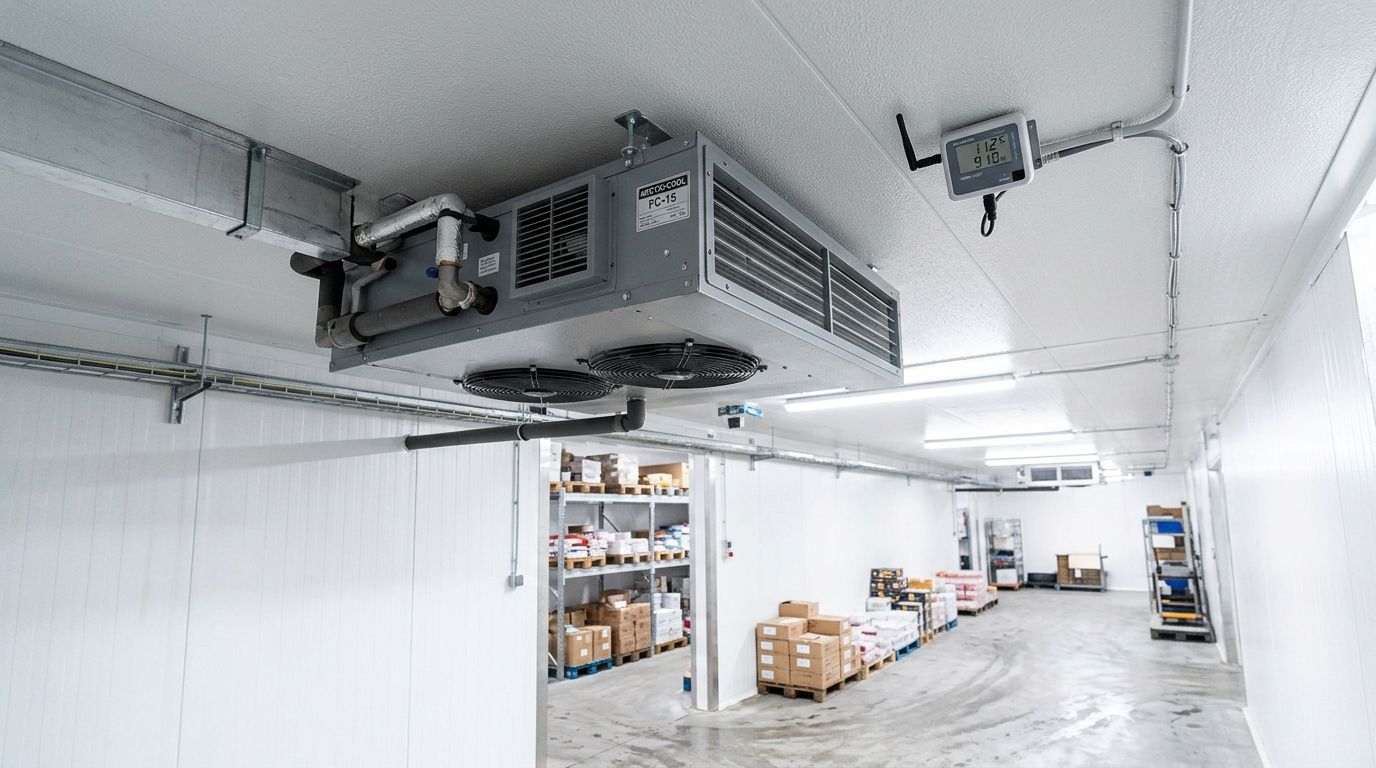
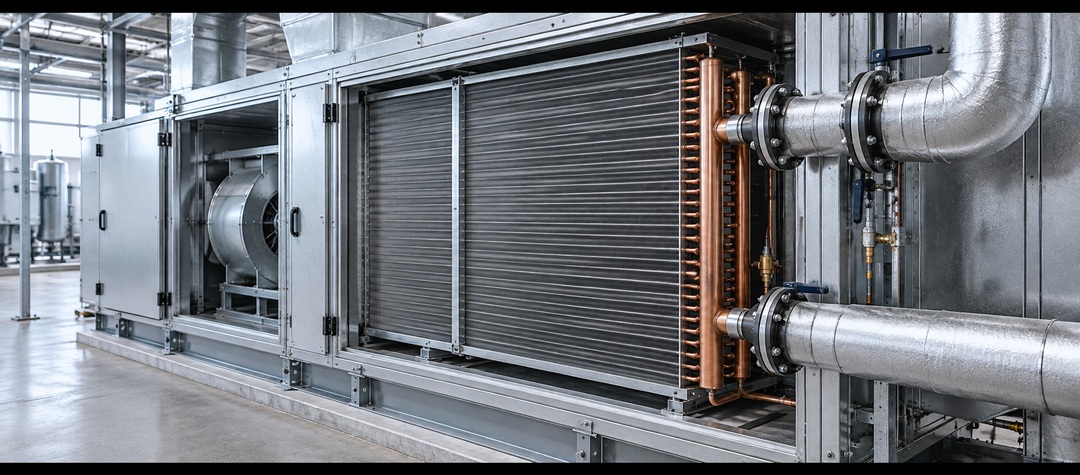
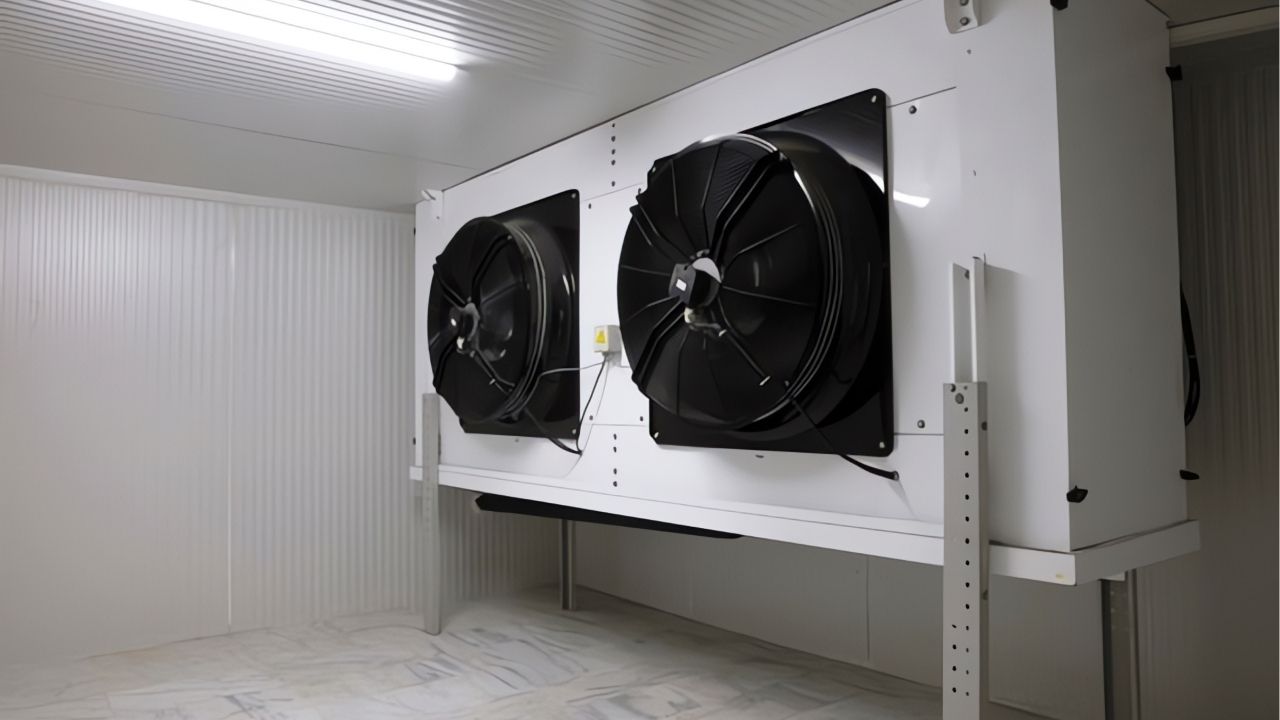
The product entry load is added to the total cooling load and enters the capacity selection of the evaporator. The selected capacity should be evaluated so that it covers the load during the busiest intake hour. If this load has been calculated on average, the room may occasionally rise above target.
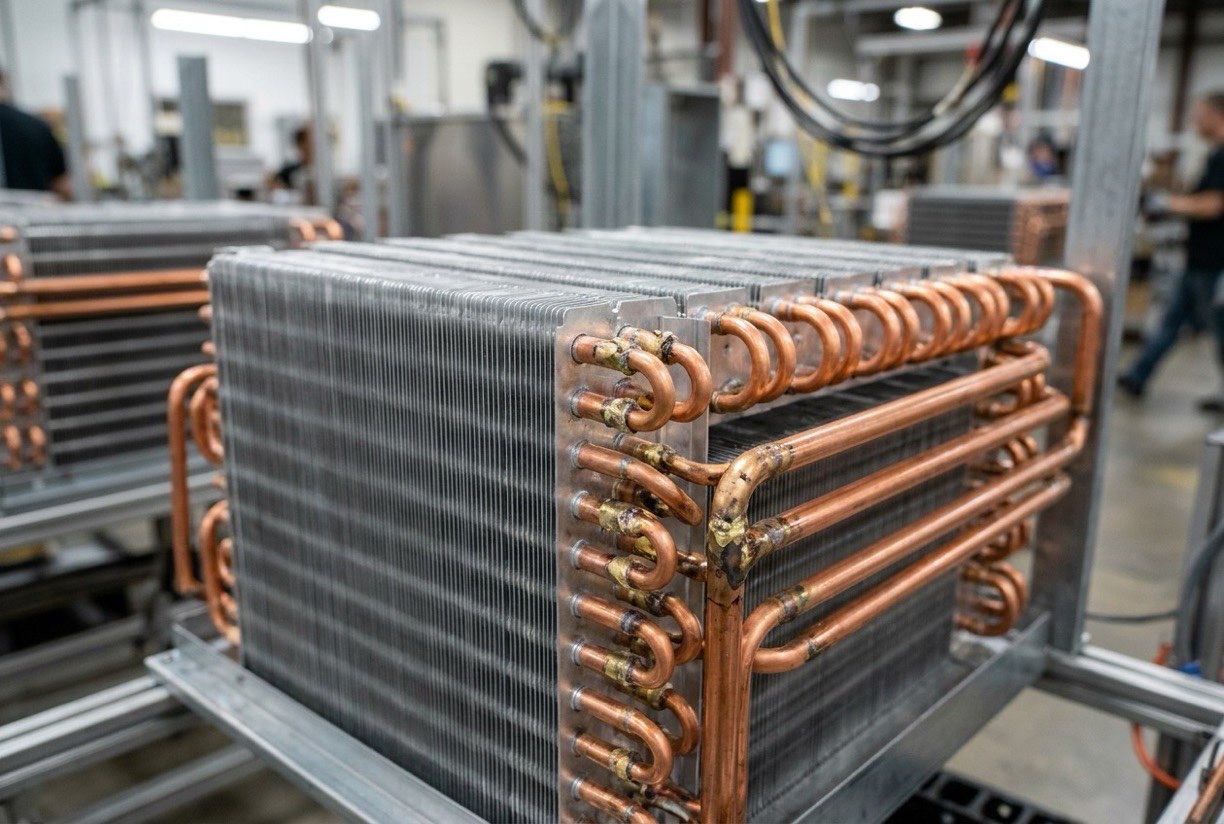
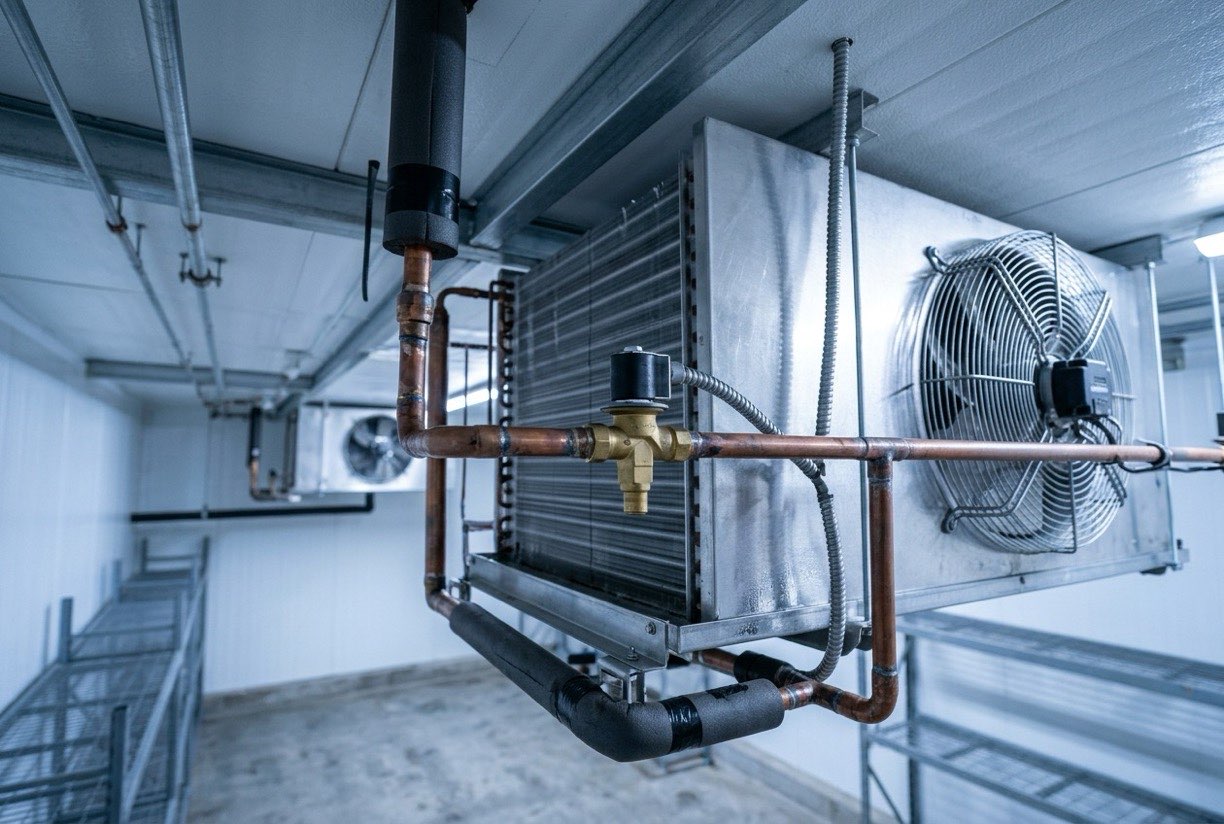
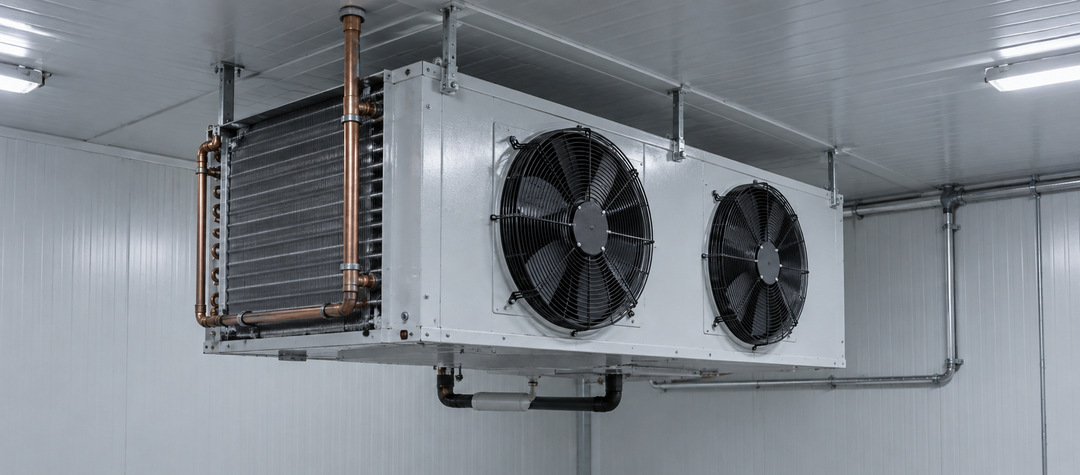
The result should also be compared with the standard conditions of the evaporator catalogue. The Günay Soğutma technical team can support reflecting this calculation in the evaporator selection, based on your project data.
The result of the product entry heat calculation is one of the basic inputs that determine the capacity of the evaporator. The peak load from the calculation is taken as the value the evaporator must meet in selection. If the evaporator falls below this value, the cooling time becomes longer and the room temperature may stay above target.
Evaporator selection must include the leakage and transmission loads as well as the entry load. The total load is determined by the sum of these three sources. If one item of the calculation is missing, the selected evaporator cannot meet the real load.
The difference between the peak load and the average load also determines the capacity flexibility of the evaporator. If the difference is large, a variable-speed system or several evaporators may be more suitable. This decision should be made according to how the load is distributed over time.
The fit between the design temperature difference of the evaporator and the calculation is also important. The evaporator should be selected to work at the target temperature of the room and under the required load condition. The conditions under which the catalogue values were obtained should be known for the selection to be accurate.
In conclusion, the correct calculation of product entry heat is the key to an evaporator that works both adequately and efficiently. Where the calculation is not made or is incomplete, the system has problems in both capacity and energy. The calculation should therefore be treated as the first step of the selection.
After selection, comparing the calculation with real operating data improves later decisions. If actual entry quantities and temperatures are recorded, the estimate will be more accurate in the next project. This record forms a valuable data source for the facility.
Frequently Asked Questions
What share of the total load does the product entry heat make up?
This share depends on the product quantity, the entry temperature, and the insulation condition. Giving a fixed share would be misleading; it must be calculated for each project.
Is pre-cooling calculated separately?
If products arrive already cooled to a lower temperature from a pre-cooling room, a separate calculation is needed for that room. The load of the main room is calculated from the entry temperature of the incoming product.
What happens if the daily entry quantity changes?
The average load changes, and on busy days the room can rise above target. For this reason the design should be based on the quantity of the busiest day.
How should the product temperature be measured?
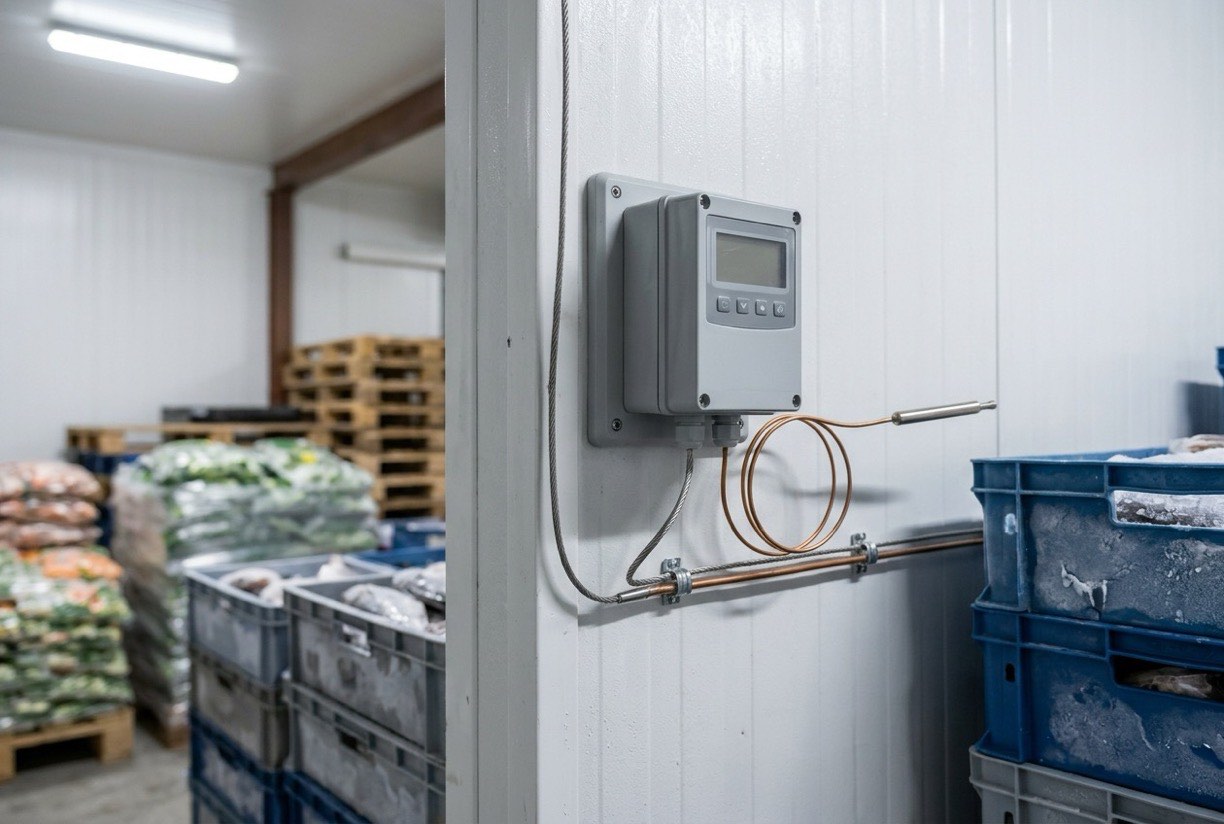
Product temperature should be measured with a sensor placed inside the product or with a calibrated thermometer. The surface temperature may not reflect the internal temperature. The measurement should be made just before entry and recorded. ? What safety margin is used in the calculation? The safety margin is set according to the uncertainty of the data, the entry fluctuations and future capacity needs of the facility. Its size should match the risk level of the decision. The margin should be shown clearly in the calculation and its reason written down.