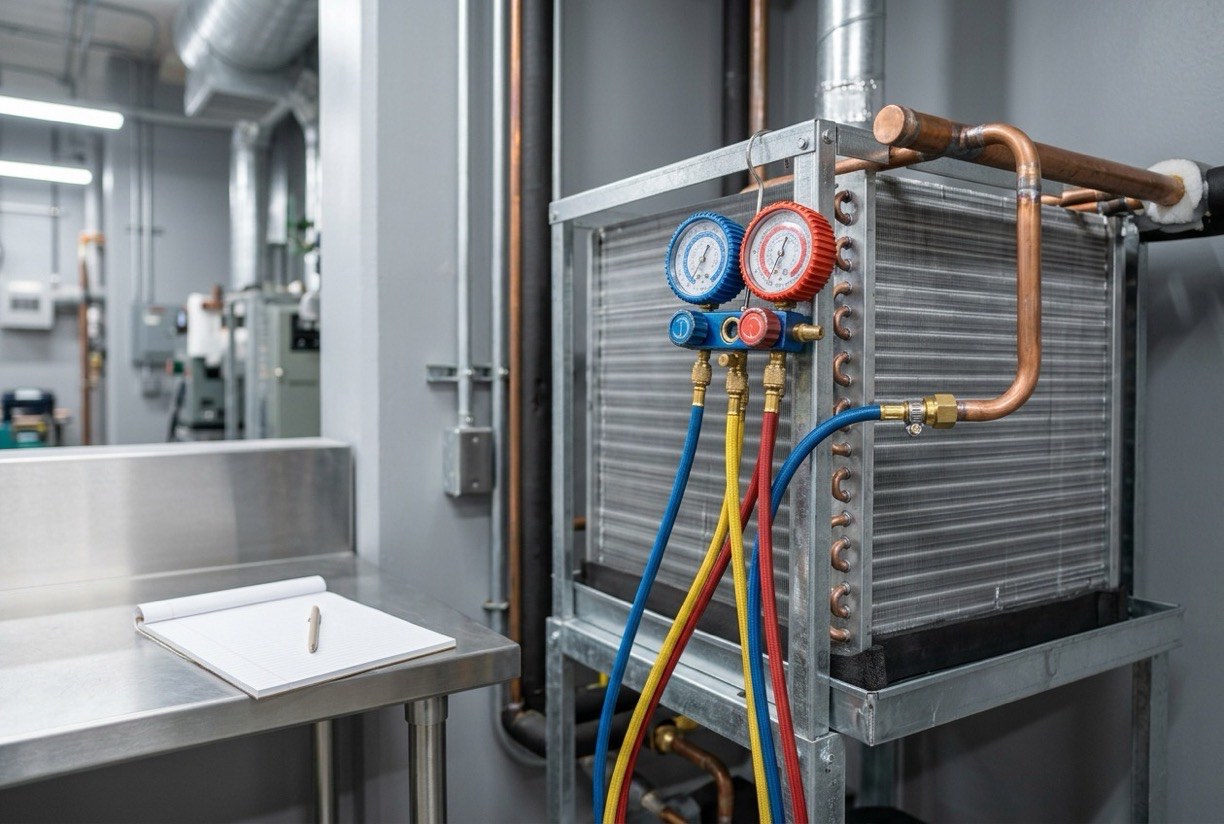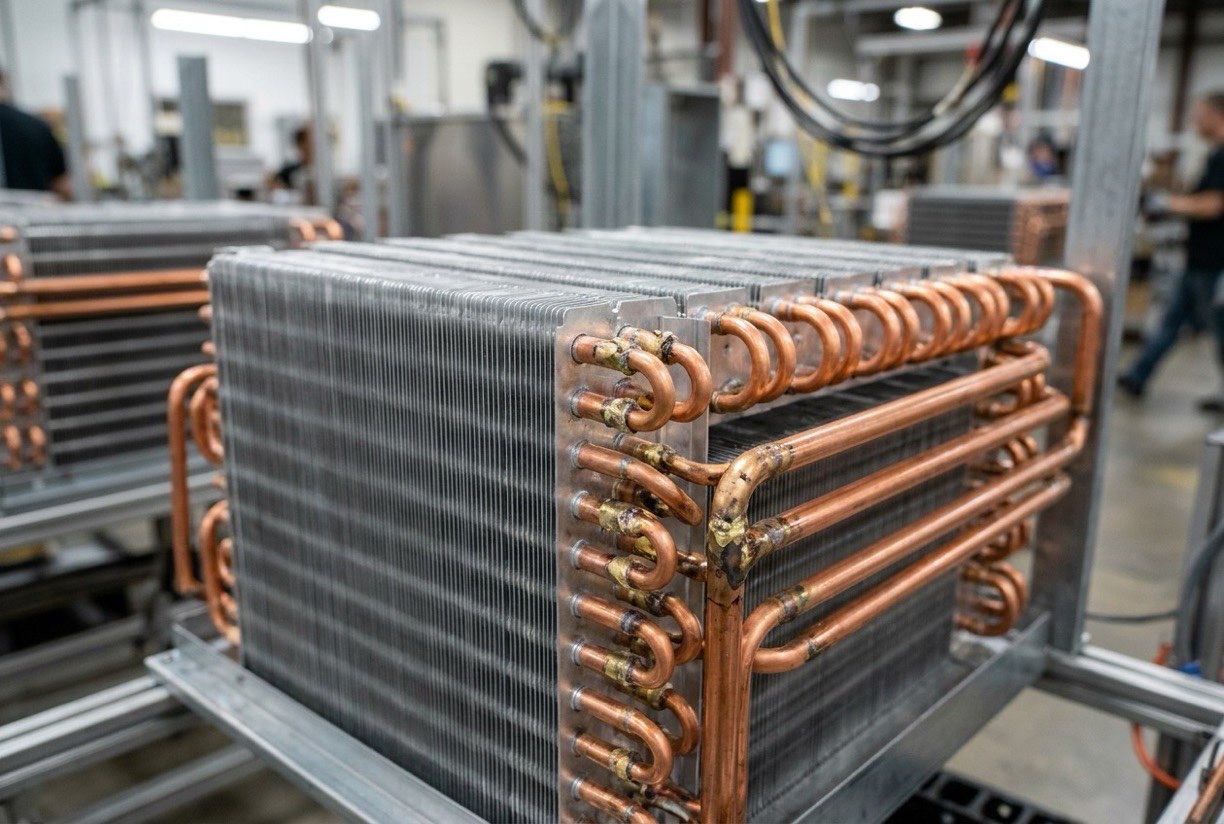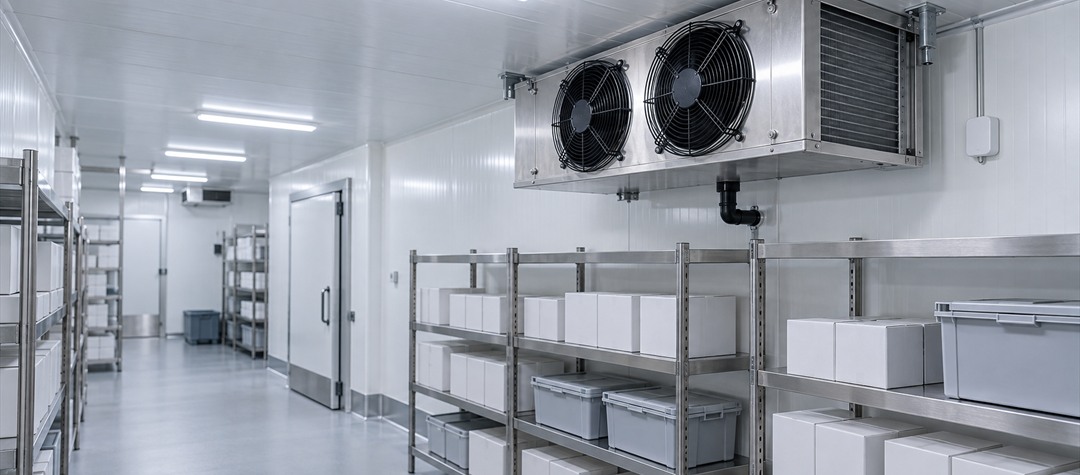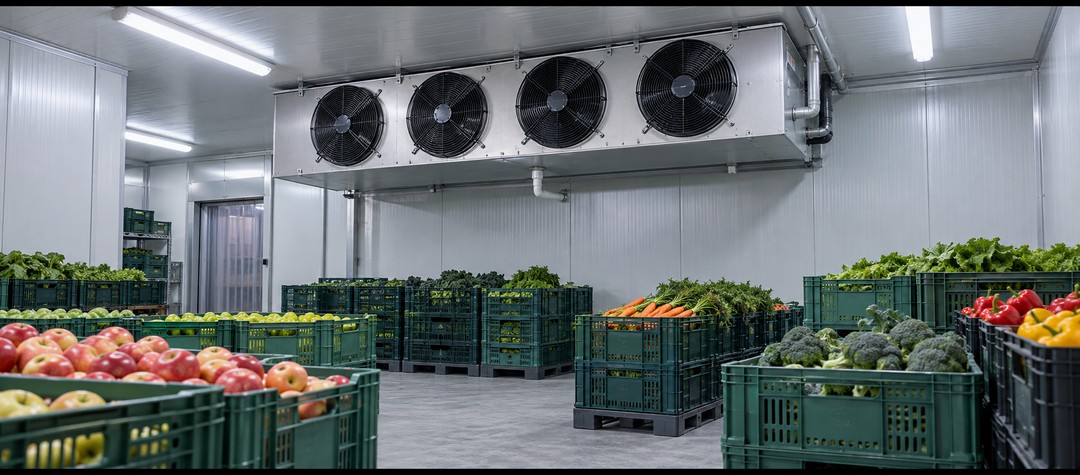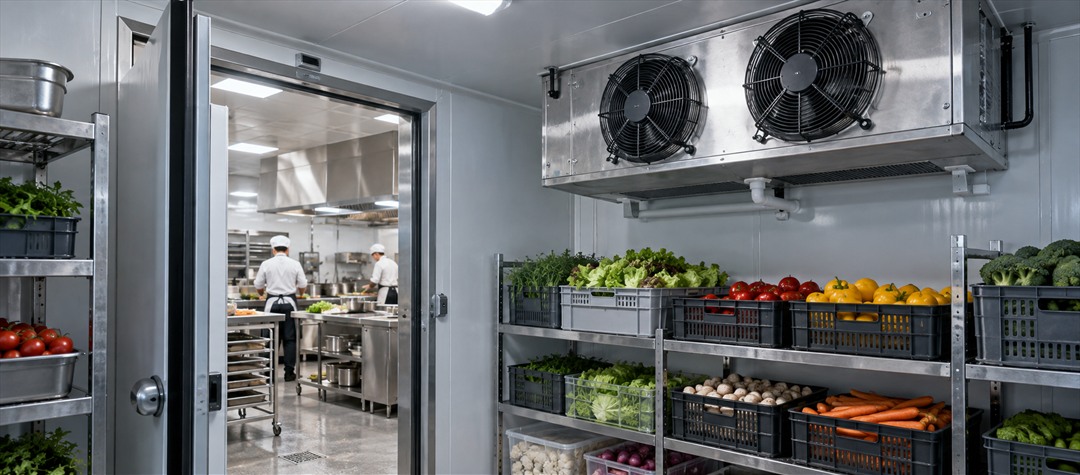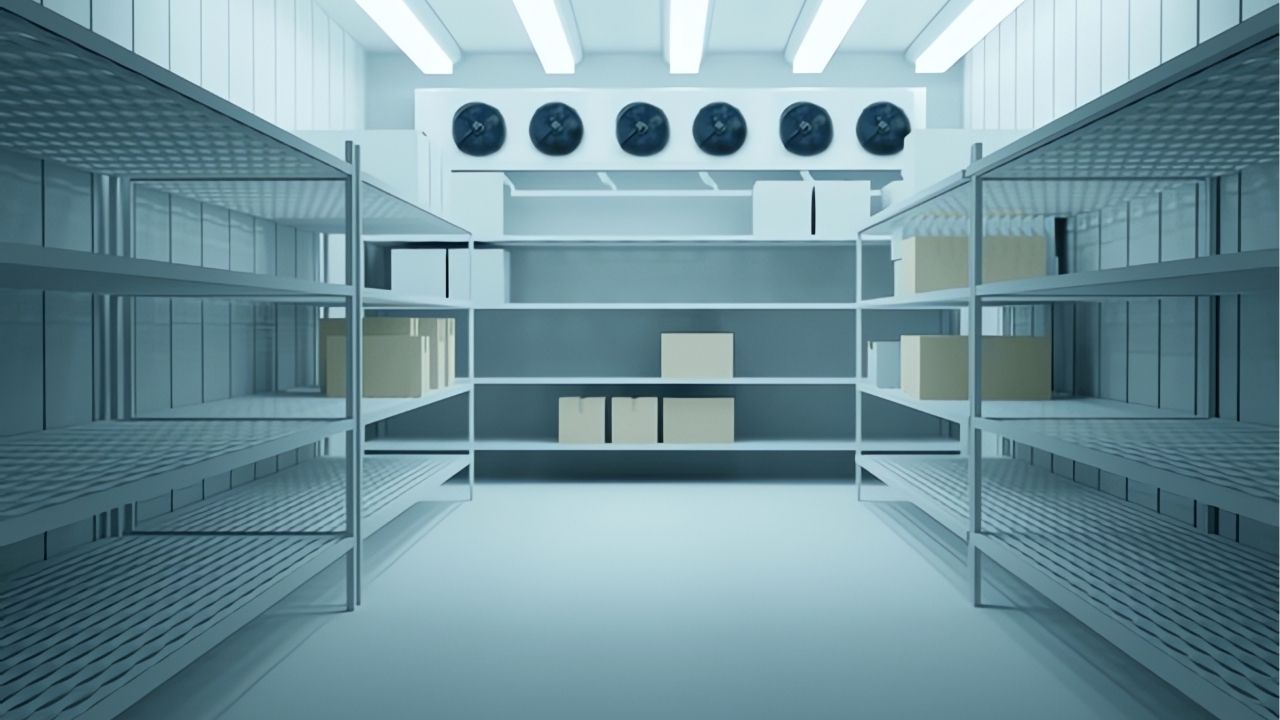
Cold room temperature control works from the value that the sensor measures. If the sensor is placed in the wrong position, the system decides based on a temperature that does not represent the room. The compressor may keep running while the room is still above target, or it may switch off early while the products are warming. This article explains why the sensor and thermostat position matter, how the right point is chosen, and what to consider during installation.
Table Of Contents
- Why Must The Sensor Be In The Right Position?
- What Problem Does A Sensor Close To The Evaporator Outlet Cause?
- How Is A Position Representing The Product Temperature Chosen?
- Should The Thermostat And Defrost Sensor Be Separate?
- How Are Installation And Calibration Carried Out?
- Frequently Asked Questions
Why Must The Sensor Be In The Right Position?
The thermostat makes its control decision from the temperature the sensor measures. The sensor must therefore represent the average condition of the room. The measuring point should not be strongly influenced by either the hottest or the coldest zones of the room.
A badly positioned sensor shows a temperature different from the real one, which affects both energy use and product quality.
The thermostat makes its control decision from the temperature the sensor measures. The sensor must therefore represent the average condition of the room. The measuring point should not be strongly influenced by either the hottest or the coldest zones of the room.
A badly positioned sensor shows a temperature different from the real one, which affects both energy use and product quality. When the sensor value starts to drift from the real condition, the system keeps working towards a wrong target, and this error often goes unnoticed for a long time.
The importance of the sensor position grows with the size of the room and the load profile. In a large room it is difficult for a single sensor to represent the whole area. In such a case, the zone the sensor represents should be defined clearly and the decision should be recorded.
The position of the sensor is the foundation of the whole control logic. However precisely the thermostat is set, the result cannot be corrected if the sensor is in the wrong place. For this reason, the positioning should be planned and verified before any setting work is done.
What Problem Does A Sensor Close To The Evaporator Outlet Cause?
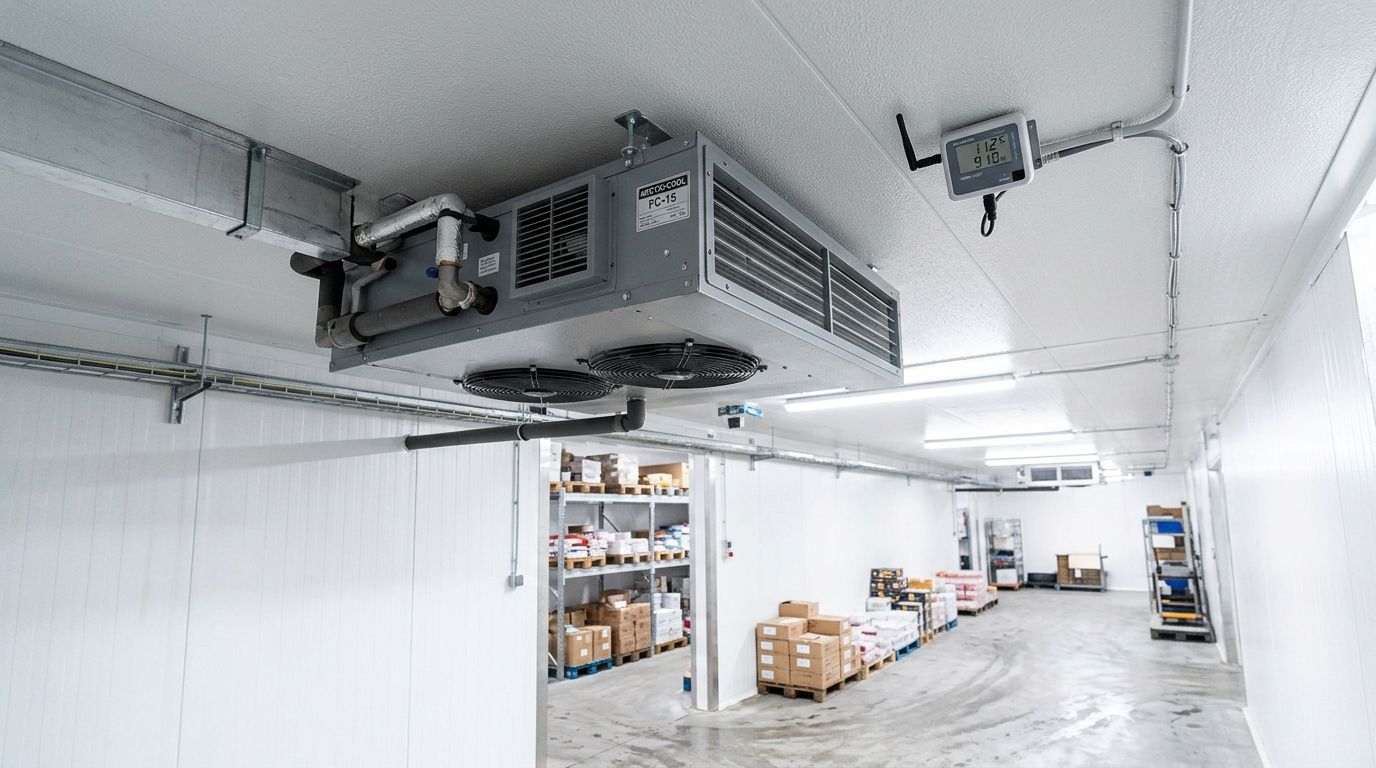
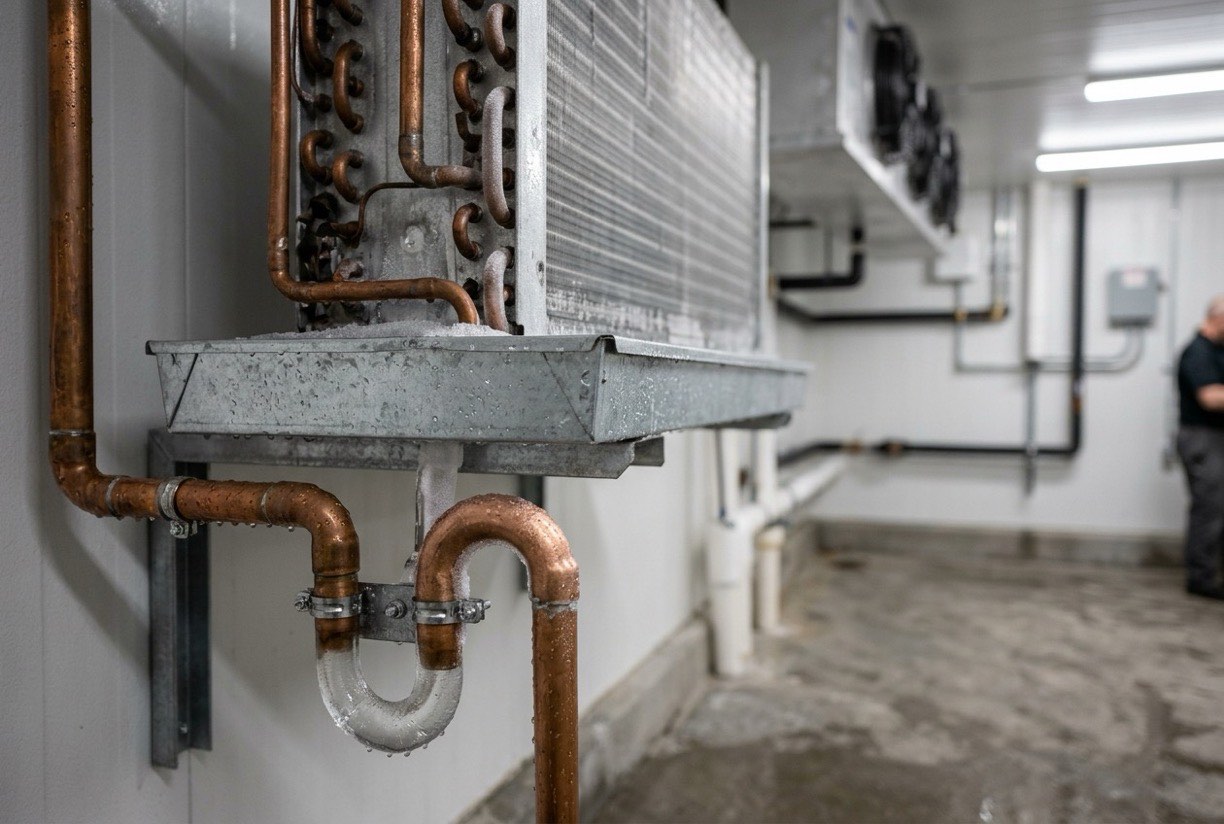
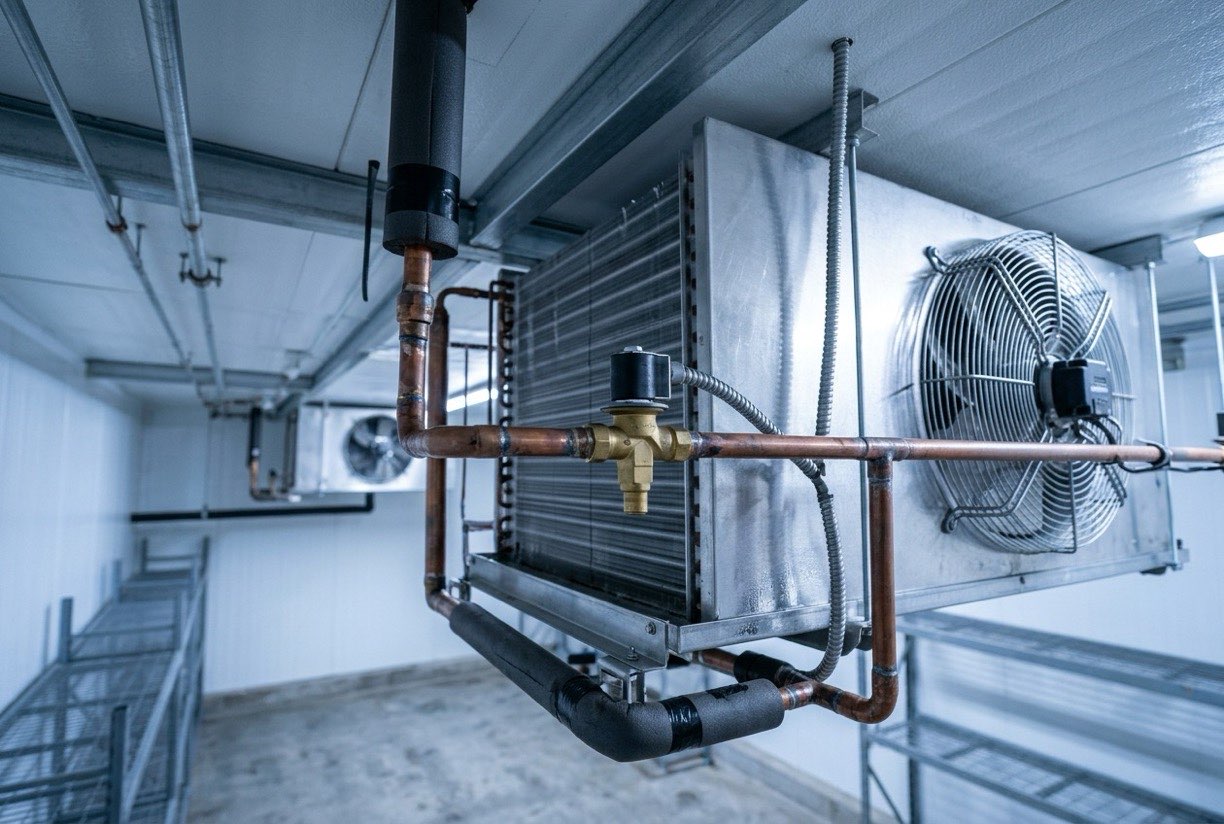
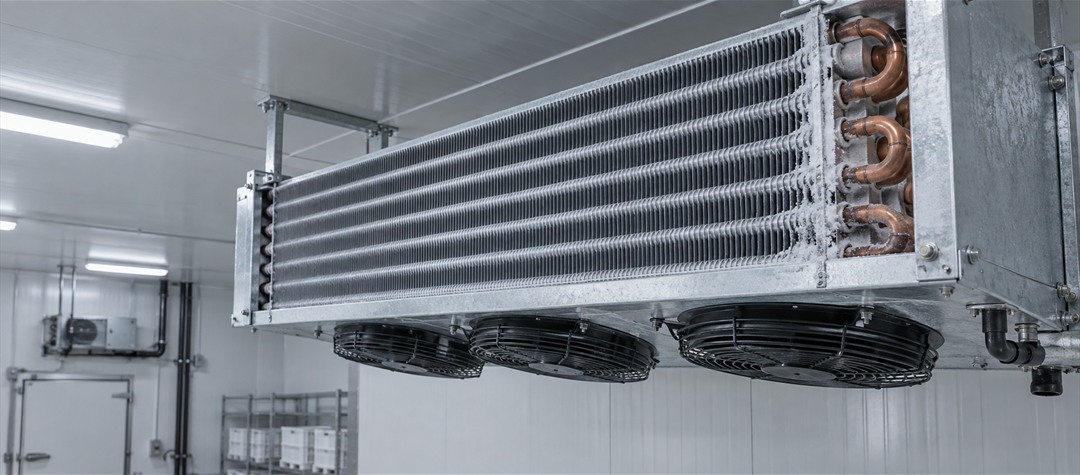
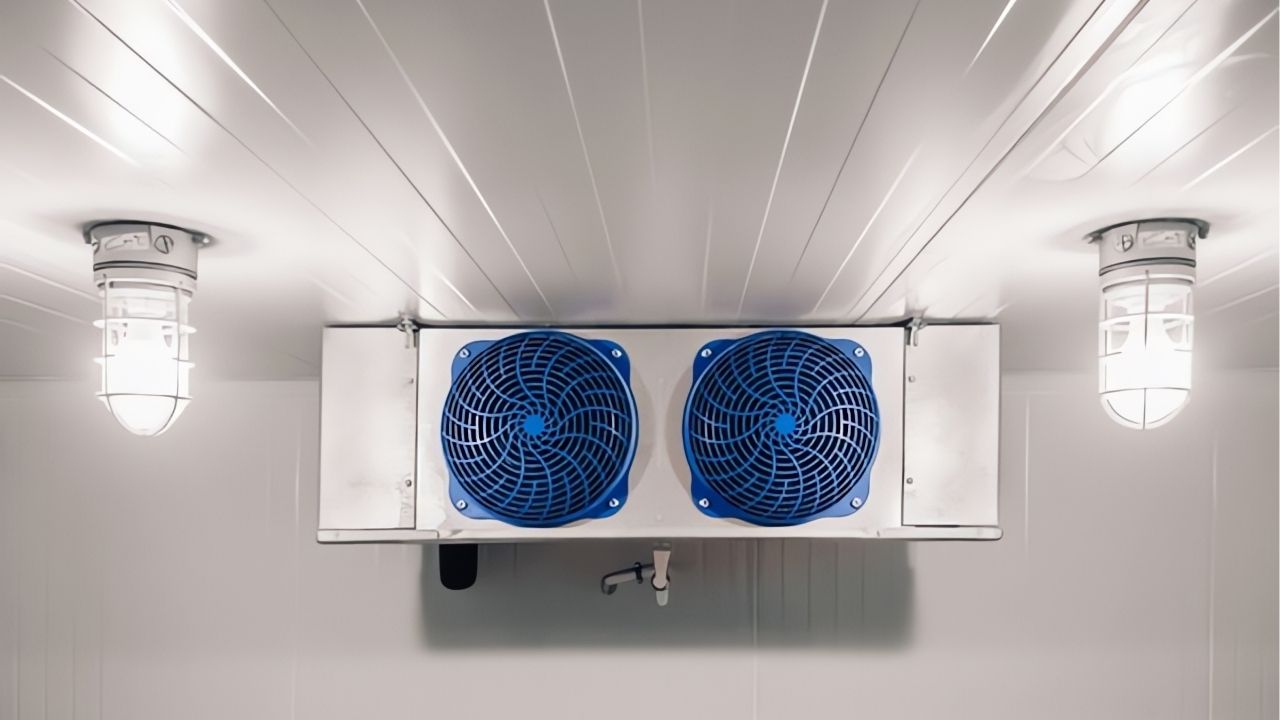
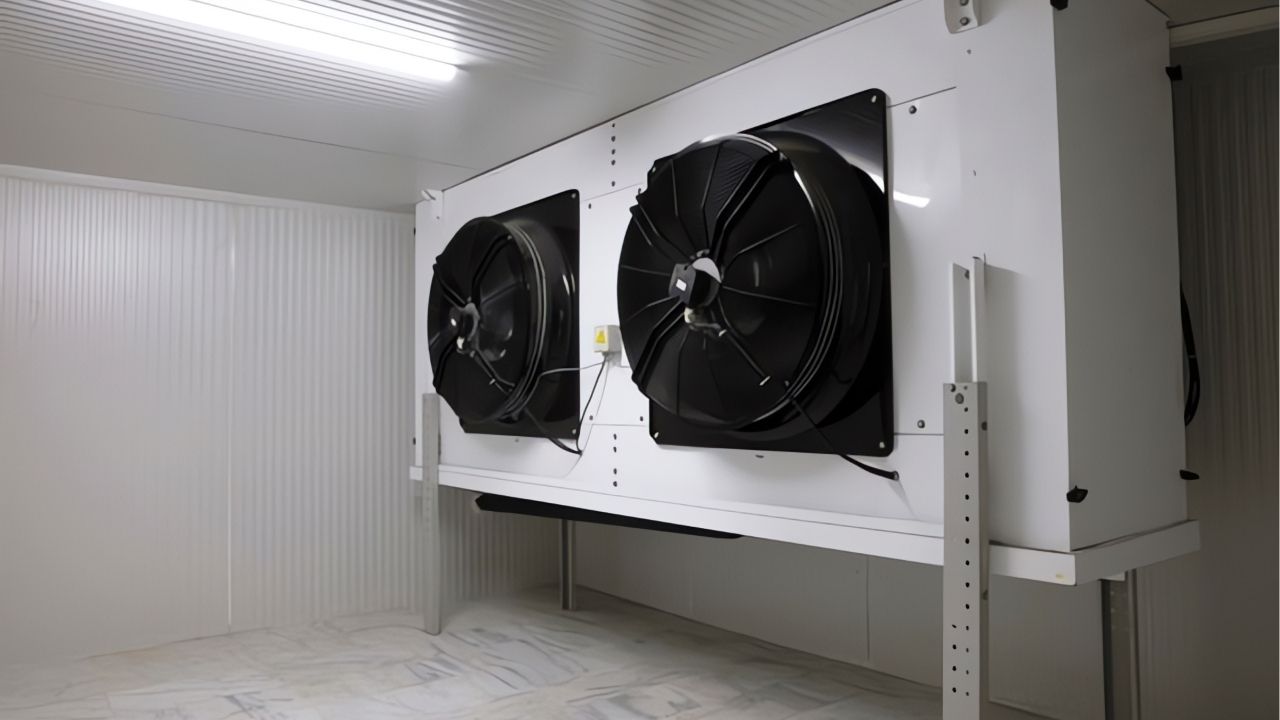
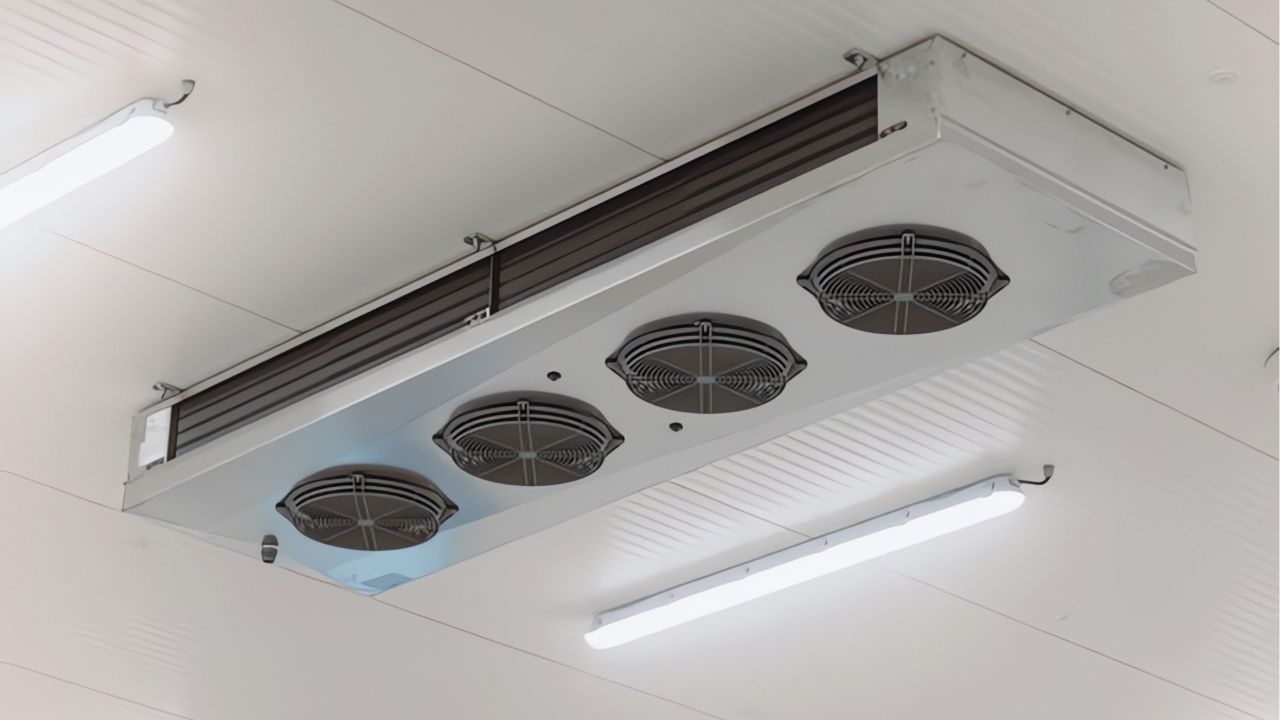
If the sensor is placed very close to the evaporator outlet, it measures the cold air blown directly from the coil. In this case the system can switch off early even though the room has not yet reached the target temperature. The room may stay above target and products cool unevenly.
Similarly, a sensor near the door can show misleading values at each door opening and create unnecessary operating cycles.
If the sensor is placed very close to the evaporator outlet, it measures the cold air blown directly from the coil. In this case the system can switch off early even though the room has not yet reached the target temperature. The room may stay above target and products cool unevenly.
Similarly, a sensor near the door can show misleading values at each door opening and create unnecessary operating cycles. Warm and humid air from the door causes short but frequently repeated sudden rises at the sensor.
Sensor position should also be chosen carefully in the zones between the evaporator and the door. These zones are where the air movement is strong and the temperature is unbalanced. Placing the sensor in such areas makes the control decision dependent on sudden changes.
A wrong position magnifies the misunderstanding not only of the control but also of the heat distribution in the room. Because the sensor sits near the outlet, the room does not appear warm, although the room is largely filled with warm spots. This can lead to delayed problems that may even end in product spoilage.
How Is A Position Representing The Product Temperature Chosen?
The sensor should be placed at a point that represents the zone where the products are stored. A place where the air circulates well, but where the direct airflow does not disturb the measurement, should be selected. A sensor located at product level on a rack or pallet brings the measurement closer to reality.
- Height: A position close to product level is preferred.
- Direction: It should be kept away from the direct discharge airflow.
- Distance from the door: Choose a place that is neither the farthest nor too close to the door.
The sensor should be placed at a point that represents the zone where the products are stored. A place where the air circulates well, but where the direct airflow does not disturb the measurement, should be selected. A sensor located at product level on a rack or pallet brings the measurement closer to reality.
Product level carries the most important temperature information in the room. The value measured at the height of the products reflects the real condition around them. A sensor close to the ceiling, however, measures the zone where the warm air rises, and can show a product temperature lower than the real one.
When the placement decision is made, the physical protection of the sensor should also be considered. A position where it can be knocked during the movement of racks or pallets may cause the sensor to shift or its cable to be damaged. The sensor should be mounted at a fixed and protected point, both for measurement and for safety.
The mounting height set according to the manufacturer's data is the basic reference for the sensor position. This height should be checked against the values foreseen in the room design and the product layout. If the product layout changes, the sensor must be reconsidered as well.
Should The Thermostat And Defrost Sensor Be Separate?
In most systems the room temperature sensor and the defrost sensor on the evaporator have different roles. The room sensor controls cooling, while the evaporator sensor manages the start and end of defrost. Mixing up the two can create faulty defrost cycles.
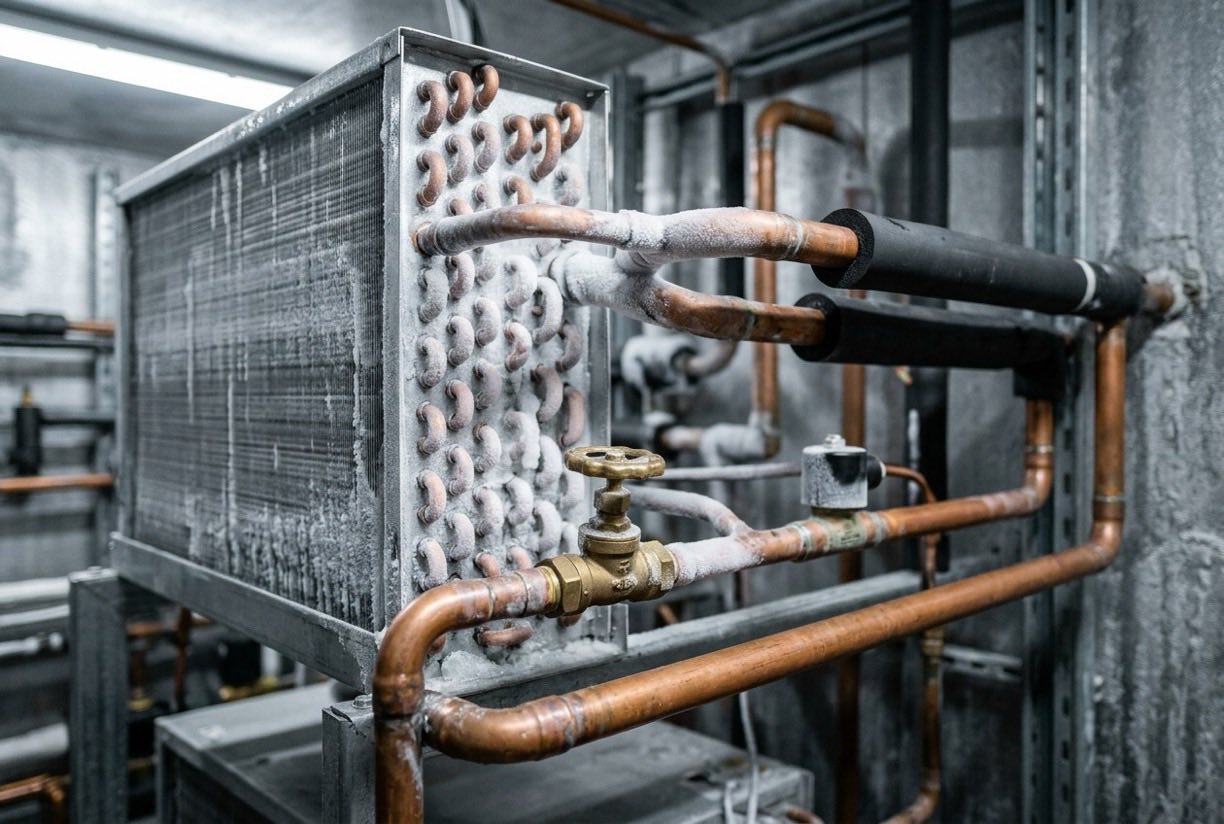
The defrost sensor should measure the actual surface temperature of the evaporator, and it must make good contact at that point. If the sensor does not contact the surface well, the defrost timing becomes misleading.
In most systems the room temperature sensor and the defrost sensor on the evaporator have different roles. The room sensor controls cooling, while the evaporator sensor manages the start and end of defrost. Mixing up the two can create faulty defrost cycles.
The defrost sensor should measure the actual surface temperature of the evaporator, and it must make good contact at that point. If the sensor does not contact the surface well, the defrost timing becomes misleading. Good contact should be made at a point that represents the heat exchange of the tube or fin, not at a random point on the fins.
The cables and connection points of the room sensor and the defrost sensor should also be kept separate. Confusion at the terminals of the control card can lead to the wrong sensor being read. If the terminal and cable of each sensor are labelled, later fault diagnosis becomes much easier.
Because the position of the defrost sensor directly affects the frequency and duration of defrost, this position should also be checked during commissioning. A sensor that responds too early or too late can lead to defrost durations that are either unnecessarily long or insufficient.
How Are Installation And Calibration Carried Out?
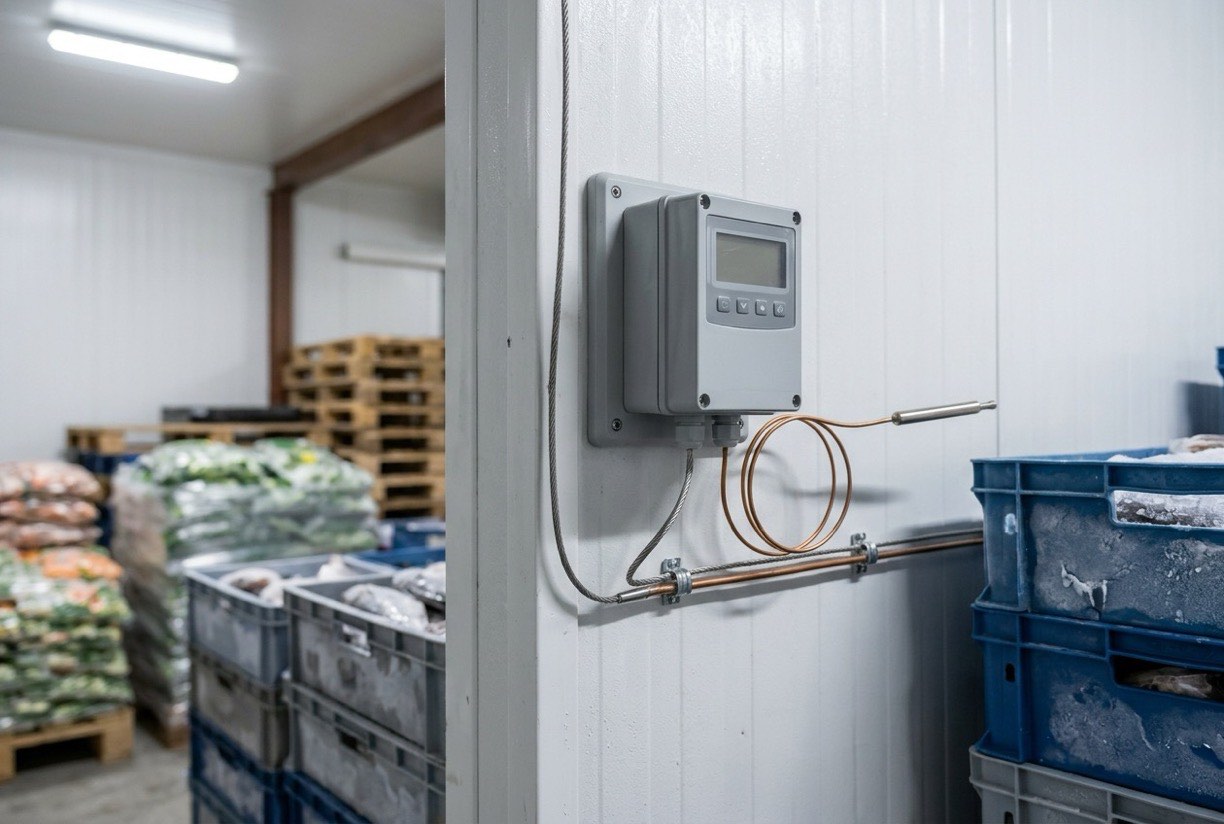
During installation, the sensor must make good contact with the surface it is fixed to, and its cable should be routed away from warm or cold sources. Calibration should be carried out by comparing the reading with a known reference thermometer.
At commissioning, the room temperature should be checked together with the thermostat display, and if there is a deviation the setting should be corrected. The Günay Soğutma technical team can support the control and sensor layout based on your project data.
During installation, the sensor must make good contact with the surface it is fixed to, and its cable should be routed away from warm or cold sources. Calibration should be carried out by comparing the reading with a known reference thermometer. The quality of the installation determines whether the values given by the sensor on the first day remain reliable for a long time.
At commissioning, the room temperature should be checked together with the thermostat display, and if there is a deviation the setting should be corrected. This check should be made after the room has become fully stable. A measurement made in an unstable room can lead to a wrong calibration result.
During installation, the free circulation of air around the sensor must not be blocked. A shelf, packaging or other material placed in front of the sensor can disturb the measurement. The area around the sensor should be kept open in a way that matches the zone the measurement represents.
The route of the sensor cable also matters for the lasting value of the calibration. If the cable loosens over time or comes close to hot lines near the door edge, the measurement can be disturbed. The cable should be fixed along a stable and protected route.
Frequently Asked Questions
Why should the sensor be placed in a separate zone?
So that the measurement is independent of local effects such as the evaporator and the door. The thermostat then operates according to the real condition of the room.
How often should calibration be carried out?
It should be done at regular intervals in the periodic maintenance programme, according to the intensity of use. Any deviation found should be corrected without delay.
What happens if the sensor measures incorrectly?
The room may stay above or below target, the compressor may run unnecessarily, and the defrost timing can be disturbed. This leads to energy loss and deviation in product quality.
How can a difference between the sensor reading and the real room temperature be detected?
A reference thermometer placed at different points in the room should be read at the same time as the sensor. If the difference is persistent and its direction is clear, the sensor position or its calibration should be questioned. Because a single reading can be misleading, the measurement should be continued for several days.
Why should the sensor cable be routed through a separate channel?
Power cables and a signal cable running close to the compressor line can disturb the reading through electrical noise. If the sensor cable is routed through a separate channel, the stability of the measurement increases. The cable connection points should also be protected from moisture and ice.
Why does the thermostat hysteresis matter?
Hysteresis is the tolerance band that decides when the compressor switches on and off. A band that is too narrow makes the compressor cycle too often, while a band that is too wide leads to large swings in the room temperature. The setting should be made by considering the sensitivity of the product and the operating condition of the compressor together.