The oil in a refrigeration compressor lubricates the moving parts and helps remove heat. When the oil level falls, the compressor is under-lubricated, wears, and eventually fails. When the oil level is too high, oil can enter the circuit and reduce efficiency. This article explains why the oil level matters, how to read the sight glass, and the signs of a low oil level.
Table Of Contents
- Why Does The Oil Level Matter?
- How Is The Sight Glass Read?
- What Are The Signs Of A Low Oil Level?
- How Is Oil Added?
- How Are Oil Leaks And Compatibility Checked?
- Frequently Asked Questions
Why Does The Oil Level Matter?
In the compressor, oil forms a film between the bearings, pistons, and other moving parts. This film reduces friction and limits wear. The oil also helps carry heat away from the windings and motor parts.
Keeping the level correct is decisive for both the life and the efficiency of the compressor.
Compressor oil reduces wear by forming a film between rubbing parts, carries heat away and keeps the seals supple. A correct oil level is needed for all of these functions to be performed together. When the oil is insufficient, the internal parts of the compressor lose this protection.
When the oil level is low, the oil pump or the oil distribution passages can begin to draw in air. This causes fluctuations in oil pressure and disruptions to lubrication. Continuous under-lubrication can lead to rapid wear of the ball bearings and the pistons.
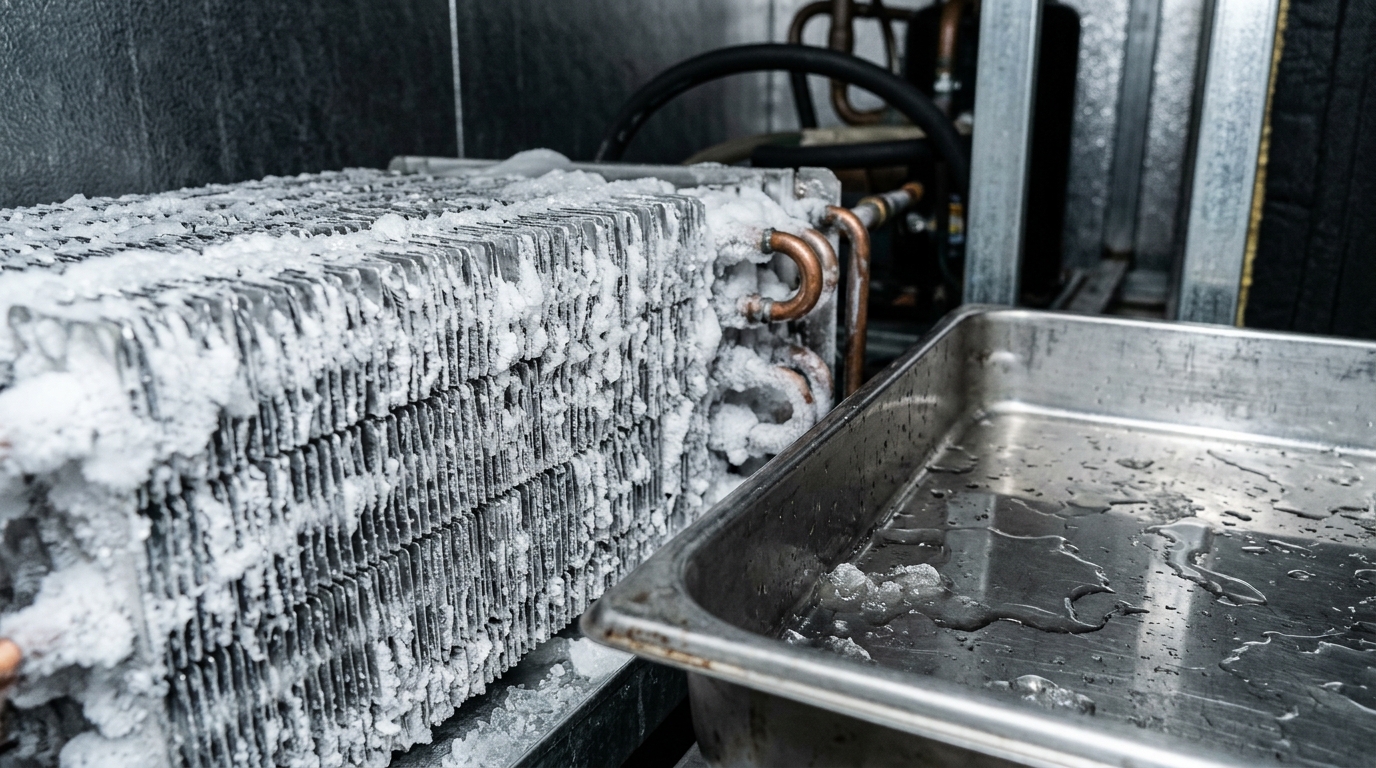
An oil level that is too high also causes problems. Excess oil can foam inside the compressor and mix into the system, carried into the refrigeration circuit. In that case oil collects on the evaporator surface and heat transfer decreases.
Oil is a fluid that continuously circulates in the refrigeration circuit. During this circulation some oil leaves the compressor, travels through the system and must return. If oil return cannot be achieved, oil loss in the compressor becomes visible, and this is often first noticed in the sight glass.
The quality of the oil matters as much as its level. Dirty, humid or acidified oil can damage the compressor even when the level is correct. For this reason the level check should be made together with an assessment of the oil condition by eye and, where needed, by laboratory testing.
The oil level is one of the basic indicators of how safely the compressor runs under load. The effect of a low or high level appears over the long term in the life of the compressor. The level check should therefore be part of the regular maintenance plan, not carried out only after a failure.
How Is The Sight Glass Read?
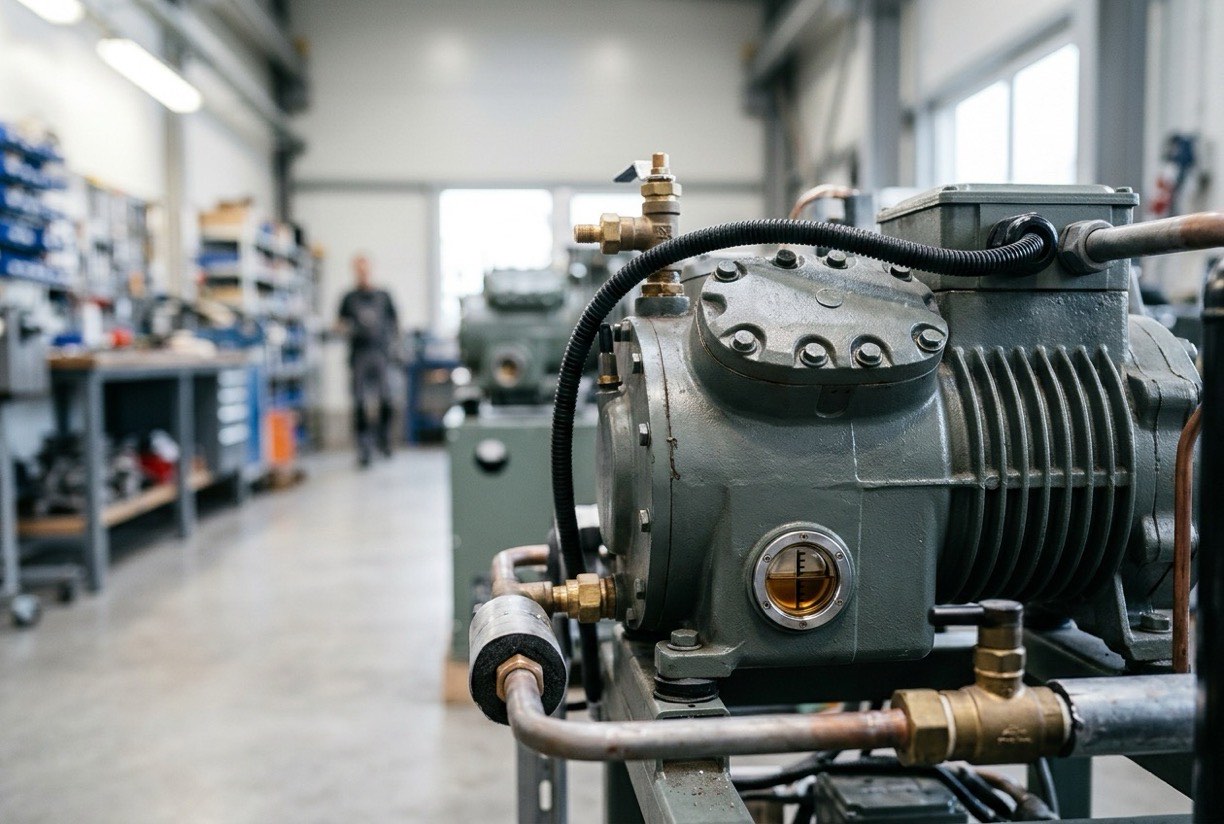
On many compressors the oil level is observed through a sight glass. The reading should be taken shortly after the compressor has stopped and the system has settled. The oil should be aligned with the mid-line of the glass.
The colour and consistency of the oil should also be observed during the reading. Dark or dirty oil can indicate contamination in the system.
The sight glass is a transparent window that allows the oil level of the compressor to be seen from outside. The reading should be taken when the compressor has stopped and the system has settled. In a running compressor, the oil may not show the correct level because of foam and agitation.
For an accurate reading, the compressor should stand on a level floor. A reading taken in a tilted position can show a value different from the real level. The oil level should be judged by looking at which part of the mark in the middle of the glass the oil reaches.
The colour and clarity of the oil should also be assessed separately in the sight glass. Oil that has darkened or become cloudy can be a sign of contamination or chemical breakdown. Colour alone does not give a definite decision, but it is a warning that calls for further checks.
If there are traces of oil leakage around the glass, the source of the leak must be sought. The seal of the sight glass, looseness or cracking in its seat are common causes of leaks. A level check made while there is a leak can give misleading results over time.
Reading the sight glass should be done under the same conditions at every check. The same temperature, the same stop time and the same position make the results comparable. This routine is the most reliable way of noticing slow changes in the level.
The sight glass can show more than the level of the oil; it can also reveal changes in the condition of the system. Oil that bubbles, splashes or shows air bubbles in the glass can indicate moisture, a gas leak or a lubrication problem. Such observations should be evaluated together with the records.
What Are The Signs Of A Low Oil Level?
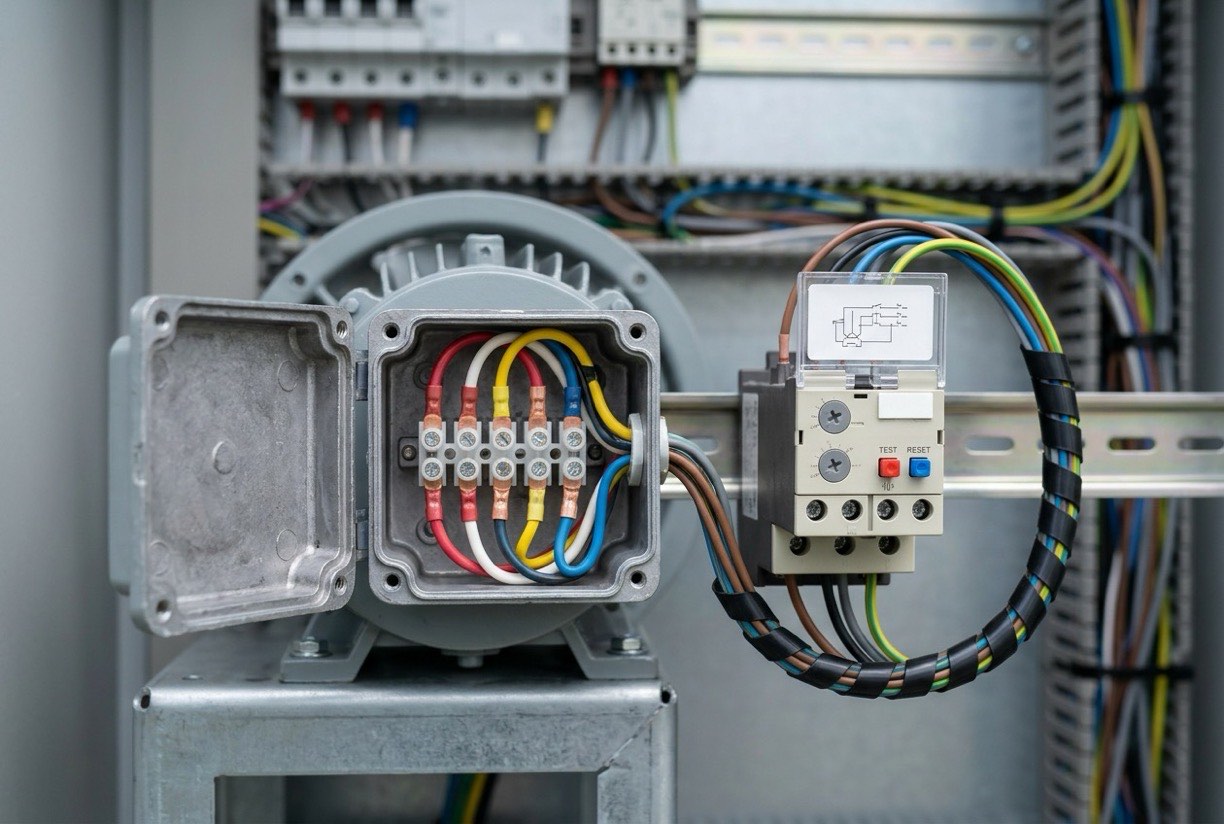
A low oil level can show up as increased noise, abnormal vibration, and a temperature rise. The compressor may also be stopped repeatedly by its protection circuit. When these signs appear, the compressor should not be run for long periods before the cause is identified.
- Noise: A knocking or ringing sound increases.
- Temperature: The compressor shell becomes hotter than expected.
- Protection: The oil pressure protection trips frequently.
A low oil level usually shows itself first in sound and temperature. A change in the sound from the compressor, a shell that is hotter than expected, or protection devices tripping frequently are signs that should not be ignored. When these symptoms appear together, a level check should become the priority.
The oil pressure protection stops the compressor when the oil pressure falls below the required level. If this protection trips often, it should be considered that the cause may not be oil shortage alone. The condition of the oil pump, any blockage of the oil passages and the filter should also be checked.
Another result of inadequate lubrication is wear and scoring on the parts inside the compressor. This wear gradually spoils the sealing and reduces efficiency. If it is not noticed early, an oil shortage can turn into a motor or bearing failure.
The cause of the symptoms is not always a shortage. Excess oil, foaming and an accumulation of oil in the system can produce similar symptoms. For this reason, reading the symptoms together with the level measurement prevents a wrong addition of oil.
When symptoms caused by a low oil level appear, the compressor should be examined rather than run further. Continuing to run it can turn a small problem into a major repair. Early action reduces both the cost and the time.
A fall in the oil level can affect not only the internal parts of the compressor but also the oil cooler and the oil filter. A disrupted oil circulation creates a risk of extra heating and blockage in these components. When symptoms appear, the whole oil circuit should therefore be reviewed.
How Is Oil Added?
Oil should be added using the oil type specified by the compressor manufacturer. Different oils may be incompatible and can cause problems in the system. Oil should be added with the system switched off and the compressor cooled, in a controlled quantity.
After adding oil, the level should be checked again, and the compressor should be run briefly and measured again.
Oil should be added only after it has been established that it is needed. Adding oil routinely without a real shortage can push the level too high. Before adding, the reason for the loss of oil should be investigated, and oil should not be added until the cause has been removed.
The type of oil to be added must match the type specified by the compressor manufacturer. Mixing different oils can spoil the properties of the oil and reduce lubrication performance. The oil container should be clean and closed before the addition.
The addition should be carried out in a way that prevents the system from becoming humid. Oil absorbs moisture as it is exposed to air, and this moisture can lead to acid formation and corrosion in the system. It is important to complete the addition quickly and not to leave the container open.
After oil has been added, the compressor should be run for a while and the level checked again. This check confirms that the oil has spread through the system and that the correct level is visible in the sight glass. The results should be recorded.
Adding oil is not a one-off task to be done and forgotten. Repeated additions show that oil loss is continuing in the system and indicate that the real cause must be found. For this reason the reason and the quantity of every addition should be recorded.
The cleanliness of the tools used during addition is also important. A dirty pump, hose or funnel can carry foreign matter into the oil. For this reason the addition equipment should be checked before every use and kept clean.
How Are Oil Leaks And Compatibility Checked?
An oil leak is the first suspicion in systems that need oil frequently. Connections, gaskets, and body joints should be checked. When a leak is found, the leak should be repaired first and only then should oil be added.
The oil type must also be compatible with the refrigerant used in the system. An incompatible oil can settle with the refrigerant and block the evaporator.
Oil leaks can occur at connection points, in seals and at brazed seams. Leaked oil often combines with dust and dirt and leaves a visible trace. These traces give the first clues for finding the location of the leak.
Oil compatibility should be assessed not only by its viscosity value but together with the refrigerant in use. Some oils can lose their properties when they mix with certain refrigerants. For this reason the choice of oil should be made together with the recommendations of the refrigerant and compressor manufacturers.
Another factor affecting oil distribution in the system is the diameter and slope of the pipework. The return of oil to the compressor depends on the layout of the line. In a line where oil return is insufficient, oil accumulation and oil shortage can be seen together.
When checking for leaks, attention should be paid to whether oil and refrigerant are leaking together. An oily leak can also be a sign of refrigerant loss. The leak should be found and repaired before the oil level check.
Oil and leak tracking should be part of the maintenance records. If the connection, the time and the amount of oil loss are noted, recurring problems are easier to identify. These records are also an important source of data for decisions about oil changes.
Repairing leak points affects not only the oil loss but also the pressure of the system. After repair the tightness and pressure test should be done again. The test result shows whether the leak has really been closed.
Frequently Asked Questions
Should the oil colour be checked?
Yes. Dark, foaming, or badly smelling oil can indicate contamination, moisture, or combustion products in the system. In this case an oil change and cleaning of the system should be considered.
Can any oil be used in any compressor?
No. The oil type must match the standards specified by the compressor manufacturer and the refrigerant. The oil should not be changed without checking compatibility.
What does frequent oil loss indicate?
It usually indicates a leak, or a problem where oil is carried into the evaporator. The cause should be found rather than simply adding oil.
How often should the oil level be checked?
The frequency should be set according to the running time of the compressor, the load condition and the past problems of the system. In systems where oil loss has been seen or where protection trips often, checks should be more frequent. A regular record of checks helps to set a suitable interval. ? Can a compressor be run when the oil level is low? Running a compressor for a long time with a low oil level can cause rapid wear of its internal parts. If the oil pressure protection has tripped, restarting without finding the cause is not right. The reason for the fall in level should be examined first. ? What is the difference between an oil change and topping up the level? Topping up means adding a small quantity of oil to replace oil that has been lost. An oil change means draining the oil in the system and replacing it with new oil. A change is needed when the oil has become contaminated or broken down; topping up is done only to make up for a loss.