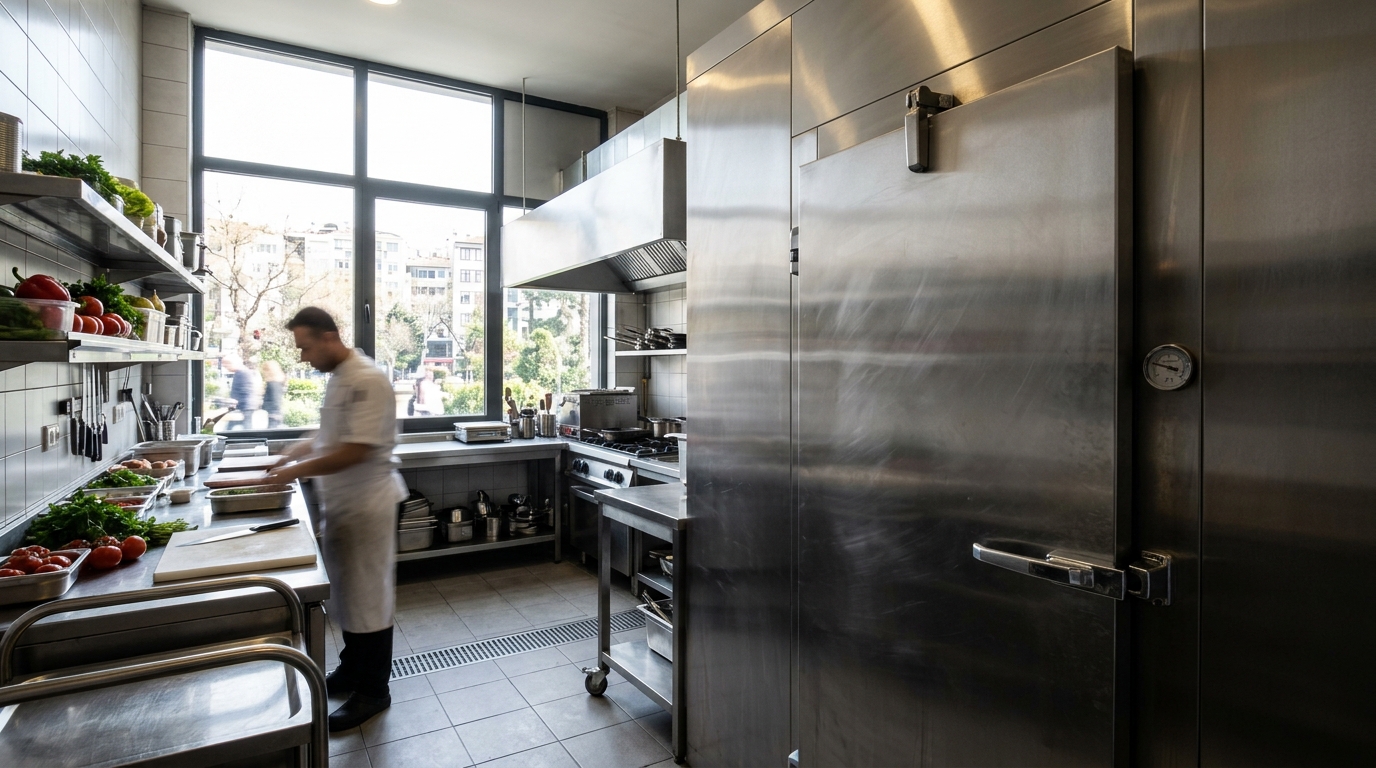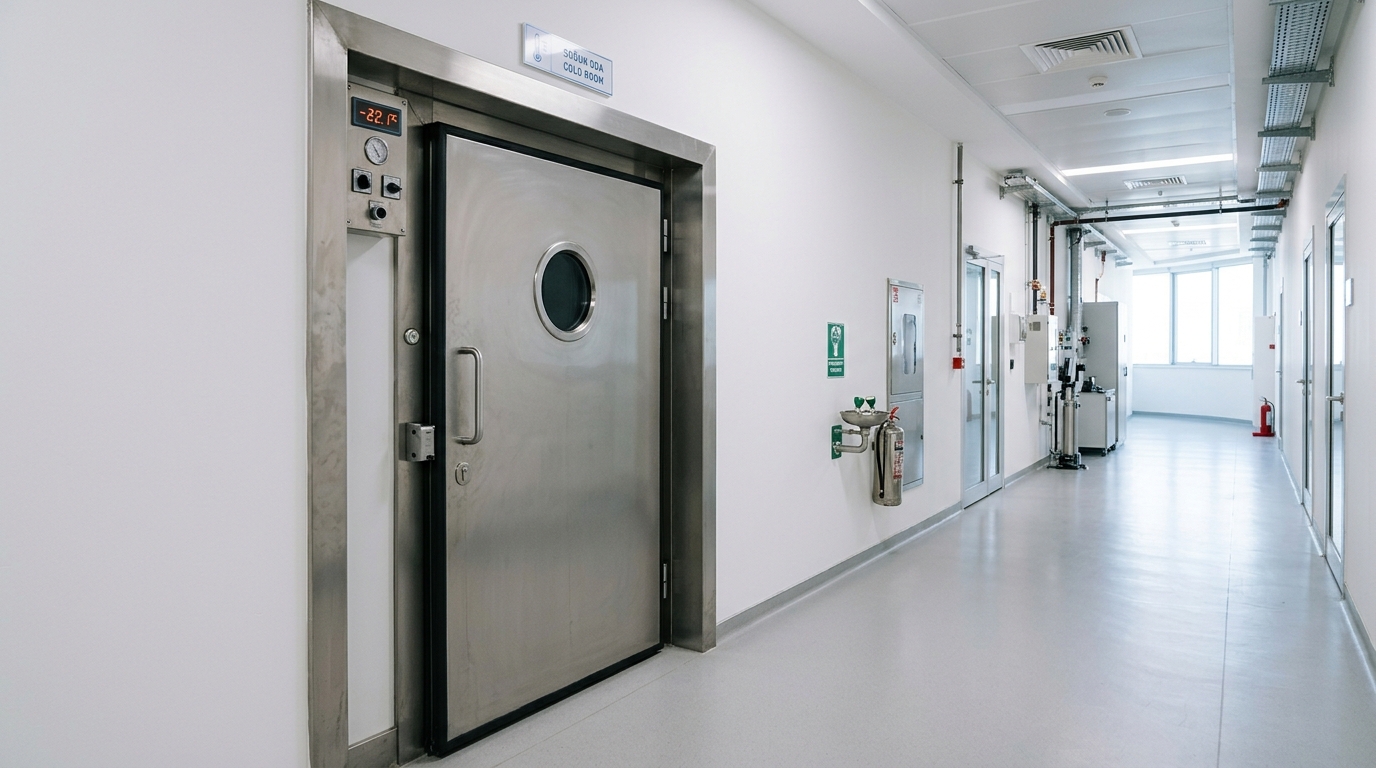
The cold room door is the most frequently used passage between the inside and the outside, and most of the temperature loss happens there. A wrong door type, an undersized opening, or a damaged gasket can cause energy loss, frosting, and safety problems. This article explains how to choose the door type, how the door size relates to traffic, and why the safety hardware is critical.
Table Of Contents
- How Is The Door Type Selected?
- What Is The Relation Between Door Size And Traffic?
- Why Are The Gasket And Closing Mechanism Important?
- How Is Frosting Prevented?
- How Are Safety And Inside Release Ensured?
- Frequently Asked Questions
How Is The Door Type Selected?
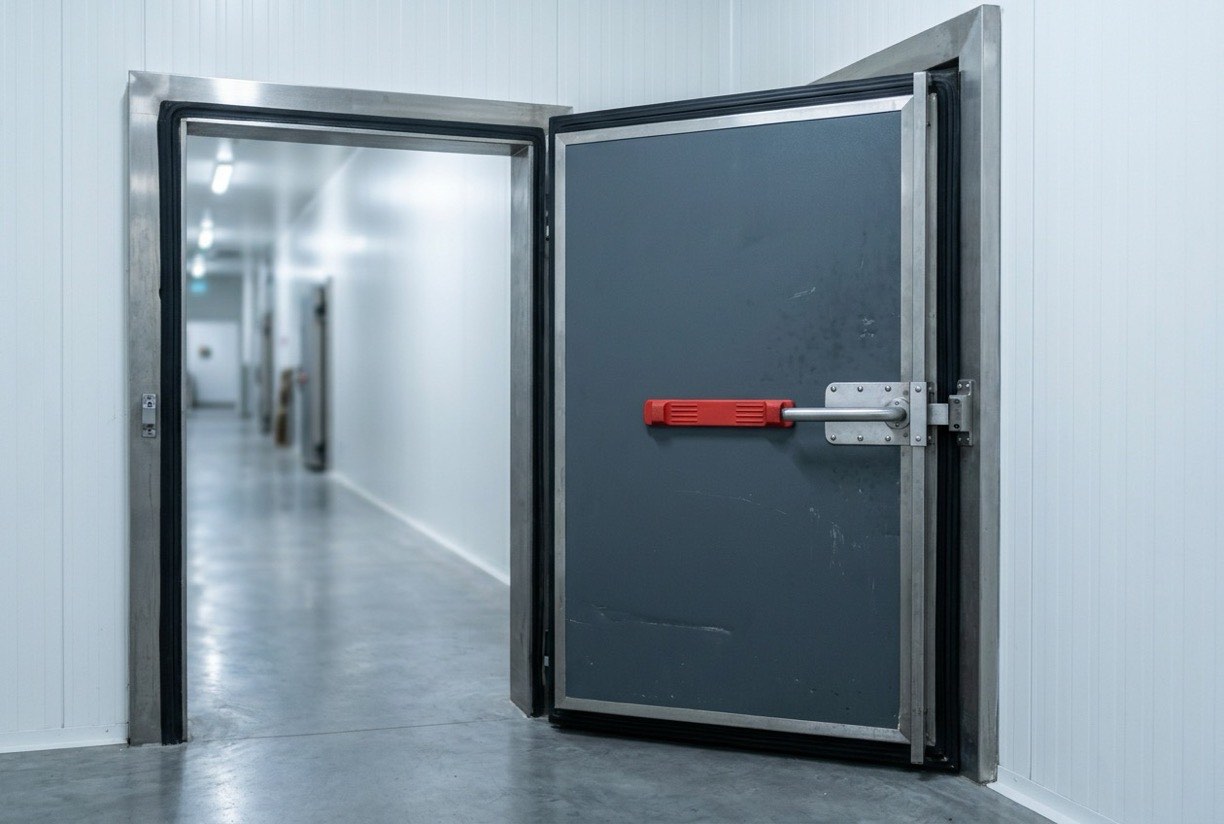
The common door types are hinged doors and sliding doors. Hinged doors are simpler and more common, but they need space in front when they open. Sliding doors save floor space, but they need the track and gasket system to be installed more carefully.
The choice should consider the layout of the room, the frequency of use, and the passage of handling equipment.
Door type selection starts with the purpose of the room. How often the door will be opened, which loads will pass through it, and how much free space exists around it are the first determinants of the most suitable type. The same type that works well in one warehouse may cause problems in another production area.
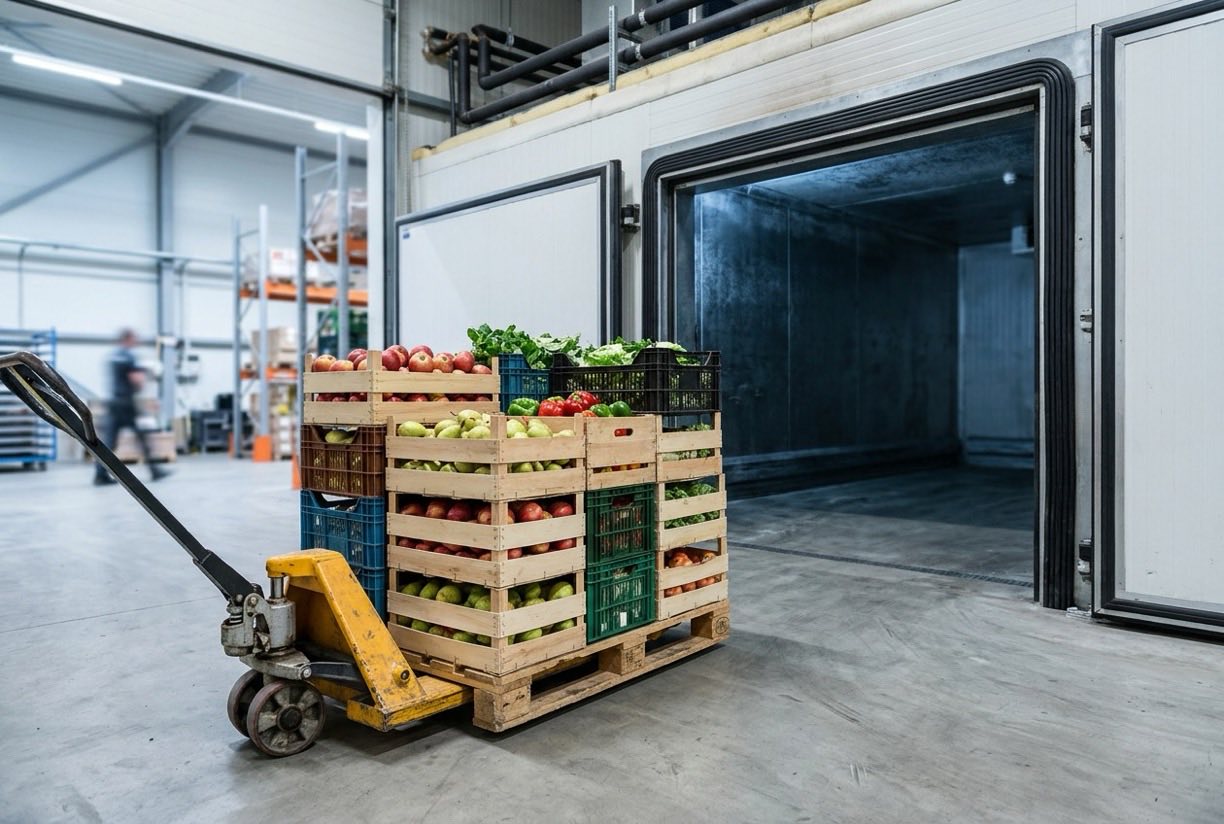
Hinged doors need enough free space on both the inside and the outside when the leaf opens. The direction of opening, the corridor width, and the passage of pallet trucks should be considered together. If the opening direction is chosen wrongly, the door is left open for long periods, causing energy loss and disruption to the workflow.
Sliding doors offer an advantage, particularly for facilities working in a limited space. However, the track system must be installed at the correct slope and on a sound floor. Dirt and ice that build up on the track can prevent the door from moving freely, so track maintenance should be planned with an easy-access design.
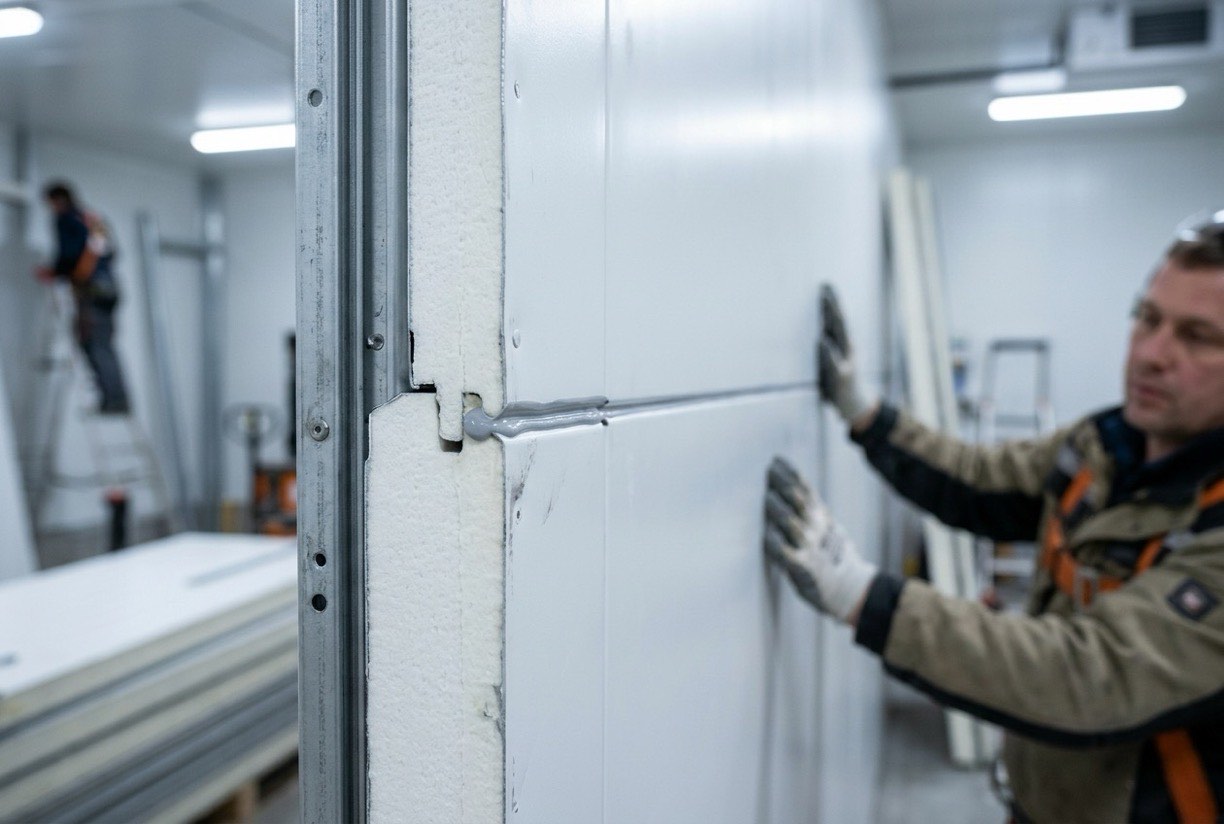
The material of the door leaf and its insulation thickness also affect the choice. The leaf must provide the same performance as the insulation of the room wall; otherwise the door becomes the weakest link in the room. The surface material should suit cleaning and hygiene requirements.
Maintenance access should also be considered when selecting the door type. Easy access to hinges, tracks and locks shortens the response time in the event of a fault. A door that is difficult to reach can turn a small problem into a major interruption.
What Is The Relation Between Door Size And Traffic?
The door size should be defined according to the comfortable passage of handling equipment and products. An oversized door can increase the time it stays open and the entry of warm air. A small door slows down the workflow and can cause the door to be opened more often.
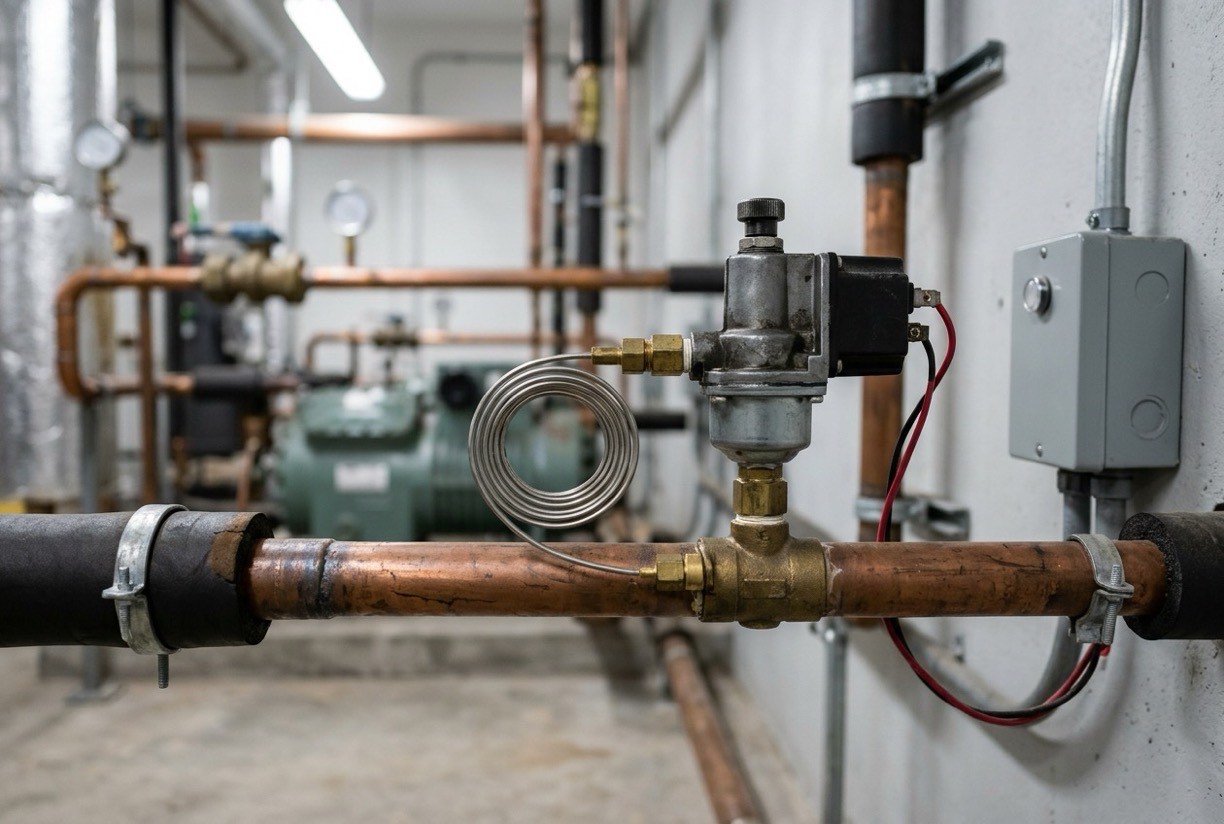
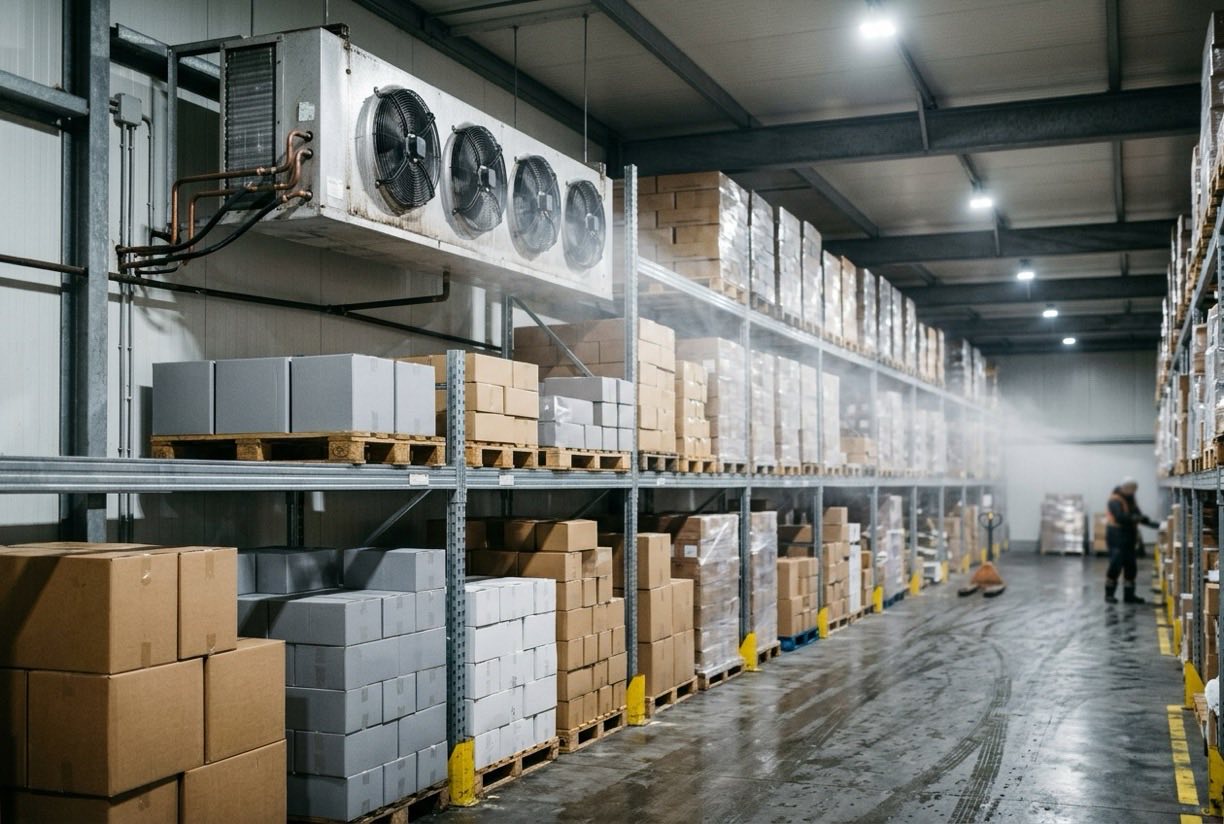
Door traffic directly affects the load on the evaporator. For this reason, the door choice should be evaluated together with the evaporator and insulation decisions.
Door size is related not only to the comfort of passage but also to the heat load of the room. When a large door stays open, the amount of warm and humid air entering from outside increases. The door should therefore be chosen at the smallest size the need requires, without compromising working safety.
The passage dimensions of the products and handling equipment set the minimum door size. Pallet trucks, forklifts and trolleys need clearance when passing through the door. A door chosen without calculating this clearance may later need to be replaced.
The intensity of door traffic is related not only to size but also to the speed of opening. Doors that open and close quickly shorten the time they stay open and reduce warm air entry. The door type and closing speed should therefore be evaluated together with the traffic intensity.
The daily working pattern of the facility also shapes door traffic. Shift changes, dispatch times and production peaks determine the periods when the door is opened most. Knowing these periods shows where and when additional measures should be applied.
Door traffic directly affects the load on the evaporator, so the door choice should be considered together with the evaporator and insulation decisions. The extra load from a frequently opened door can leave the evaporator capacity insufficient. This effect should be taken into account at the design stage.
Door size should also consider future capacity increases. If product variety or production volume is set to grow, a door that seems adequate today may become a bottleneck in the near future. A flexible plan reduces this risk.
Why Are The Gasket And Closing Mechanism Important?
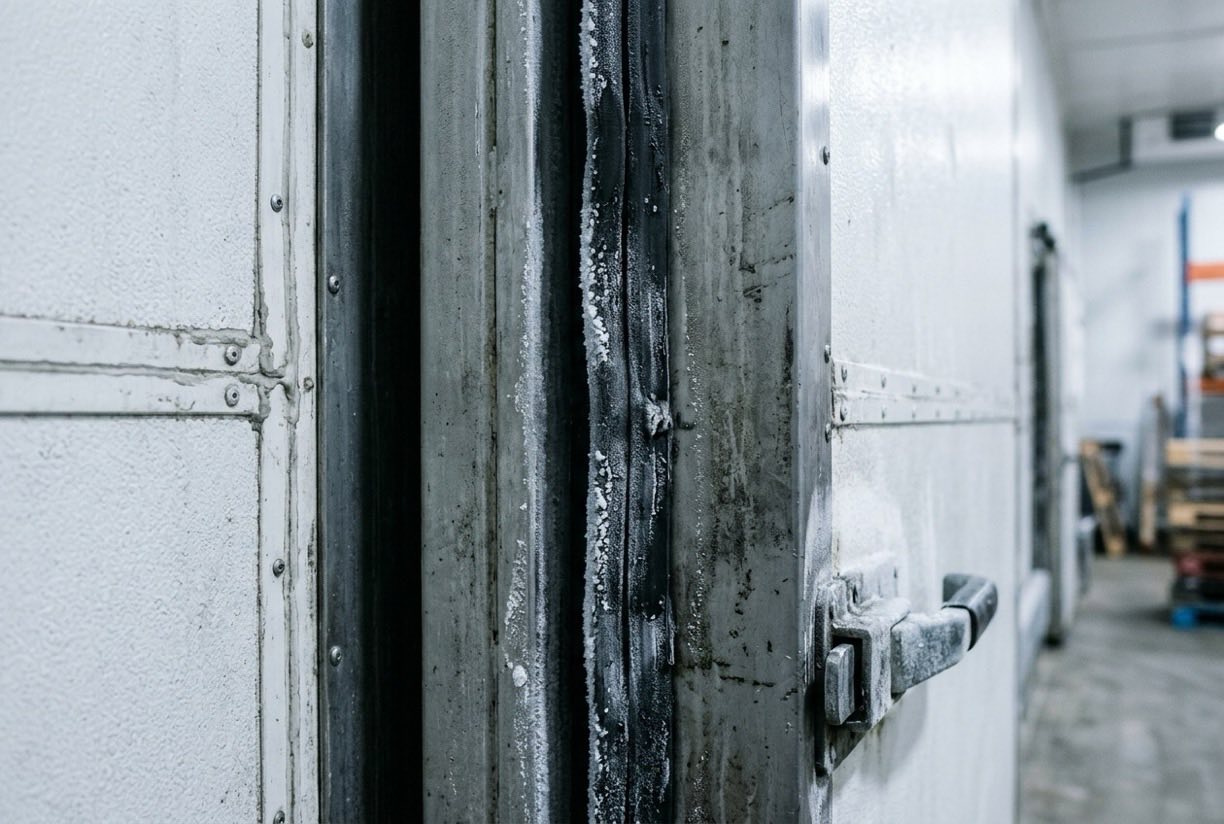
The door gasket compresses when the door closes and stops the air passage. If the gasket wears, deforms, or becomes dirty, a leak forms, and this leak returns as frosting and energy loss. The closing mechanism should be adjusted to press the gasket with adequate force.
The gasket replacement frequency and inspection plan should be part of the maintenance programme.
The door gasket is the most important element that cuts off air exchange between the cold room and the outside. When the gasket is intact, the door forms an airtight surface when closed. When the gasket is damaged, the warm air entering the room causes both energy loss and condensation on the surfaces.
The gasket material should be chosen for its resistance to temperature and its flexibility. A gasket that hardens or cracks in cold conditions loses its effect within a short time. When selecting the material, the minimum temperature of the room and resistance to cleaning chemicals should also be considered.
The closing mechanism must be adjusted so that the gasket is pressed with adequate force. When the hinges, the lock and the handle work together, the door should apply an even pressure along the frame. If there is not enough pressure at one corner, a leak forms there, and that is often the last place where it is noticed.
Checking the gasket and the mechanism should be part of a regular maintenance plan. During inspection, signs of tearing, deformation and dirt on the gasket should be examined by eye, and the seal should be tested by feeling it after the door closes. This check ensures that problems are noticed before they grow.
The gasket replacement frequency and inspection plan should be part of the maintenance programme. Doors that are opened frequently need a shorter replacement interval, and the date of each replacement should be recorded. Such records show how long a gasket lasts and under which conditions it wears out earlier.
Scratches on the door surface and on the gasket seating face can also cause leaks. Hard tools used during cleaning may damage the gasket groove. Cleaning instructions should be prepared so that they protect these surfaces.
How Is Frosting Prevented?
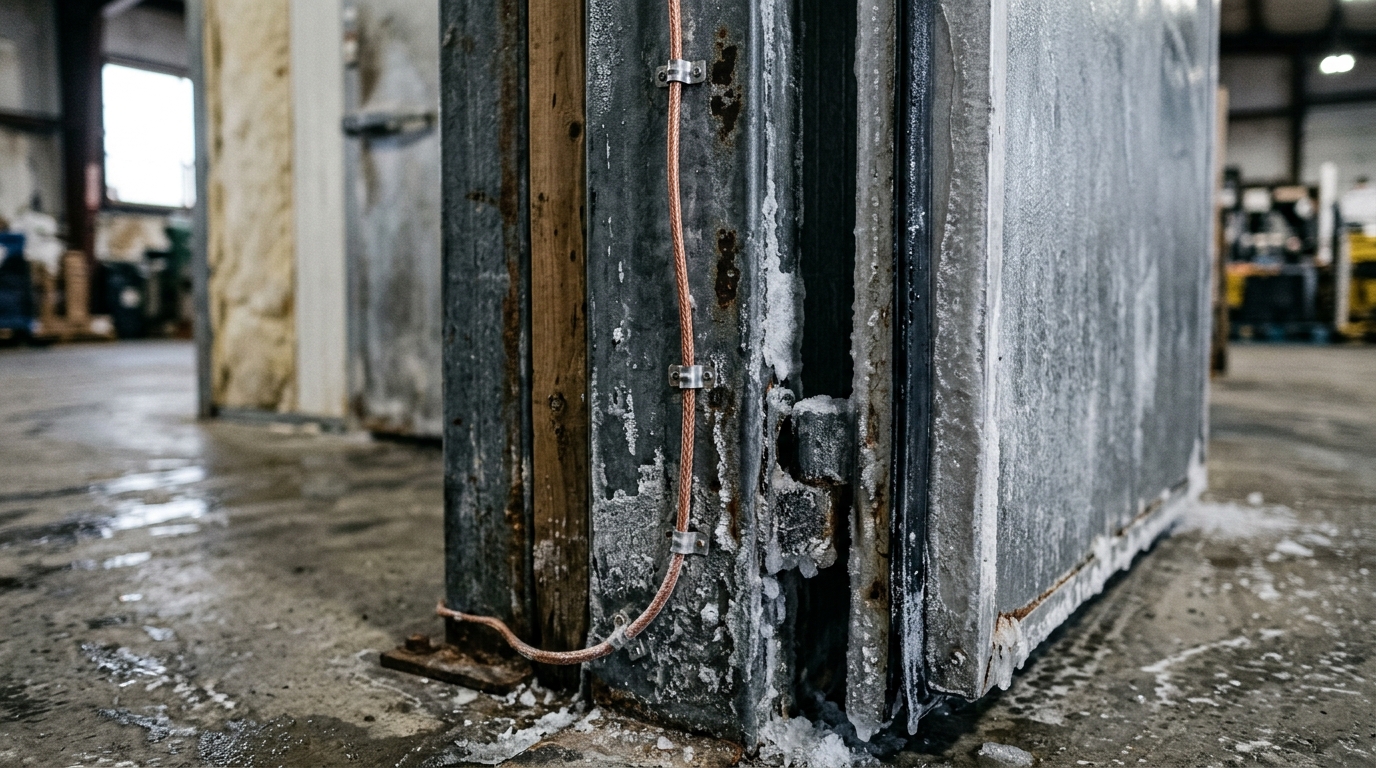
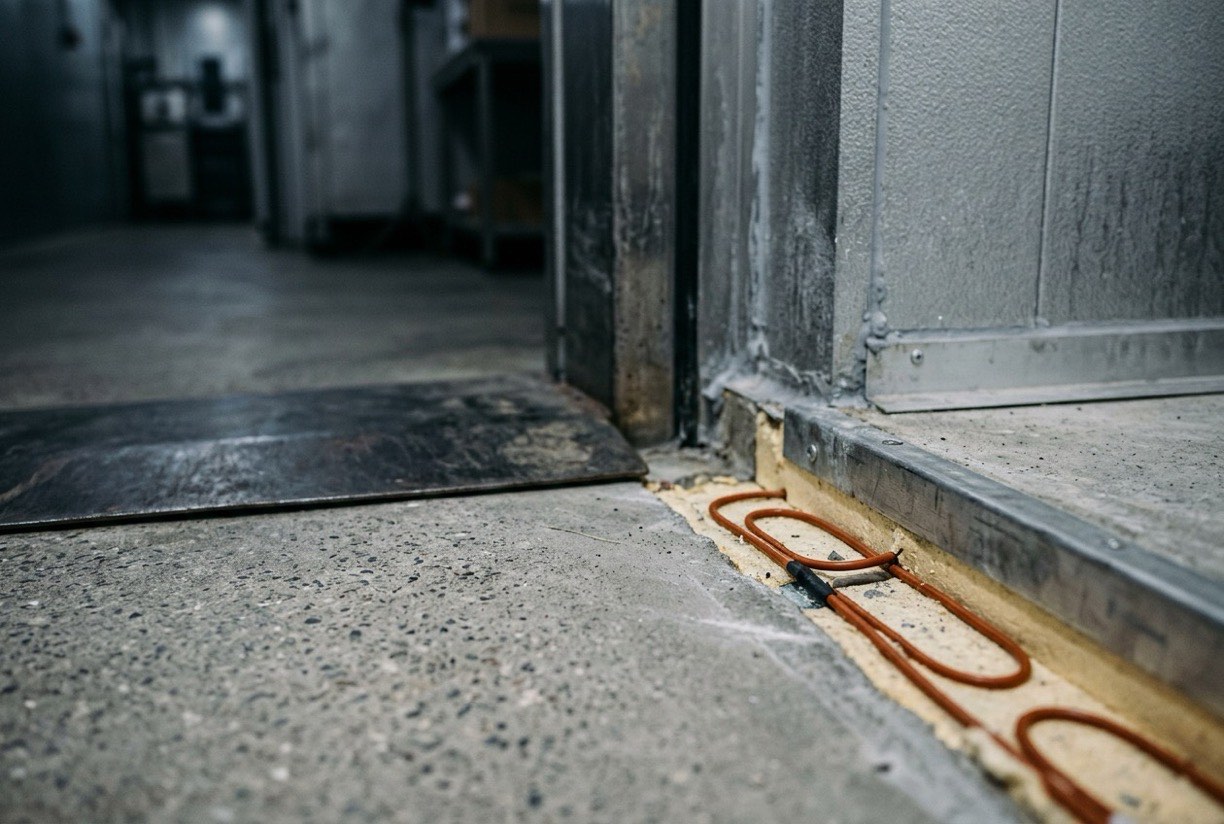
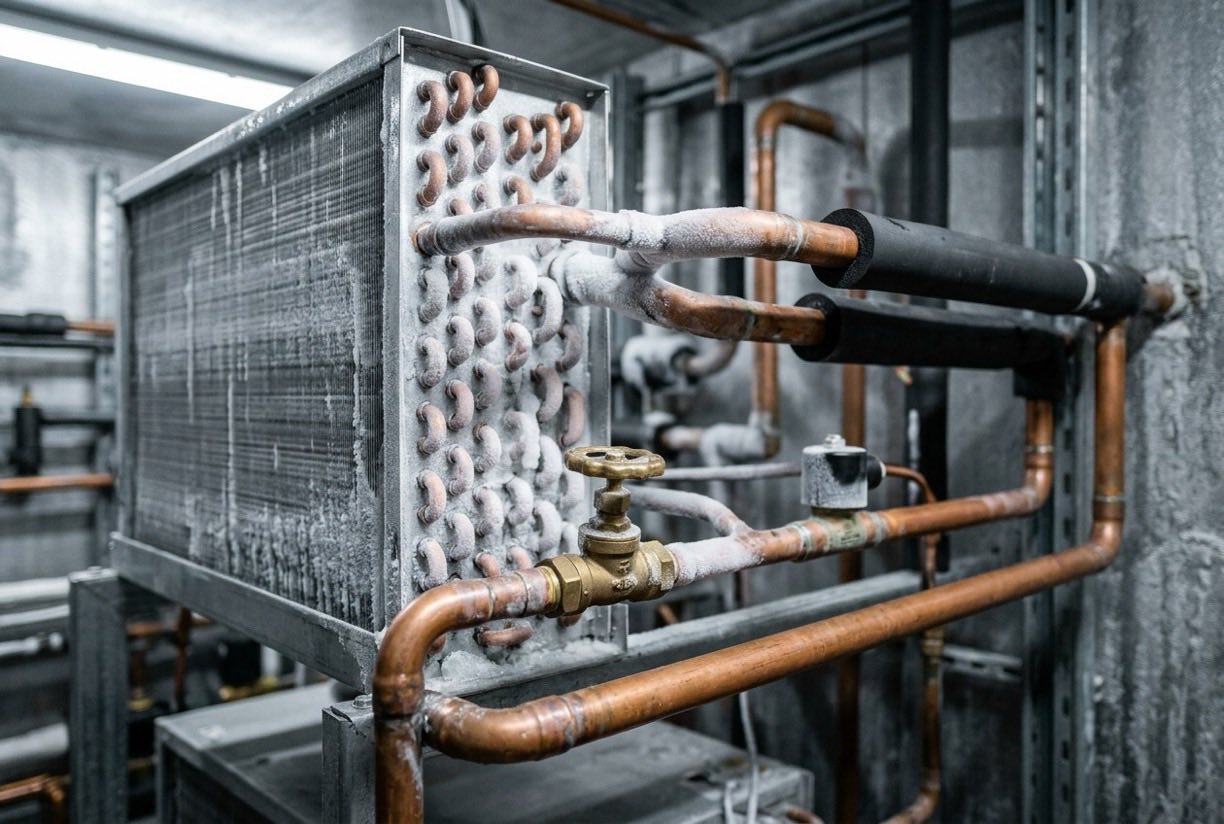
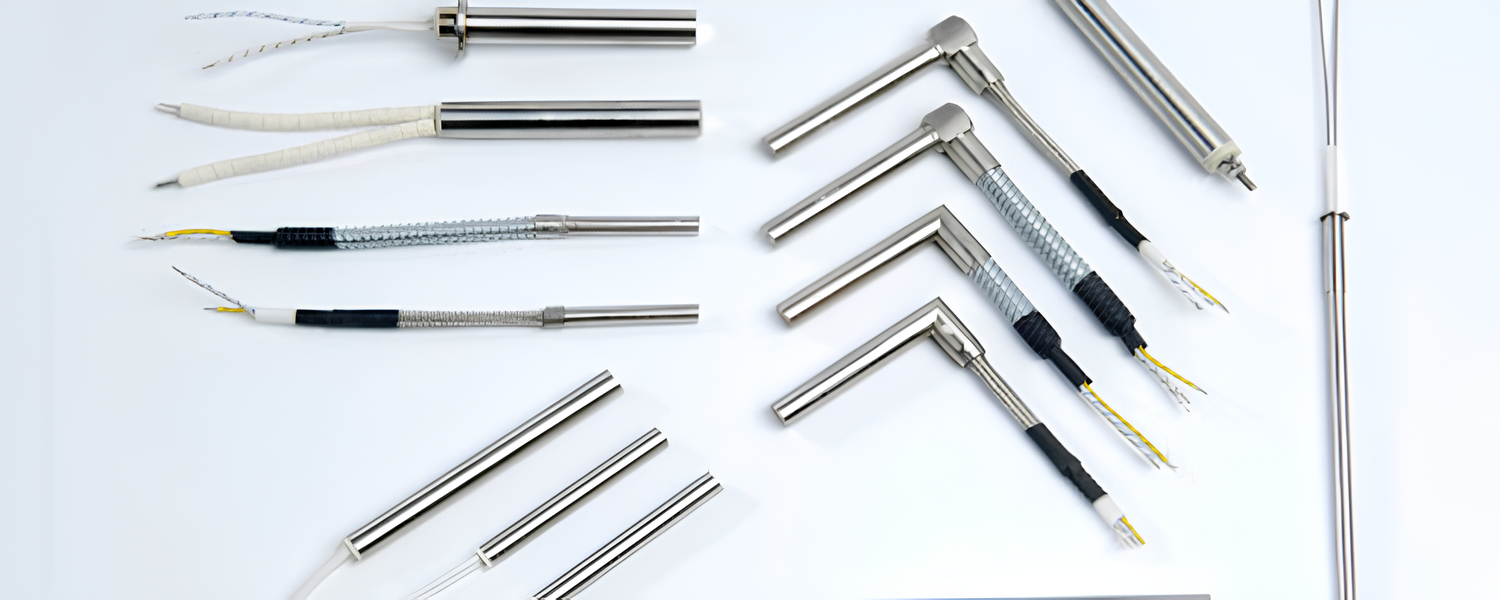
Frosting around the door forms when warm, humid air condenses on the door surface. As a countermeasure, heating elements can be used around the door, and thermal bridges between the door and the frame can be cut. Controlled operation of the heater prevents unnecessary energy use.
- Door frame heater: Limits condensation and frosting.
- Thermal bridge: No break in the insulation should be created between the door and the frame.
- Control: The heater should be set to operate only when needed.
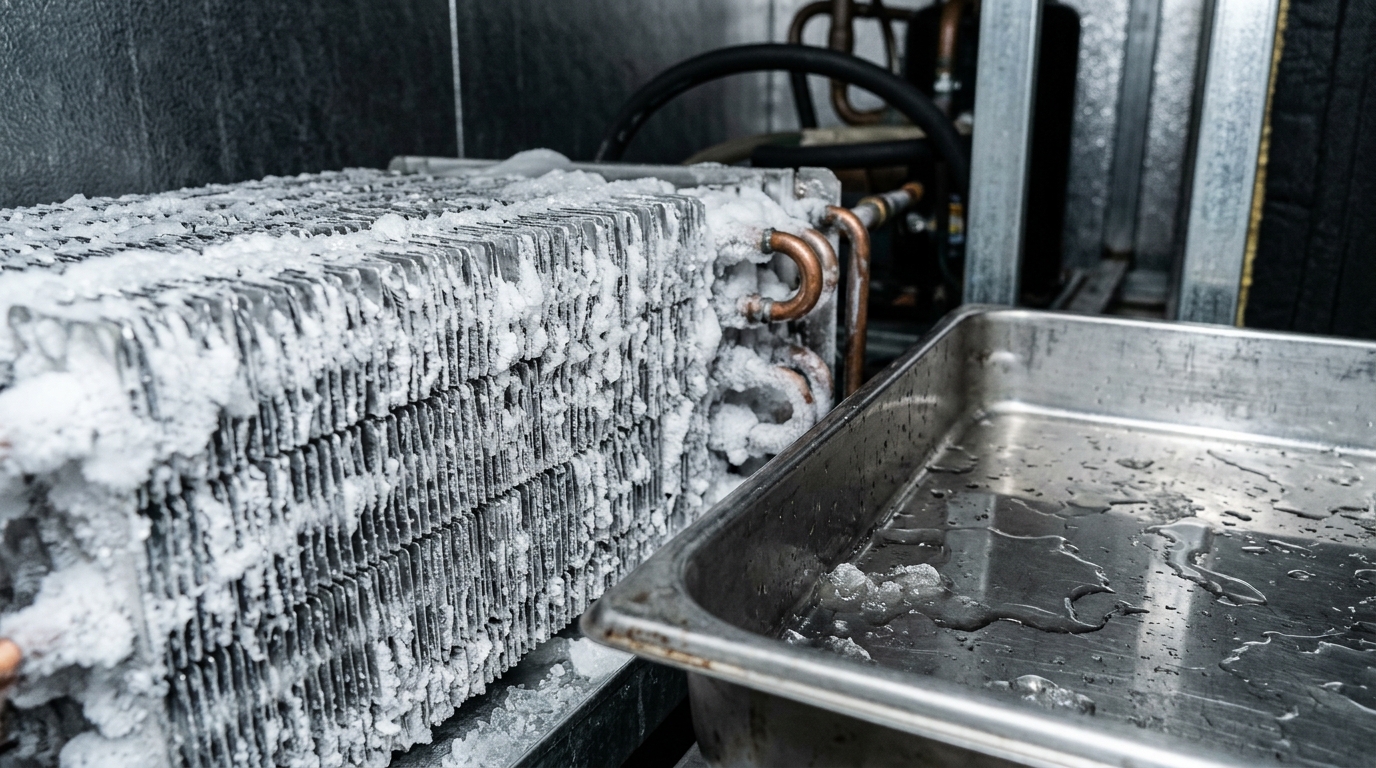
Frosting around the door forms when warm, humid air condenses and freezes on the cold door surface. It prevents the door from opening smoothly and can leave a permanent layer of ice around it. Preventing frost matters both for operating safety and for energy efficiency.
Heating elements keep the surface temperature of the door frame above the dew point and so prevent condensation. The heater's power should be chosen according to the room temperature and the moisture load. An oversized heater wastes energy and can create an unwanted heat source around the door.
Thermal bridges between the door and the frame must be cut. Cold bridges formed through metal fixings and frame profiles cause the surface to cool quickly. Keeping the insulation continuous reduces both frosting and energy loss.
Controlled operation of the heater prevents unnecessary energy use. Rather than being left on continuously, the heater should be run according to the surface temperature and the humidity condition. A timed or sensor-based control is the most practical way to achieve this balance.
Frost is not only a comfort issue. It also prevents the door from closing properly and puts strain on the door mechanism. Strained hinge and lock parts can break over time. When ice build-up is seen, treating only the surface is not enough.
How Are Safety And Inside Release Ensured?
For a person locked inside a cold room, a handle that can be opened from the inside is vital. For this reason, cold room doors should have an inside release mechanism and an alarm or illuminated warning. An arrangement that allows the person inside to communicate with the outside when the door is locked should also be considered.
Safety hardware should be selected taking into account local regulations and occupational safety requirements. The Günay Soğutma technical team can support the evaluation of door and evaporator selection together, based on your project data.
When a worker is locked inside a cold room, being able to get out is vital. The handle that opens from the inside must therefore be an indispensable part of the room design. The handle should be designed so that it can be easily noticed and operated even with gloves on.
Besides the inside release mechanism, the room should have an alarm or an illuminated warning. The alarm should be able to transmit to a place outside the room, and its sound should be noticeable at the noise level of the room. Regular testing of the warning system ensures it works in an emergency.
An arrangement that allows the person inside to communicate with the outside when the door is locked should also be considered. A simple intercom or call button can save a life in a critical moment. This arrangement should be clearly explained in the room's operating instructions.
Emergency drills help staff remember the procedure. A person who has only read the instructions may hesitate in a real emergency, while a person who has practised the release will act faster. Keeping training records also documents that the arrangement is actually known to the staff.
Frequently Asked Questions
Should a hinged or sliding door be preferred?
The space, the frequency of use, and the handling equipment are the deciding factors. A hinged door is common and simple; a sliding door gives an advantage in a limited space.
Is additional heating needed for a cold room door?
In environments with a freezing risk, especially in rooms operating below zero, heating around the door may be needed. In rooms at positive temperature the need can be lower.
How often should the door gasket be checked?
It should be checked at regular intervals according to the intensity of use. For doors that are opened frequently, the checking frequency should be increased.
Which way should the door swing?
The opening direction determines which area the door occupies during use and which equipment can pass the corridor. If the wrong direction is chosen, the door cannot open fully or the handling equipment gets stuck. The opening direction should therefore be fixed together with the layout plan.
How should the door lock be selected?
The lock should be operable from the inside and designed according to the need for access from outside. Options such as key, card or code should be decided by balancing security against ease of use. The ability of the lock to work in the cold must also be checked.
How should the door insulation match the wall insulation?
The door leaf should provide an insulation performance similar to the wall insulation of the room. The connection between the leaf and the wall should be designed so that it does not create a thermal bridge. If this match is not achieved, the door becomes the weakest link in the room.