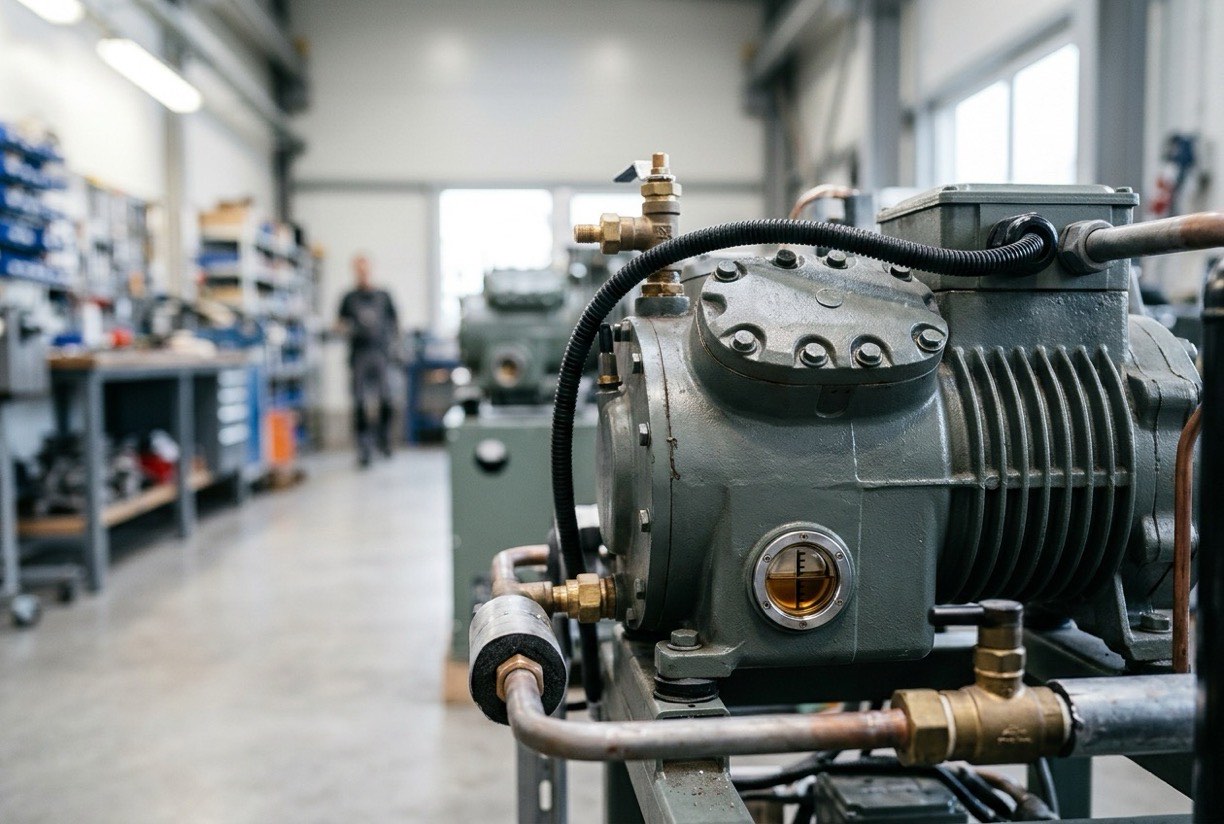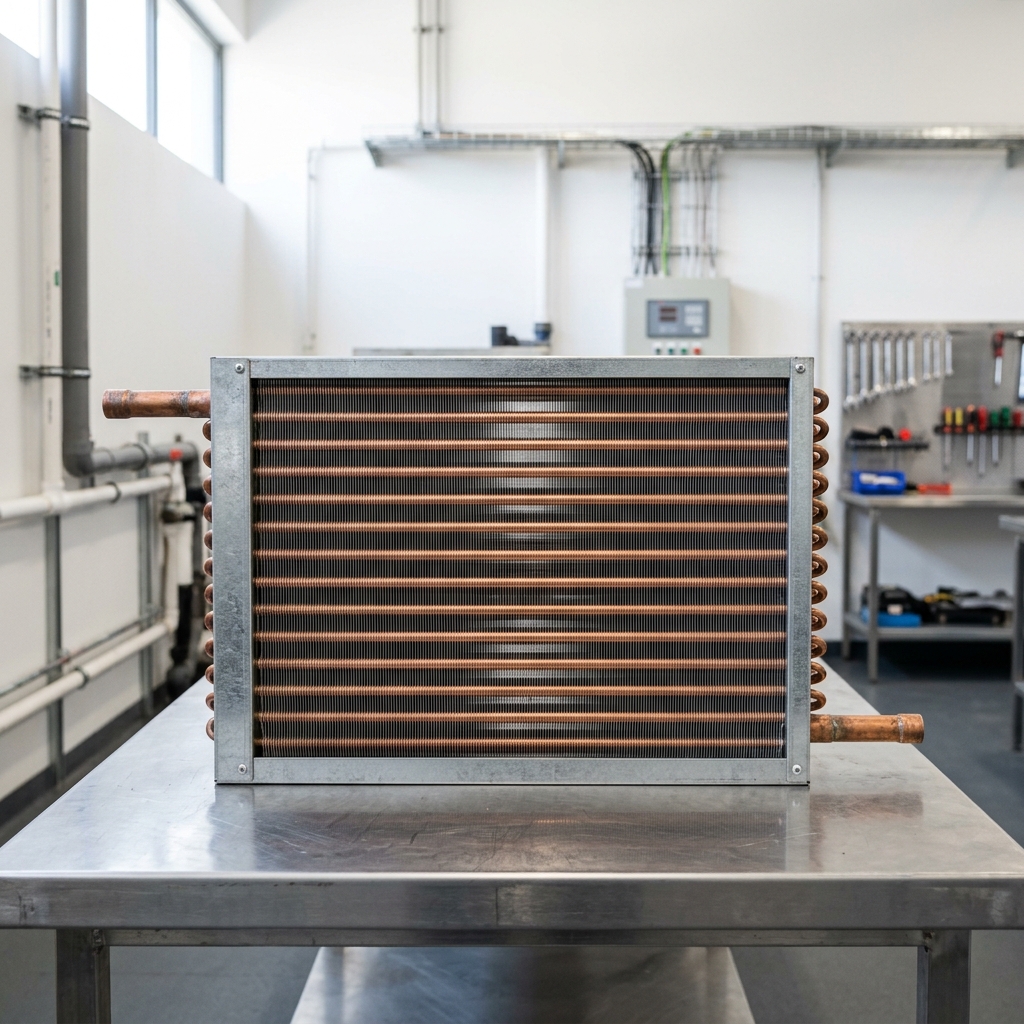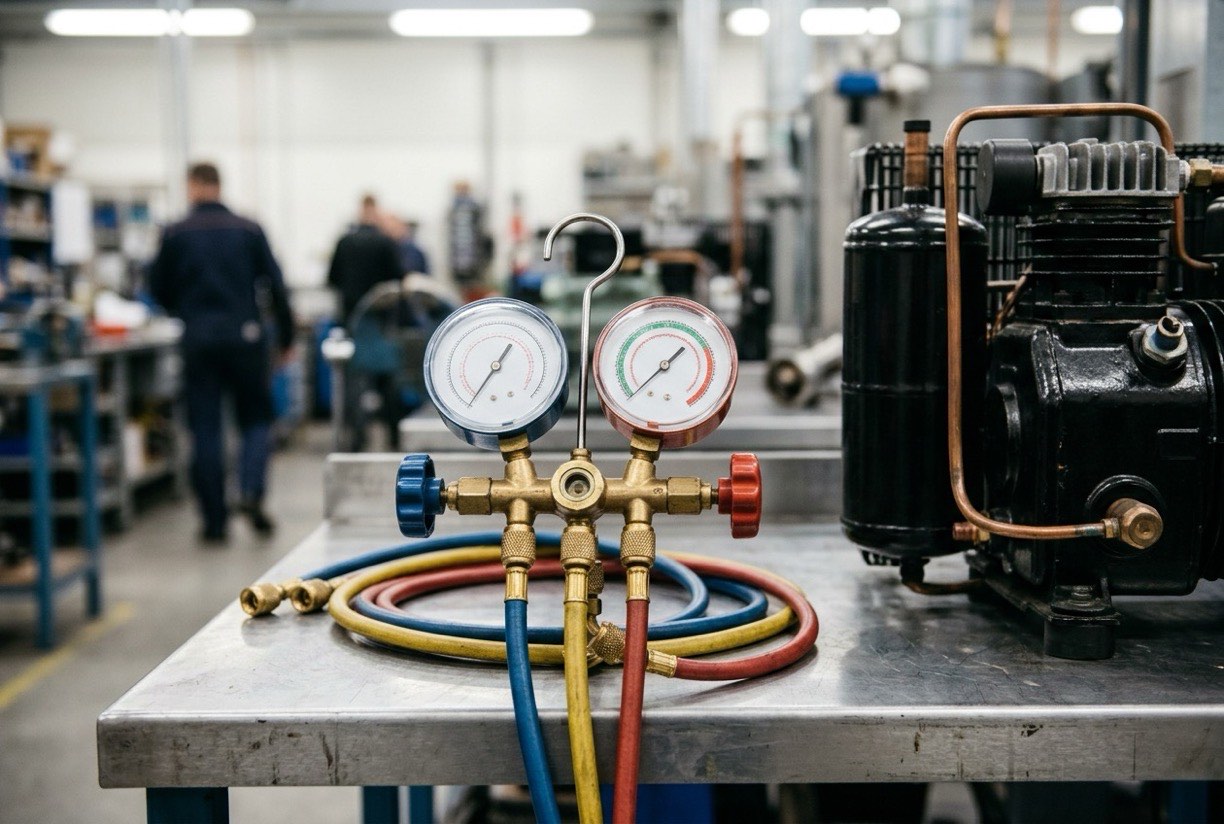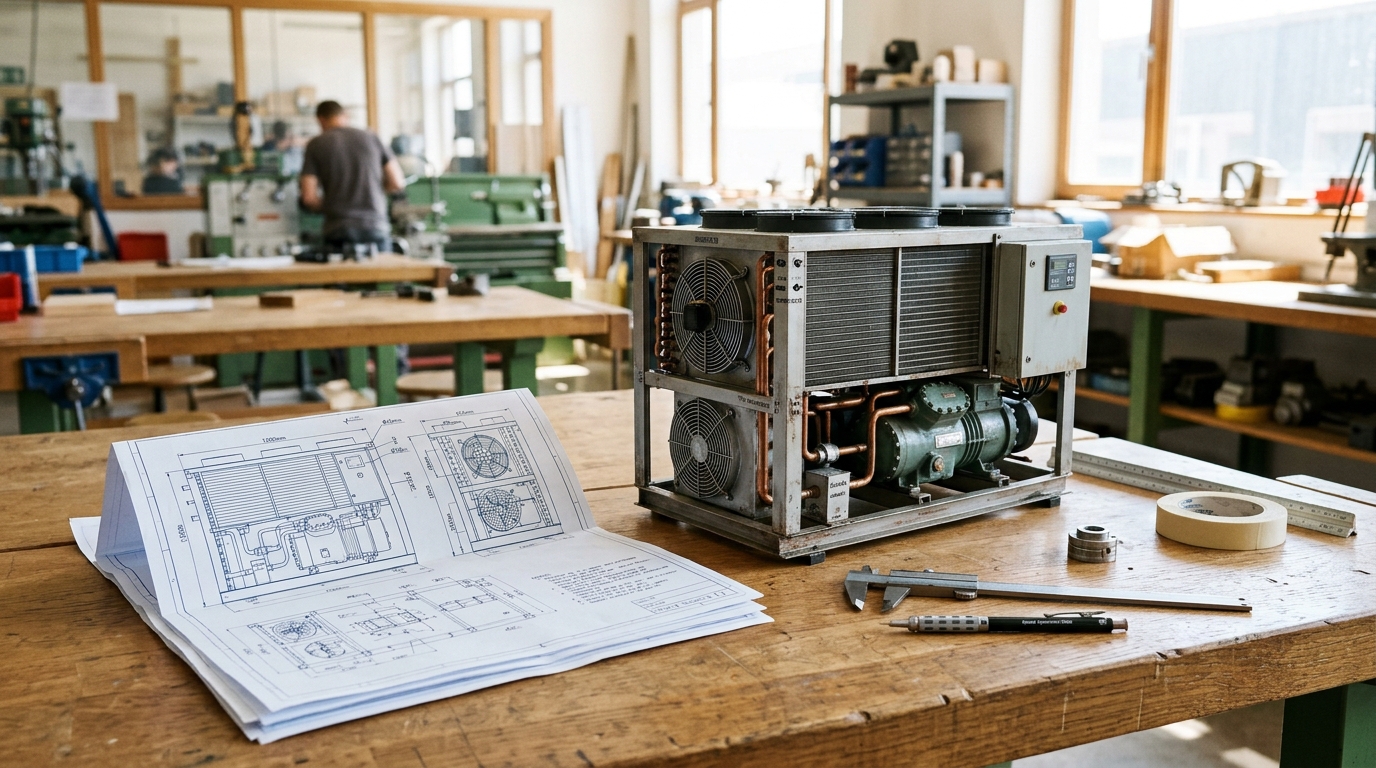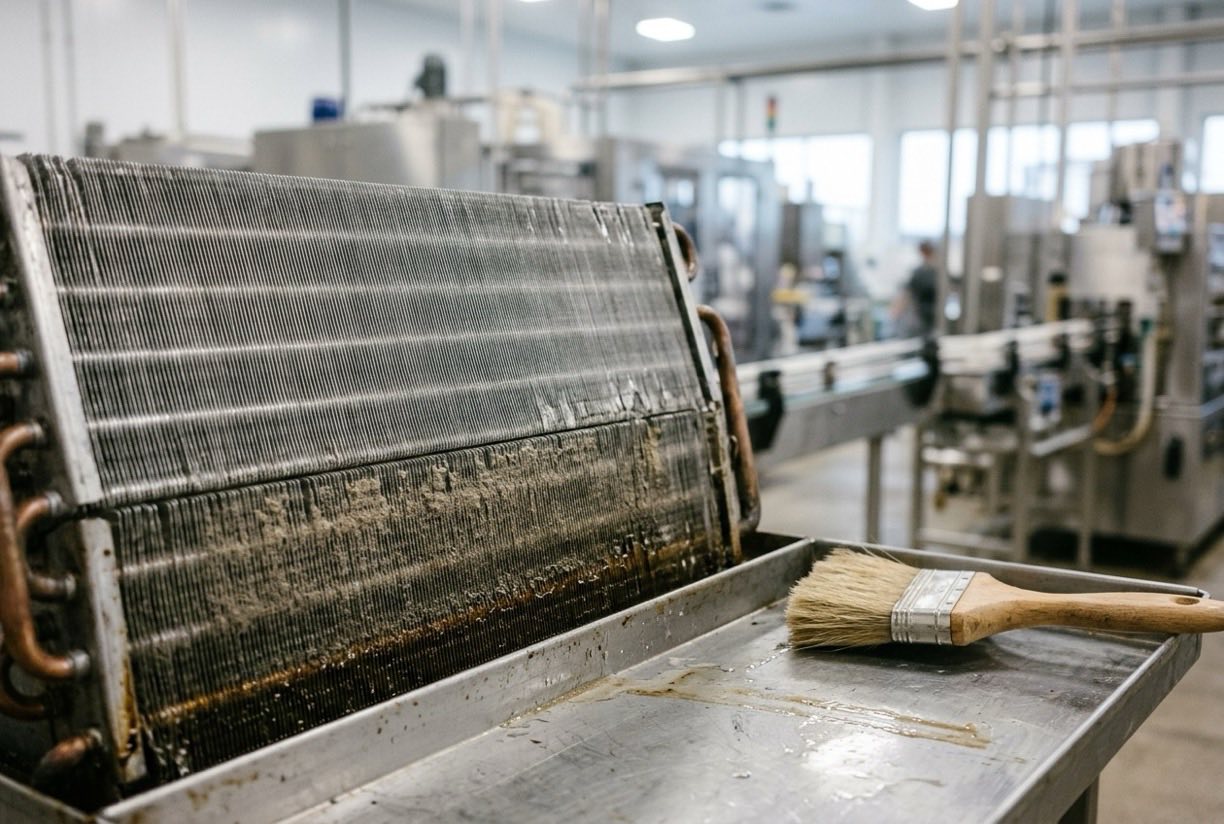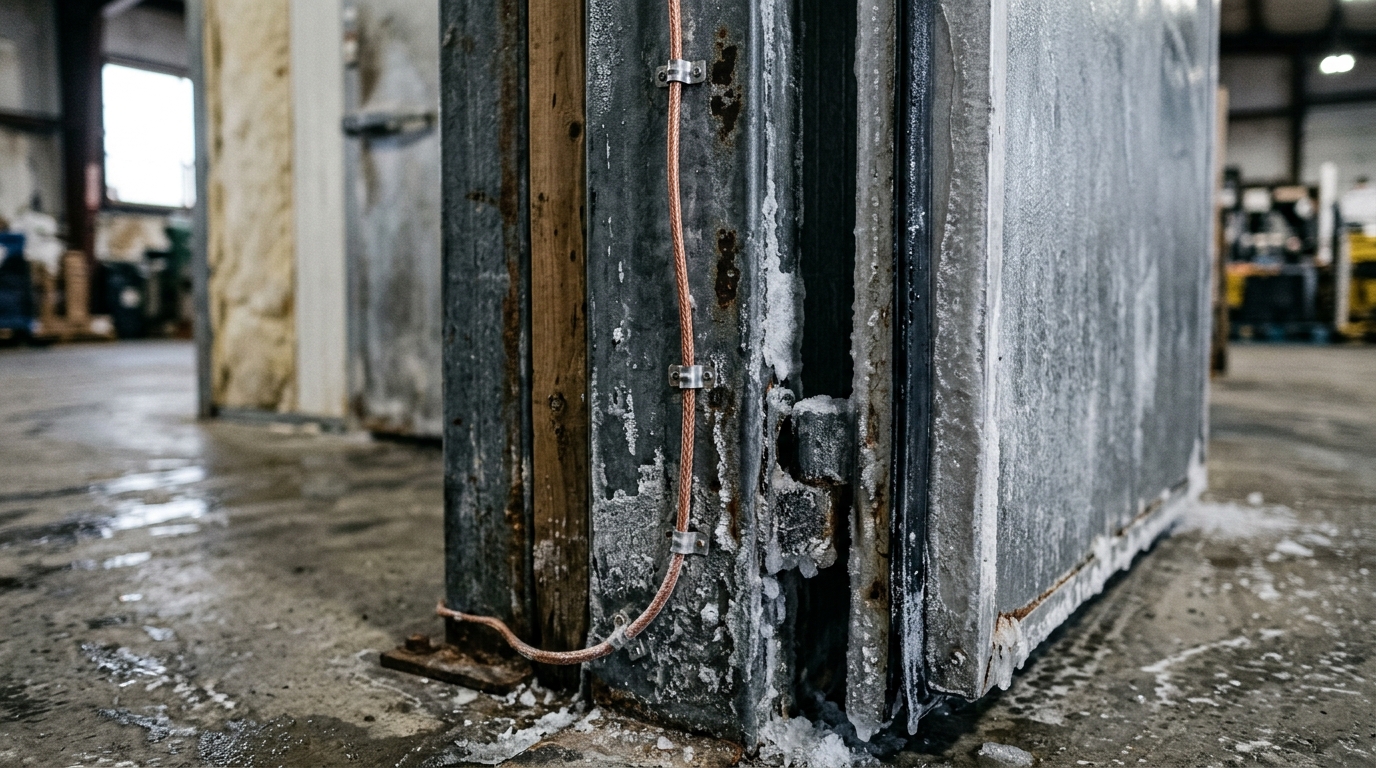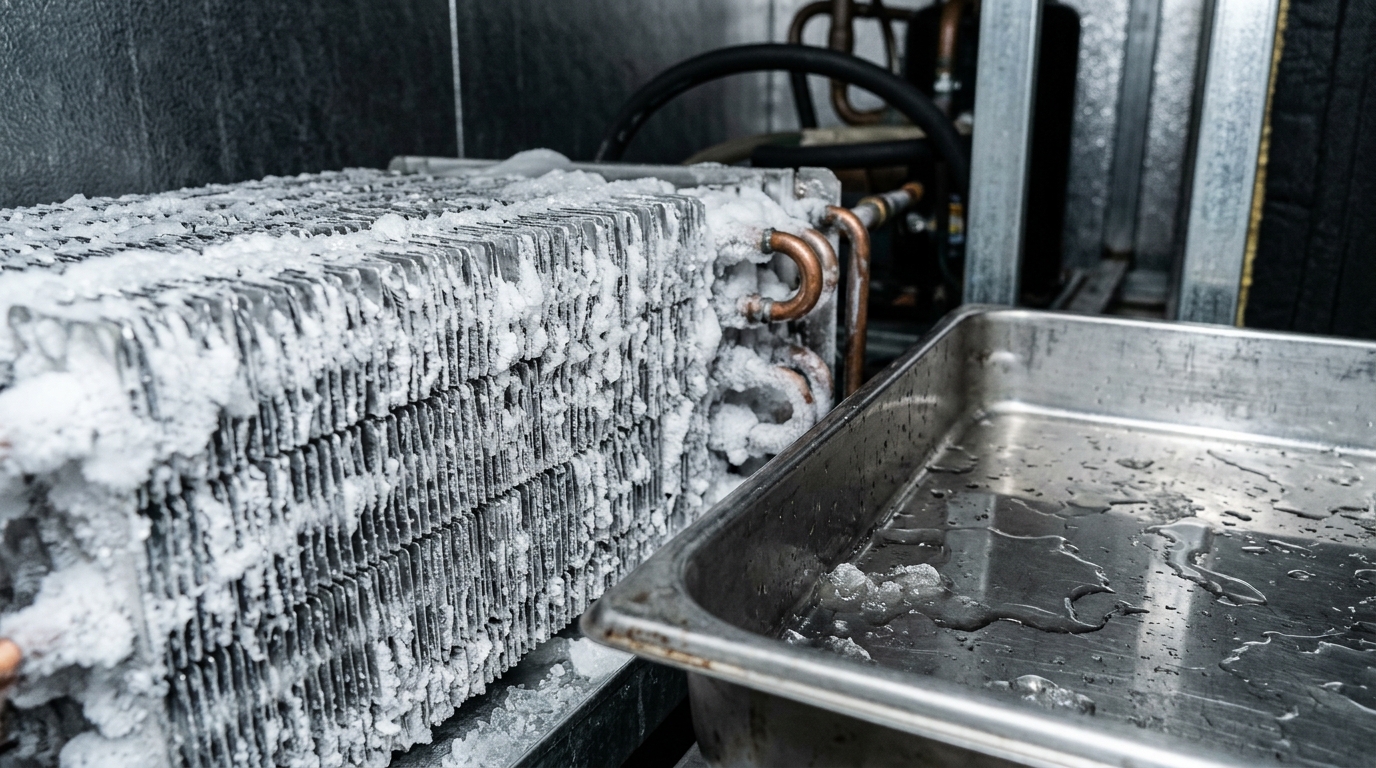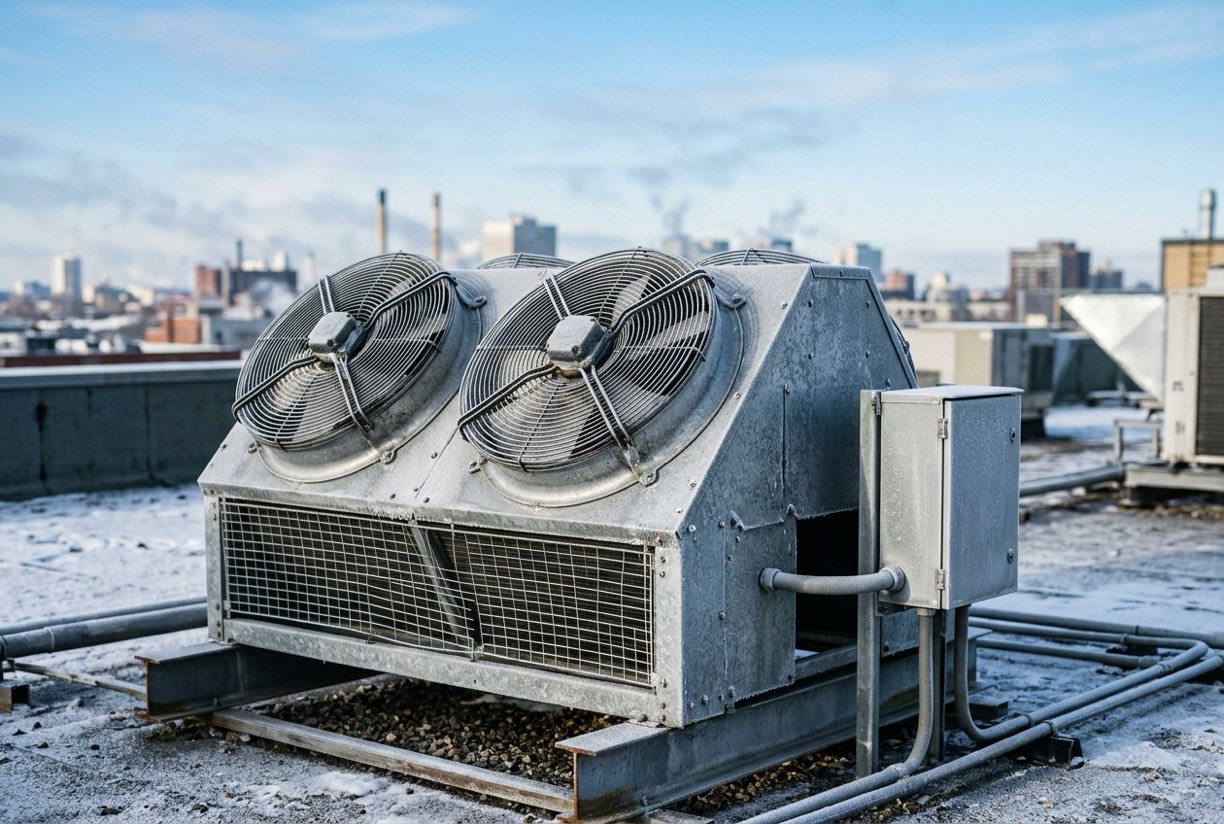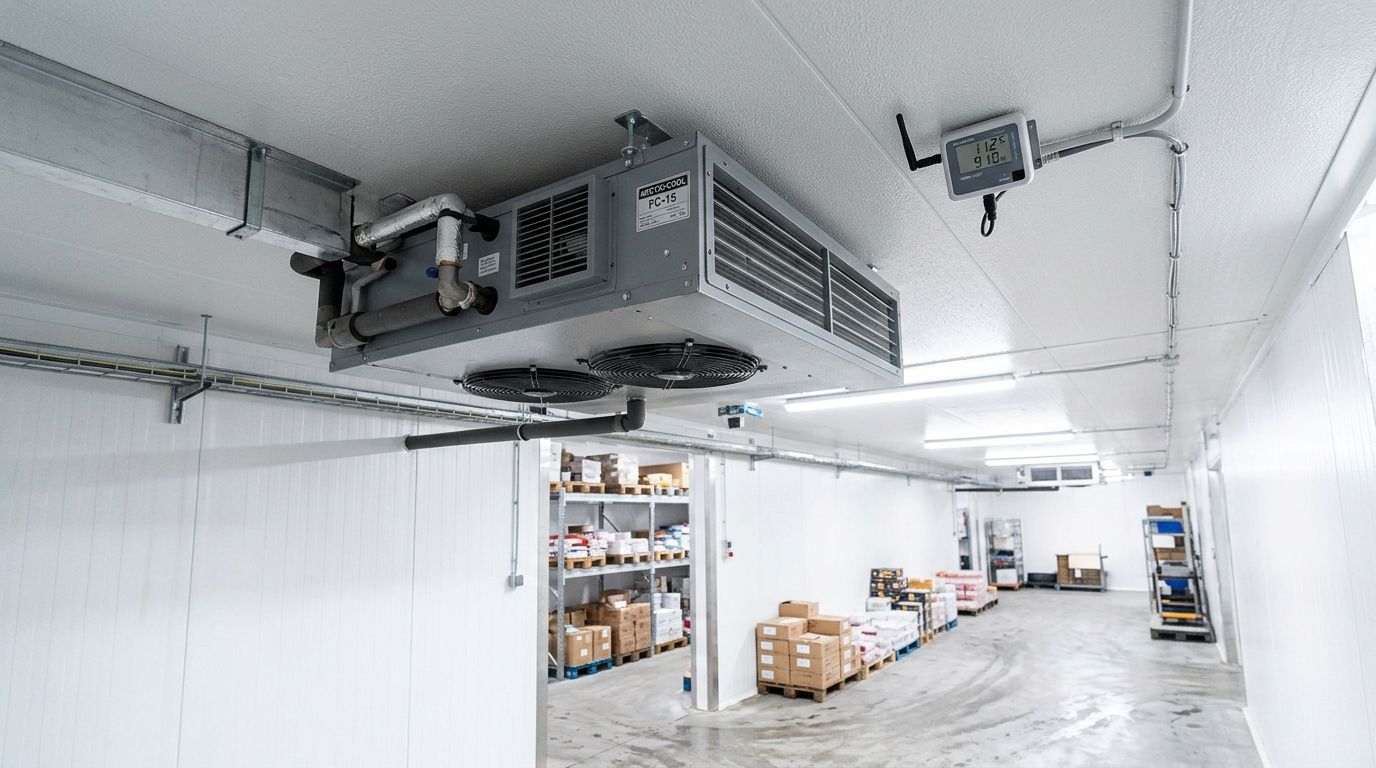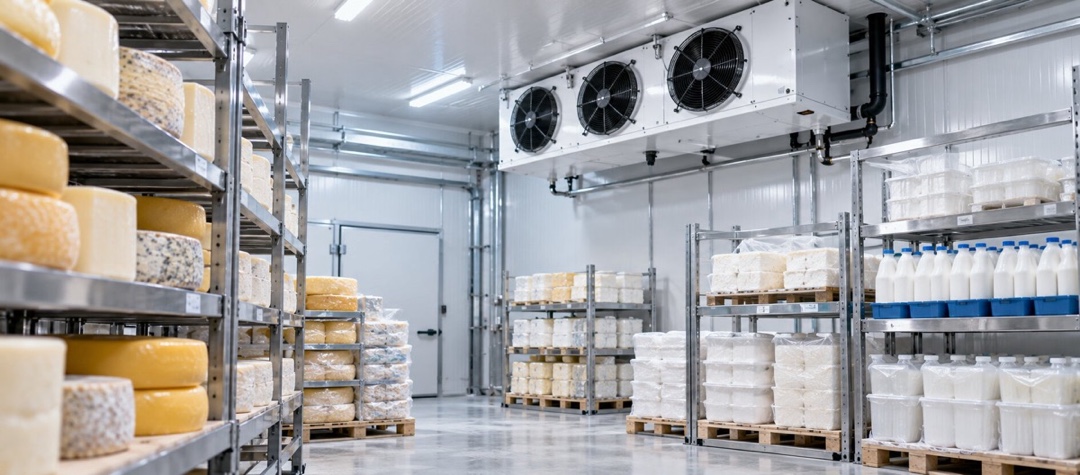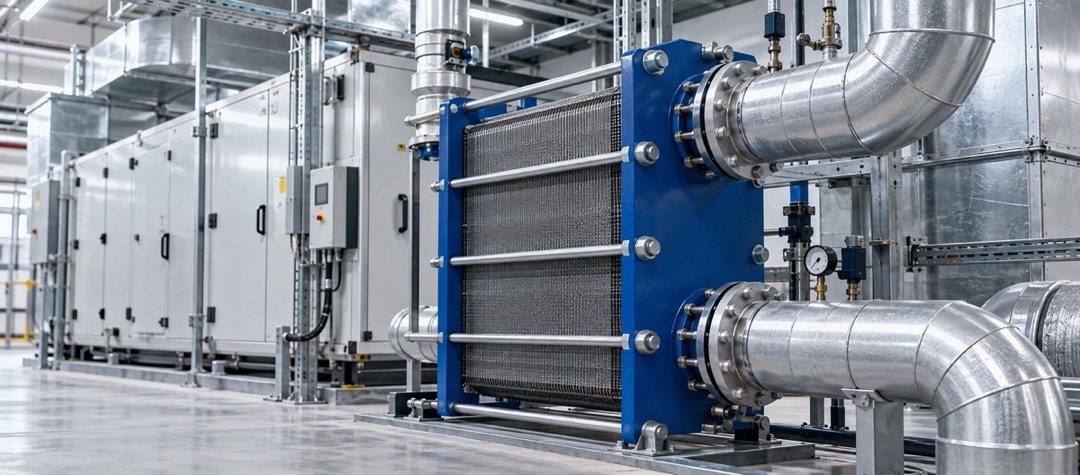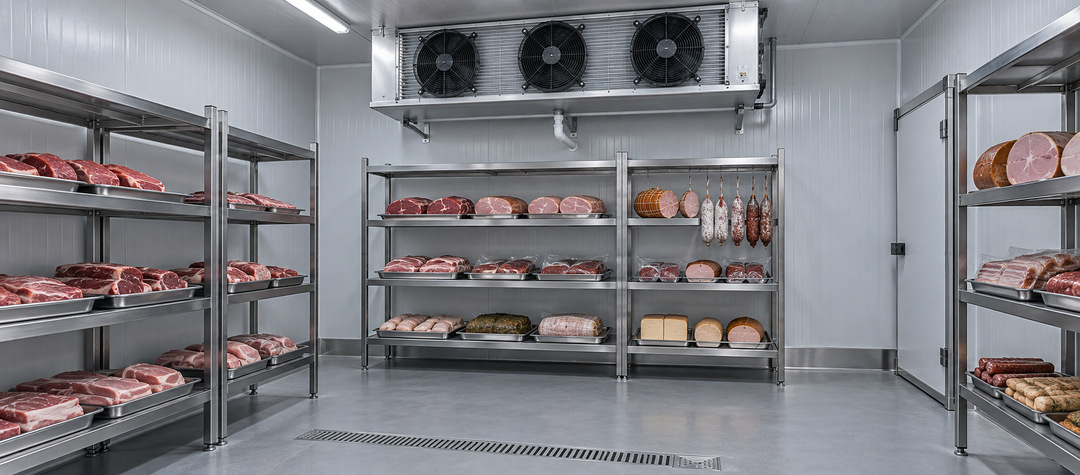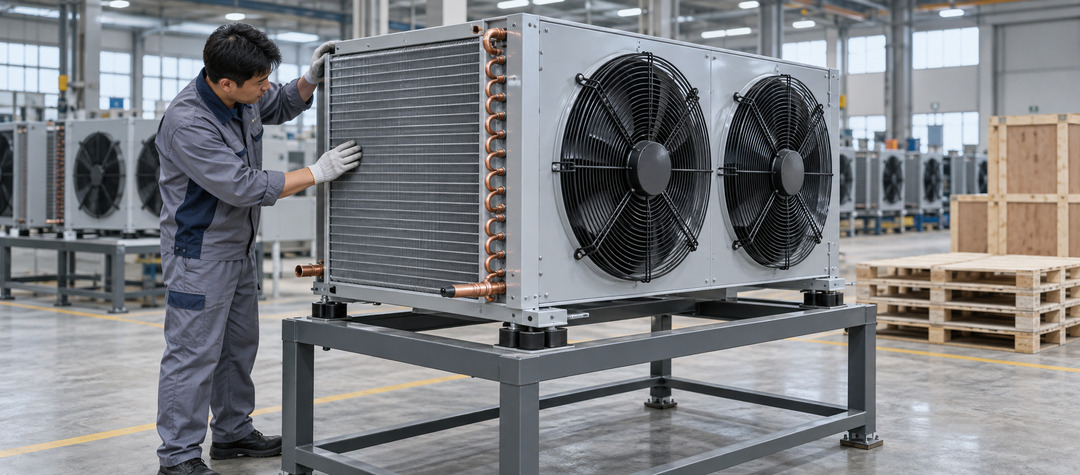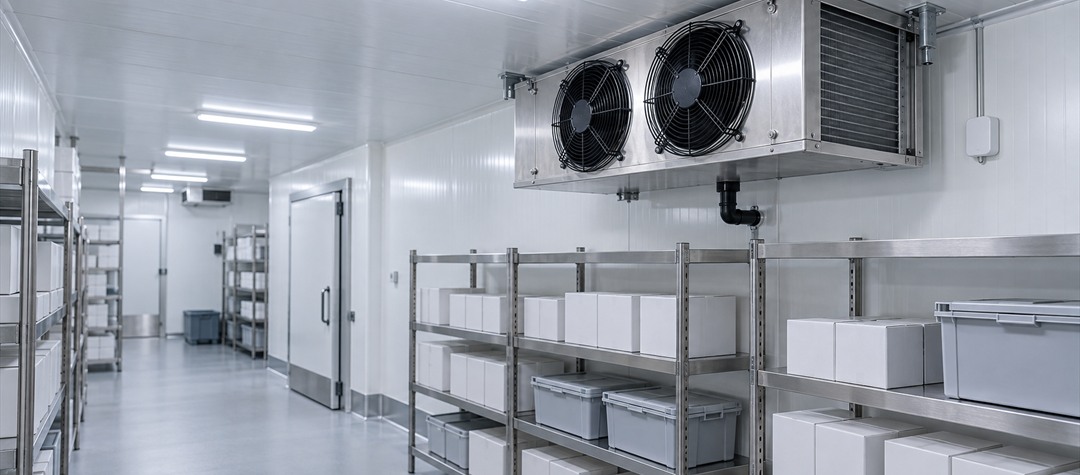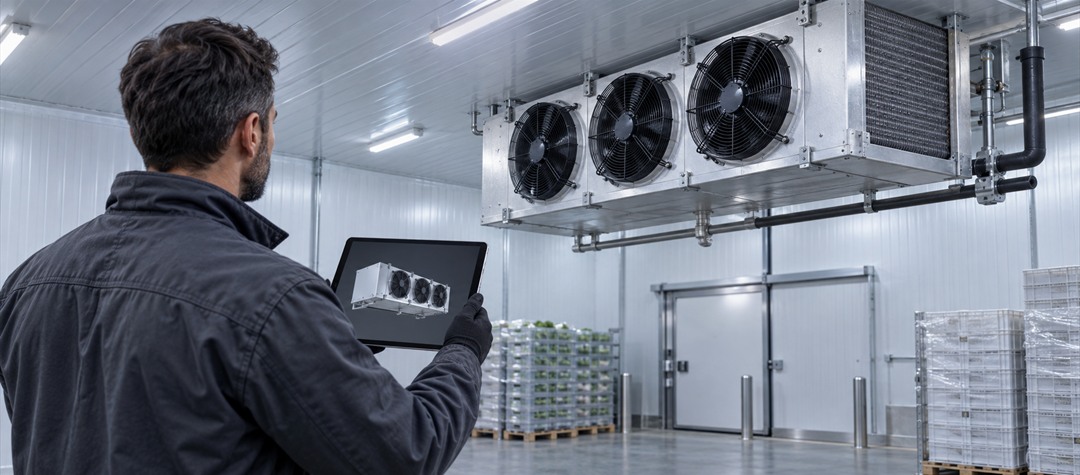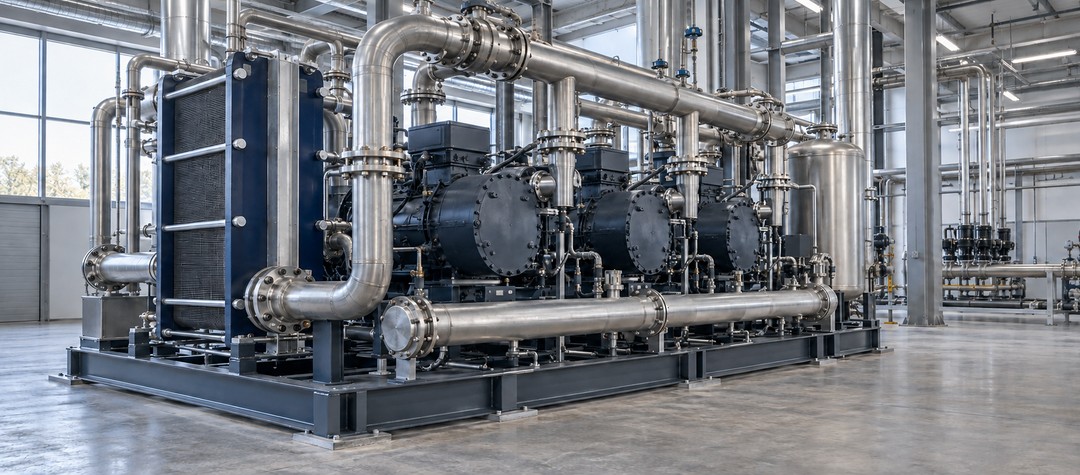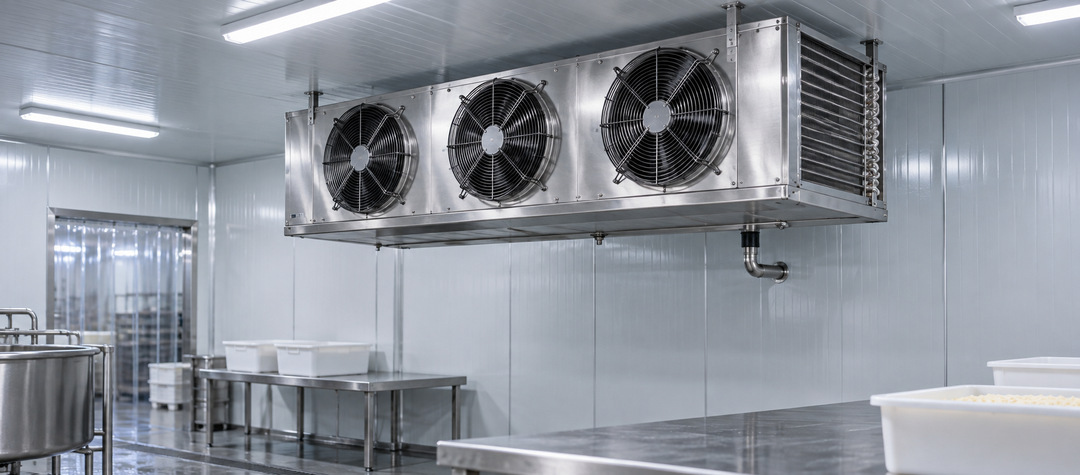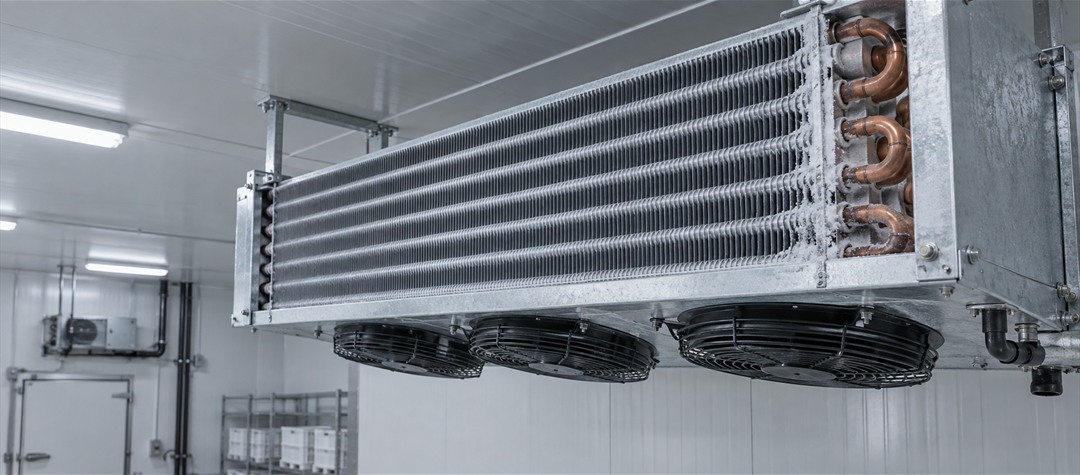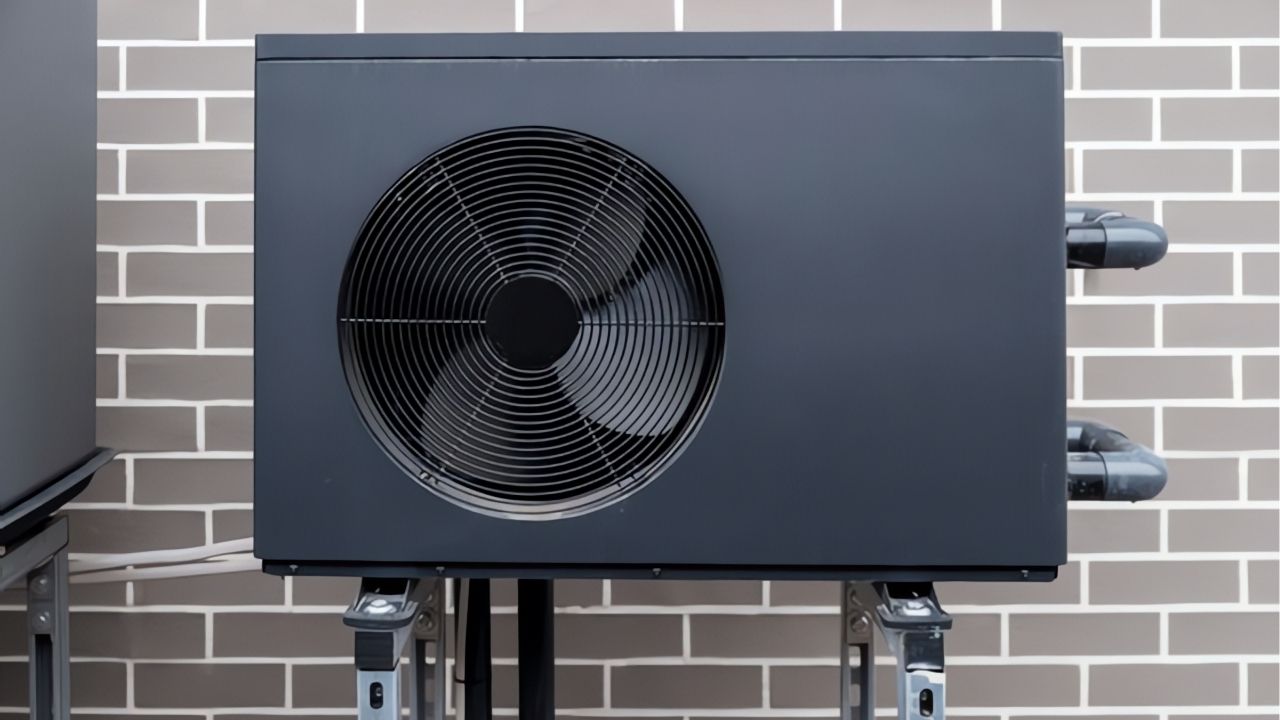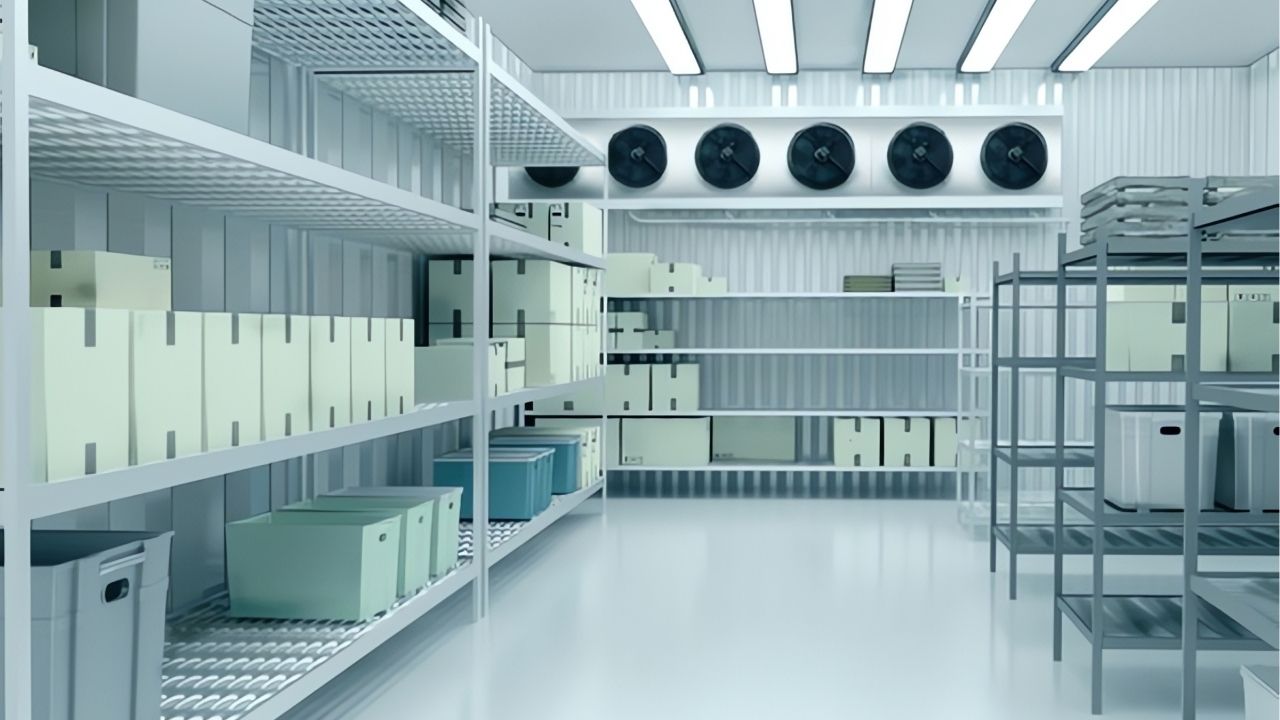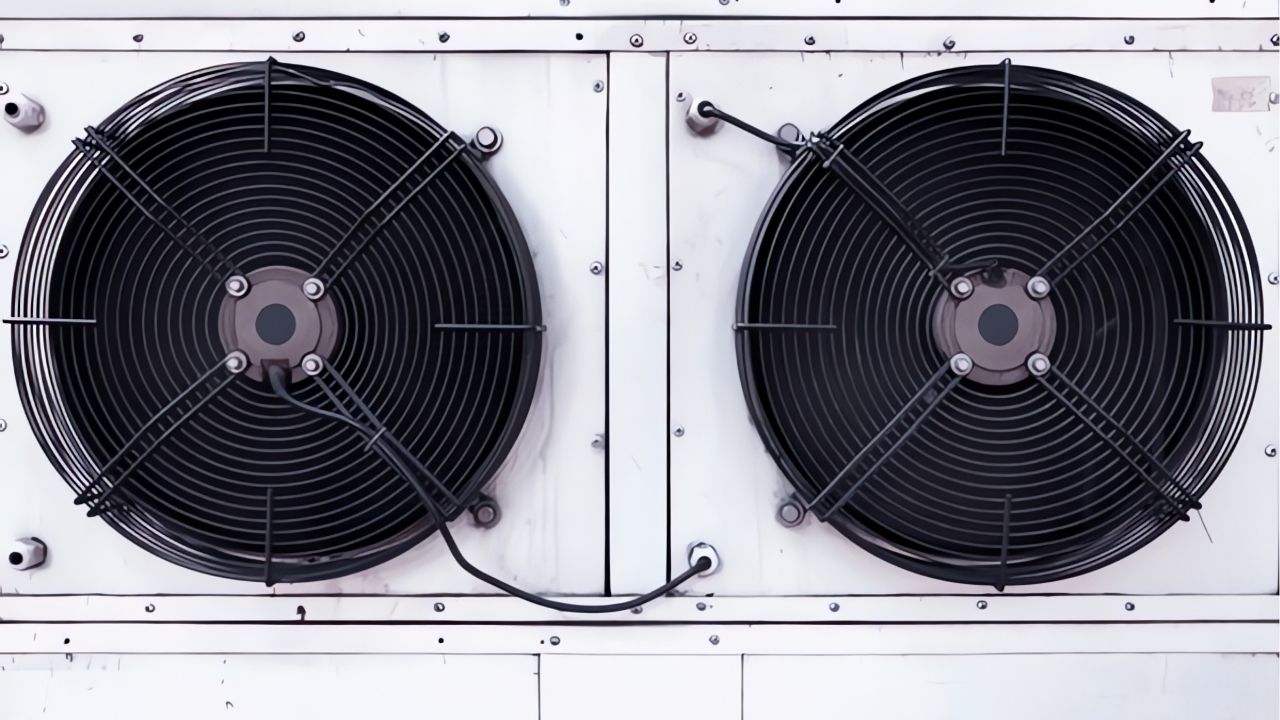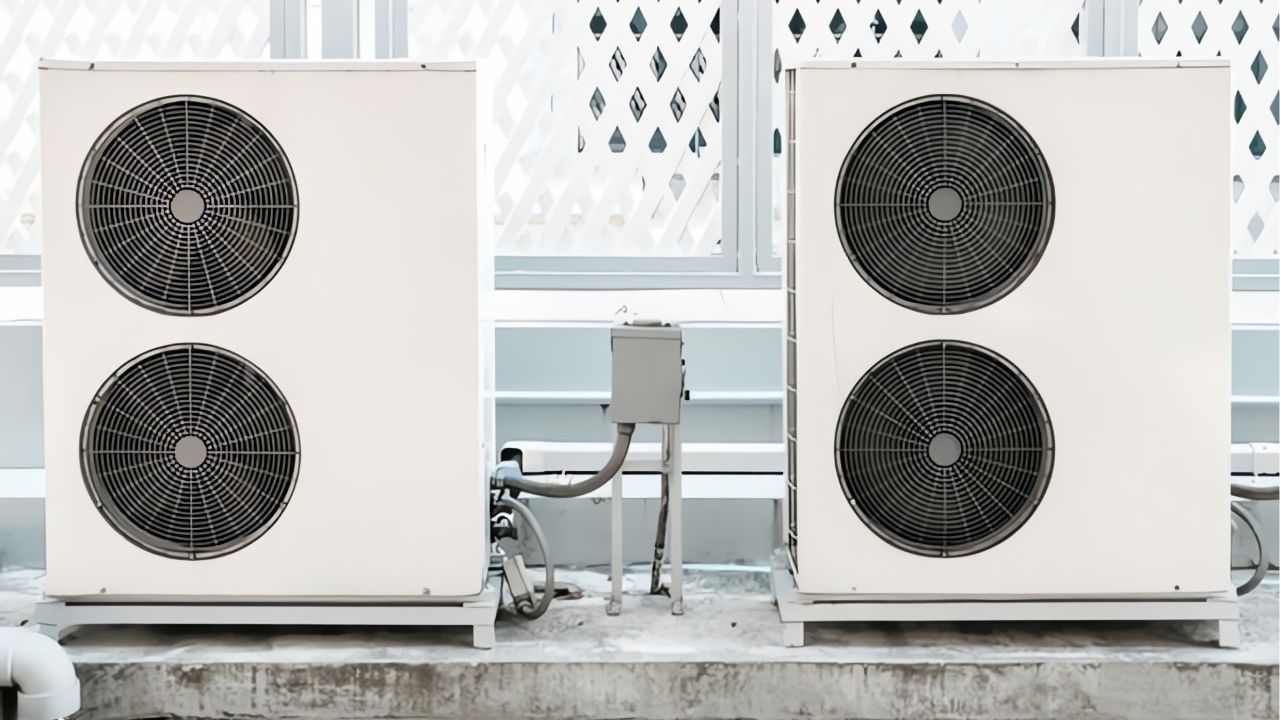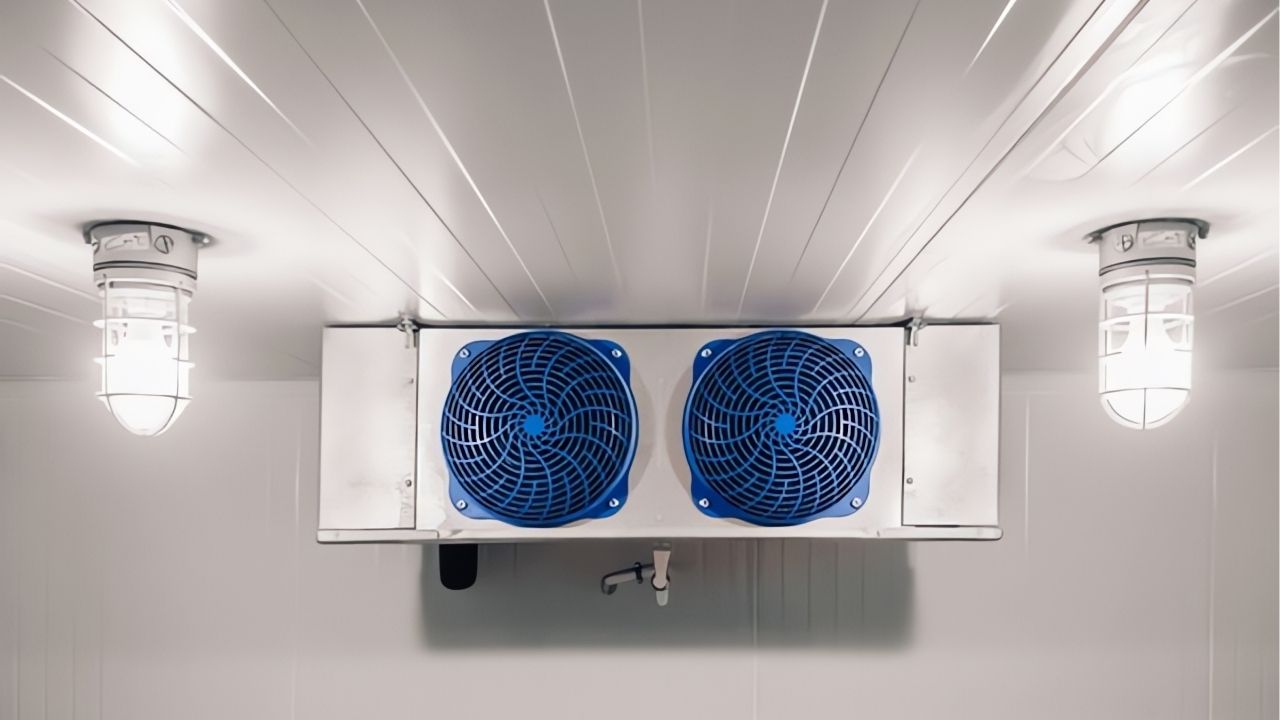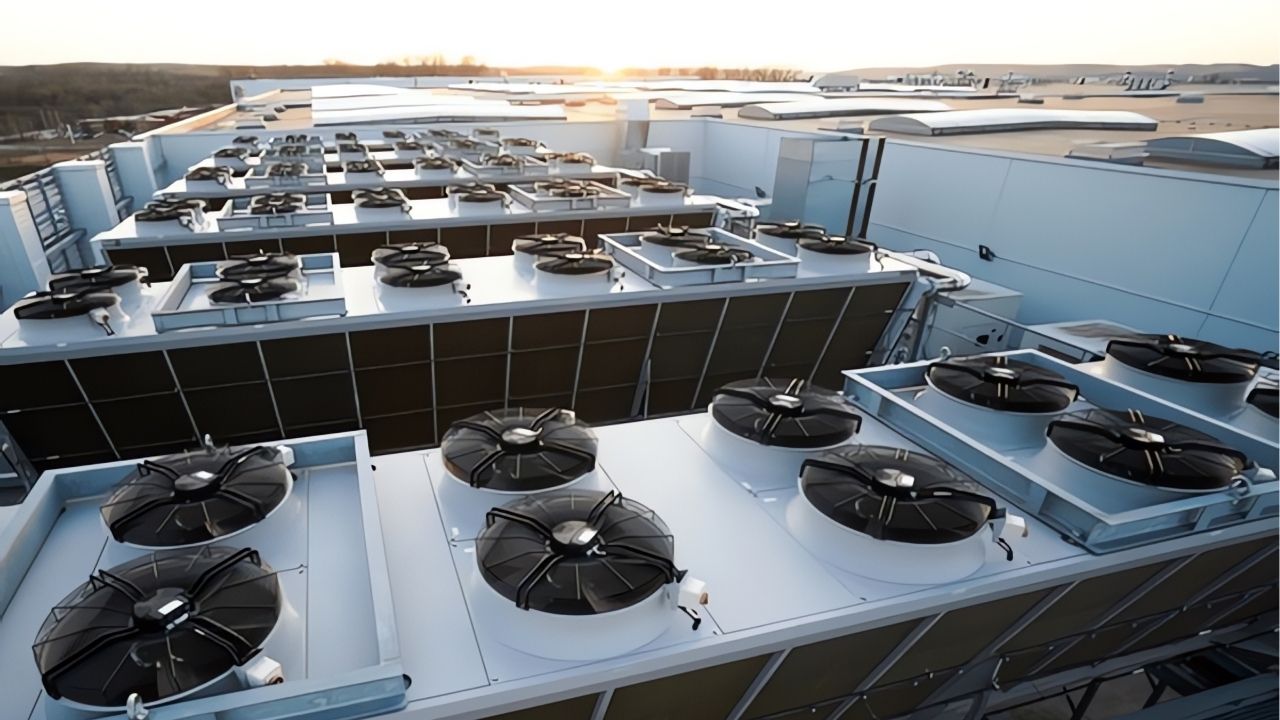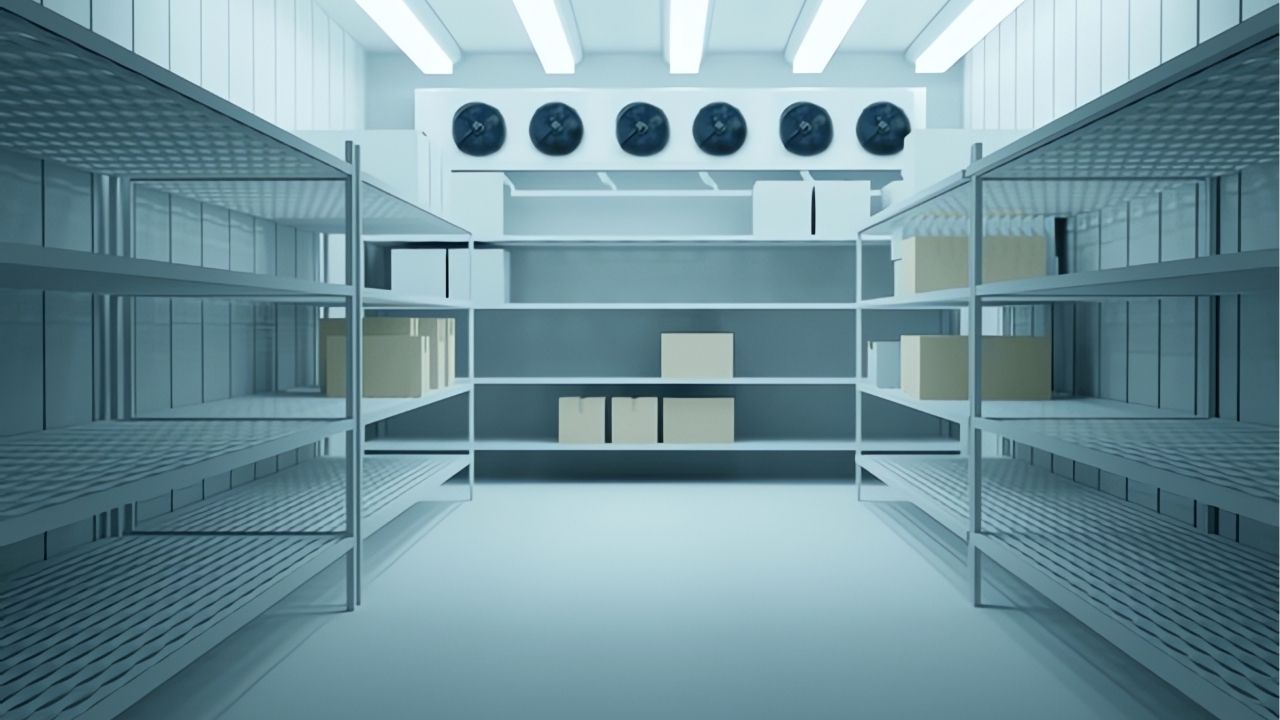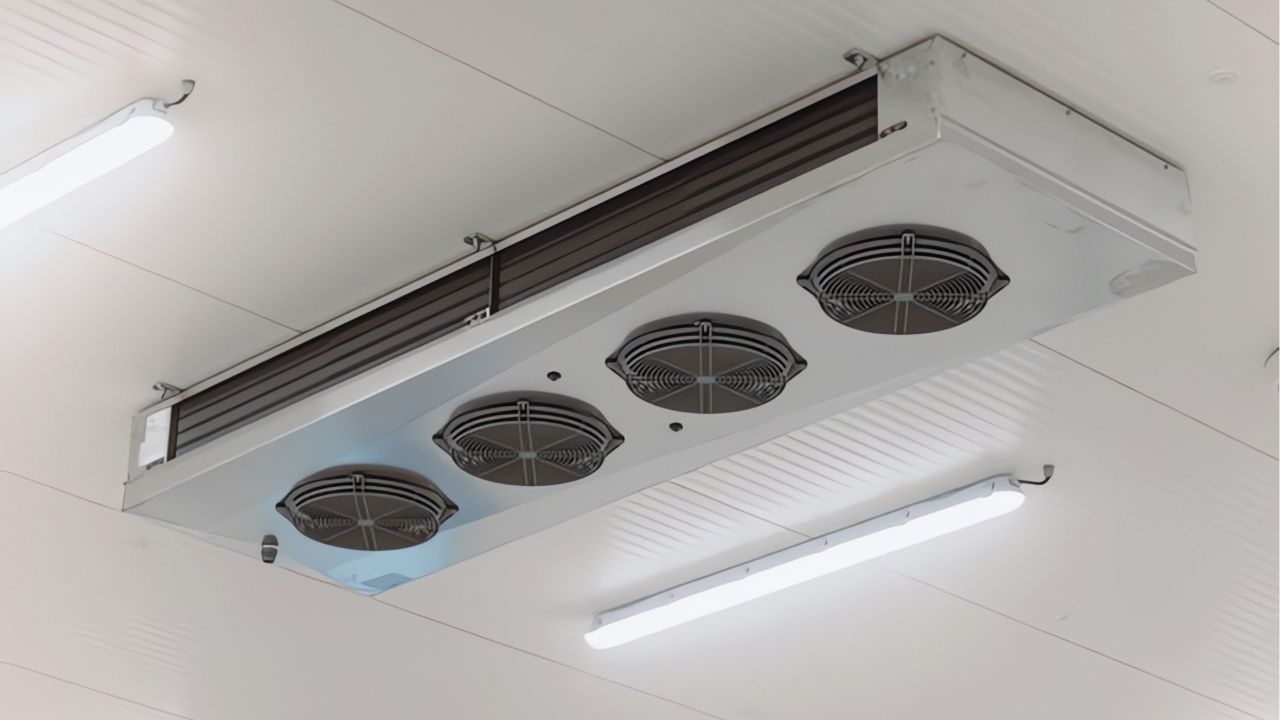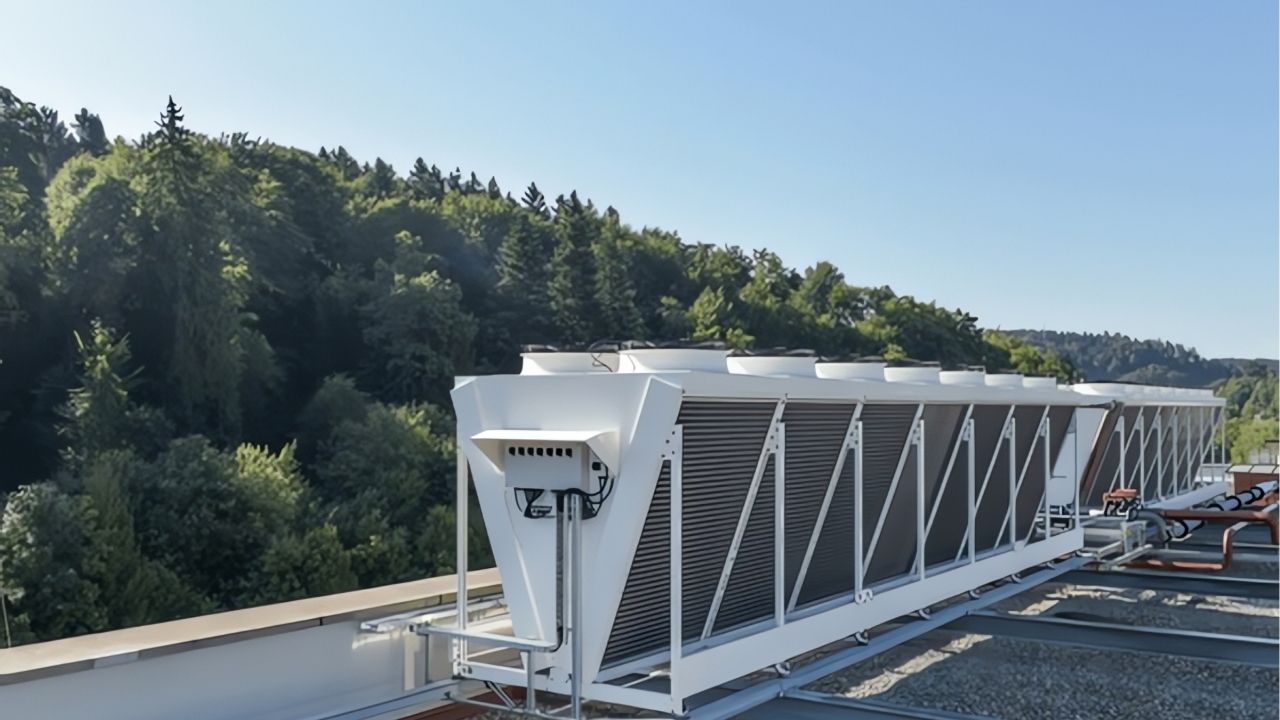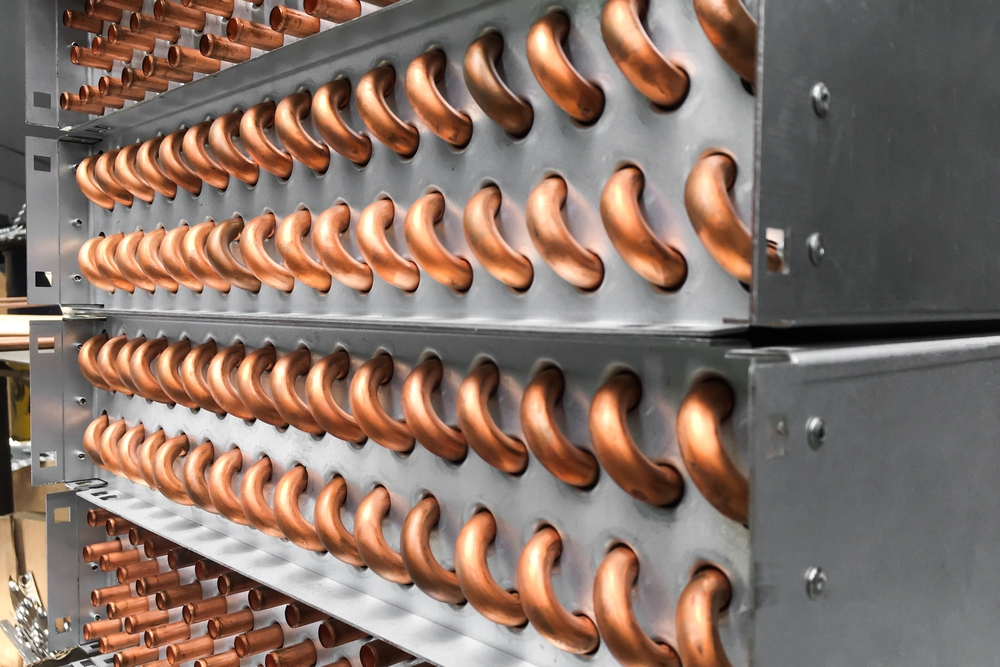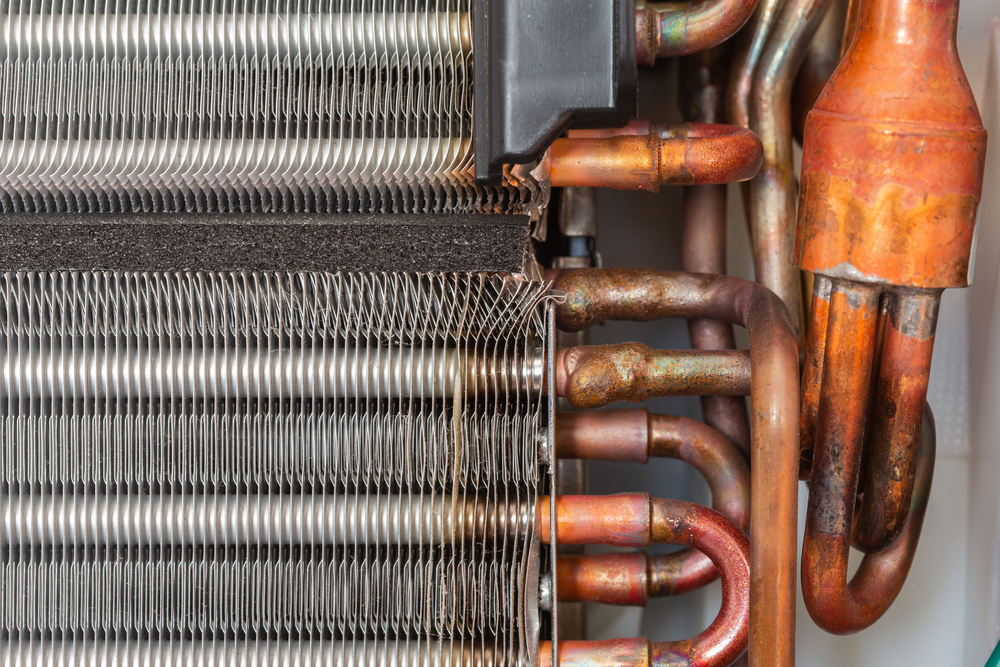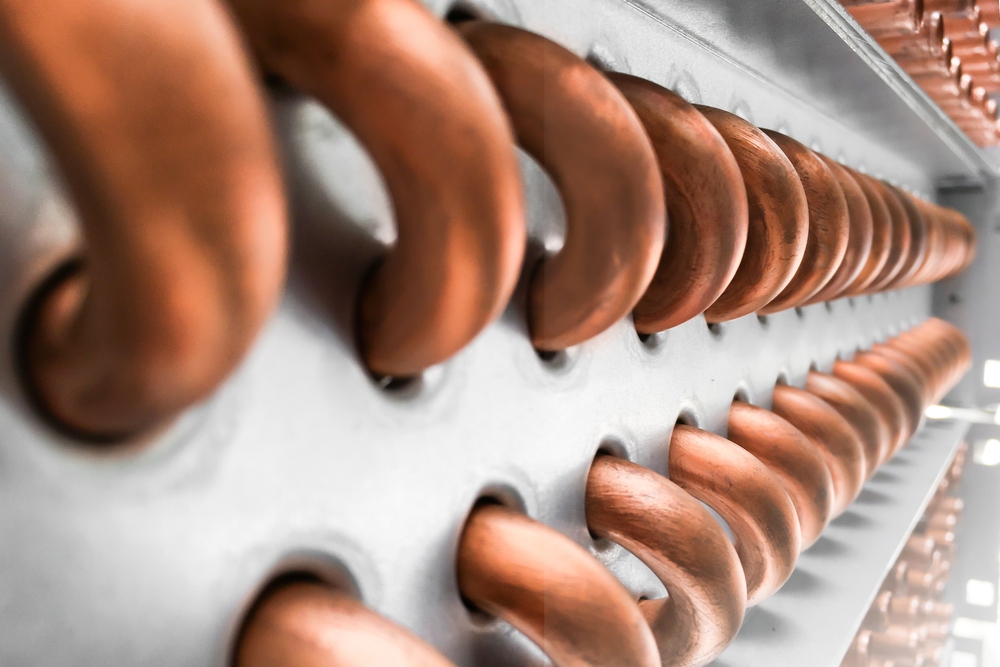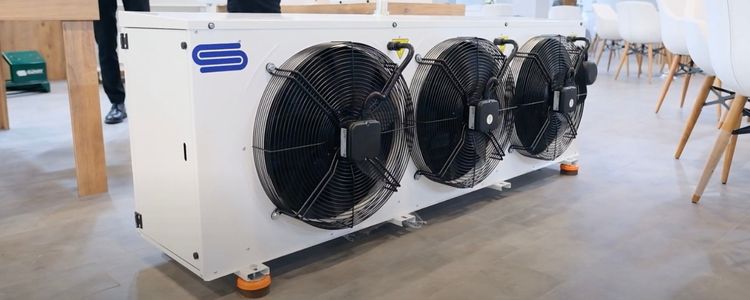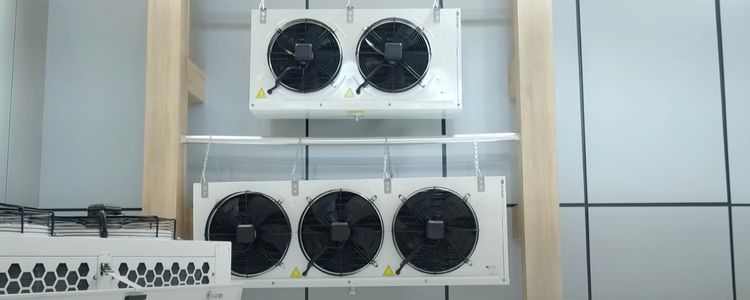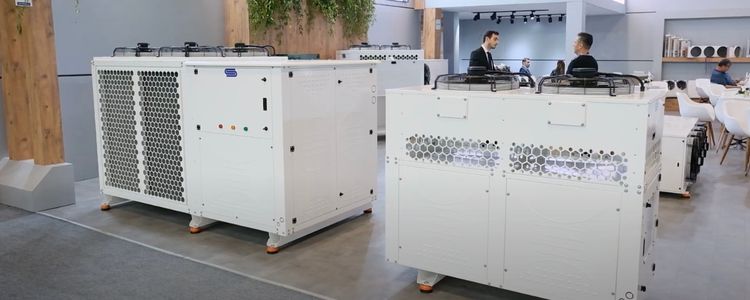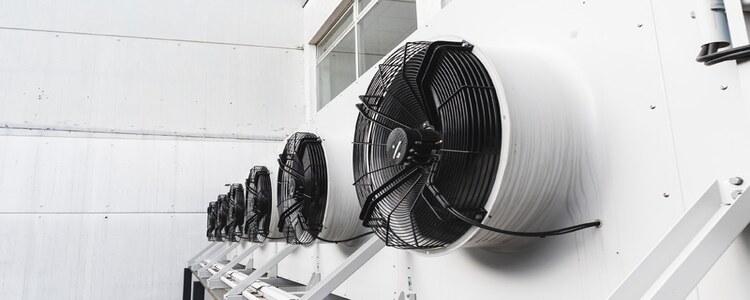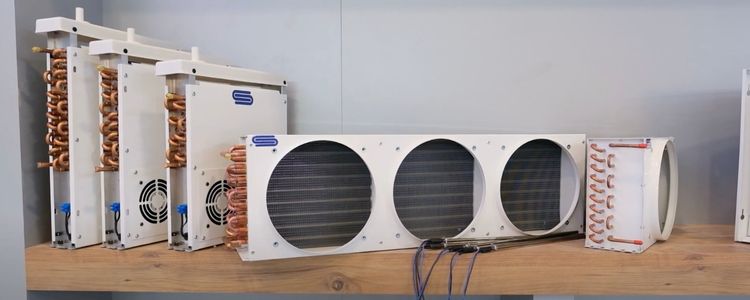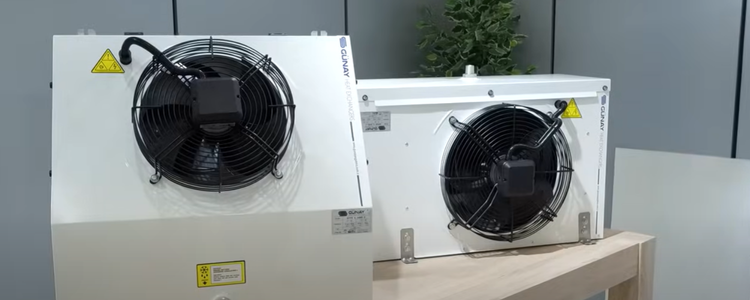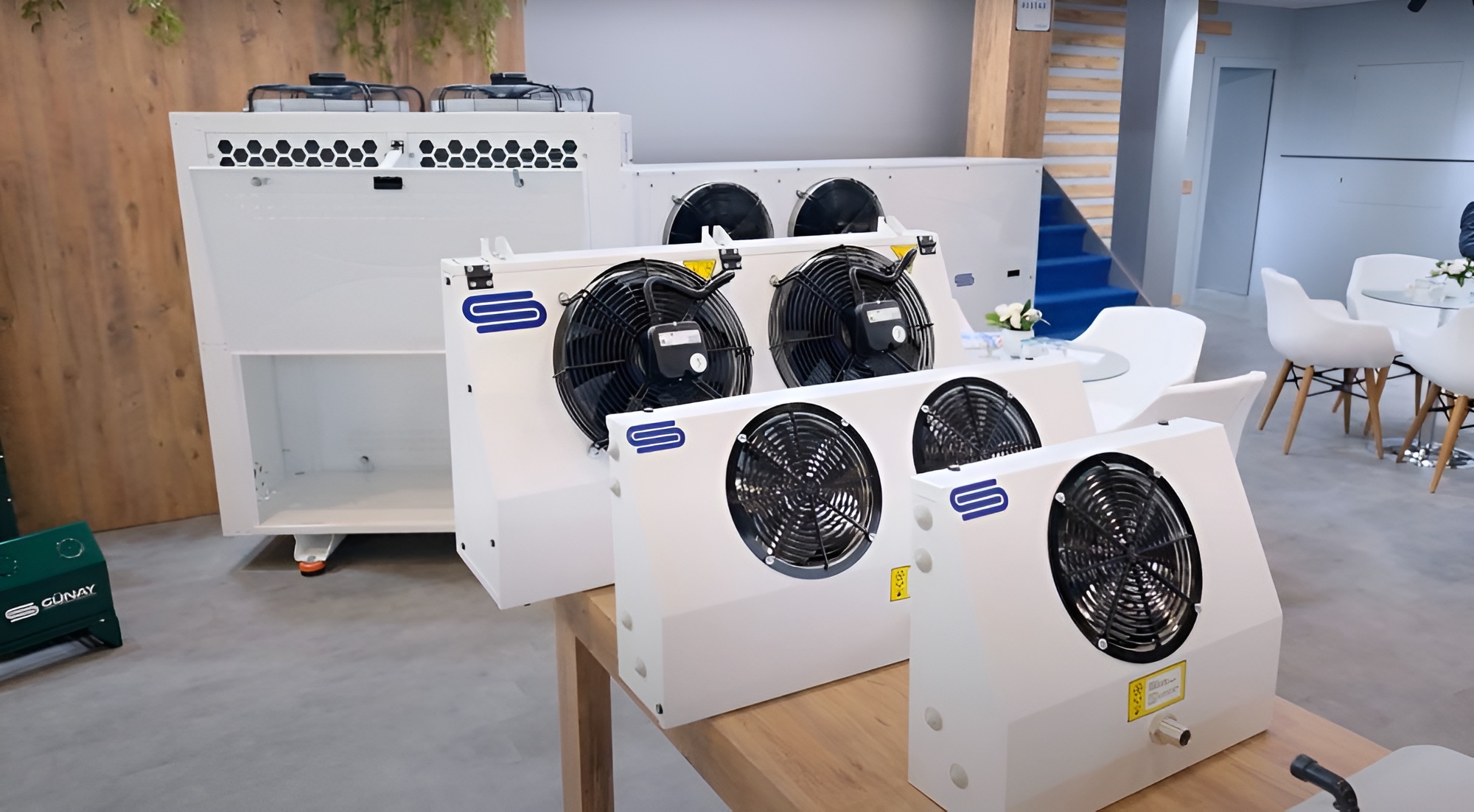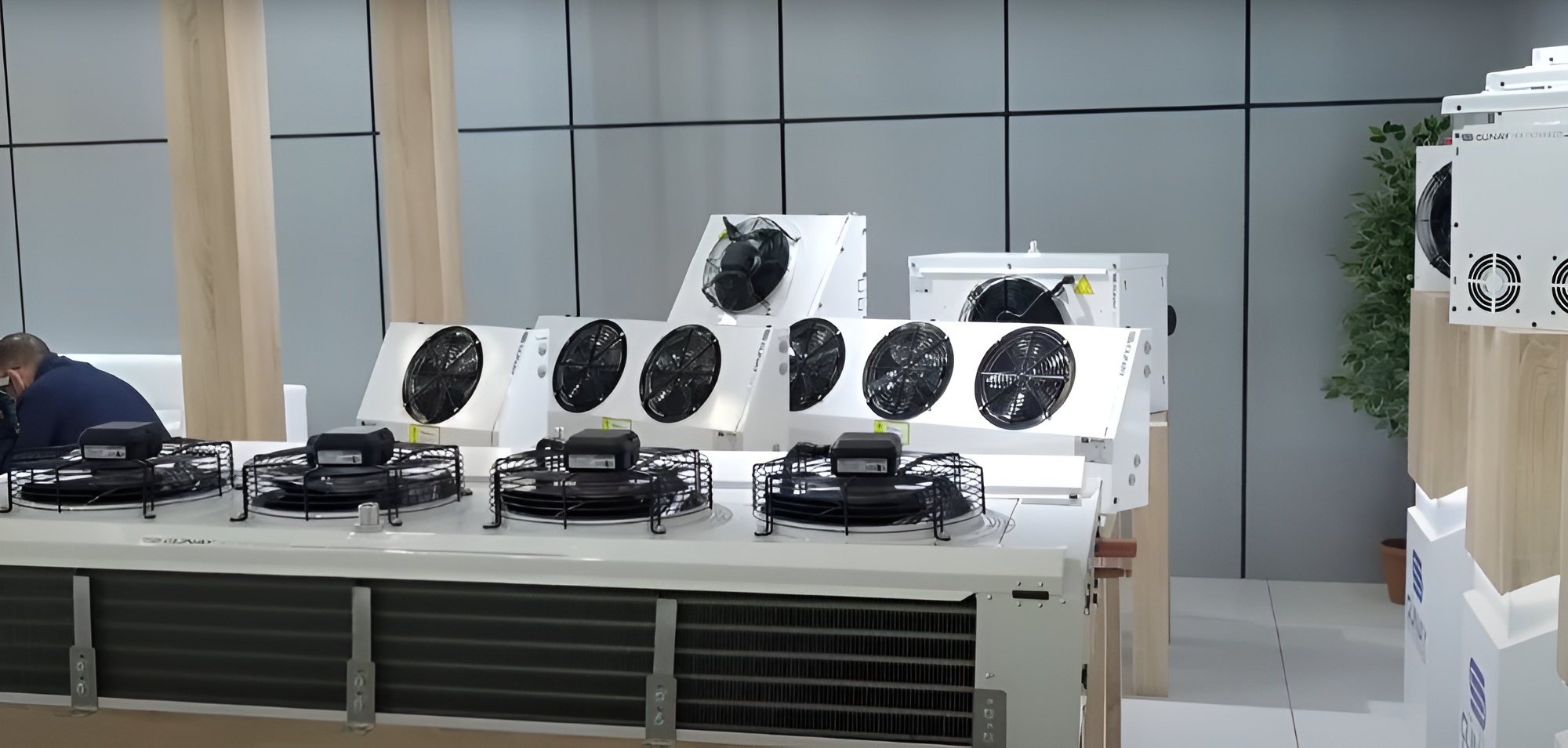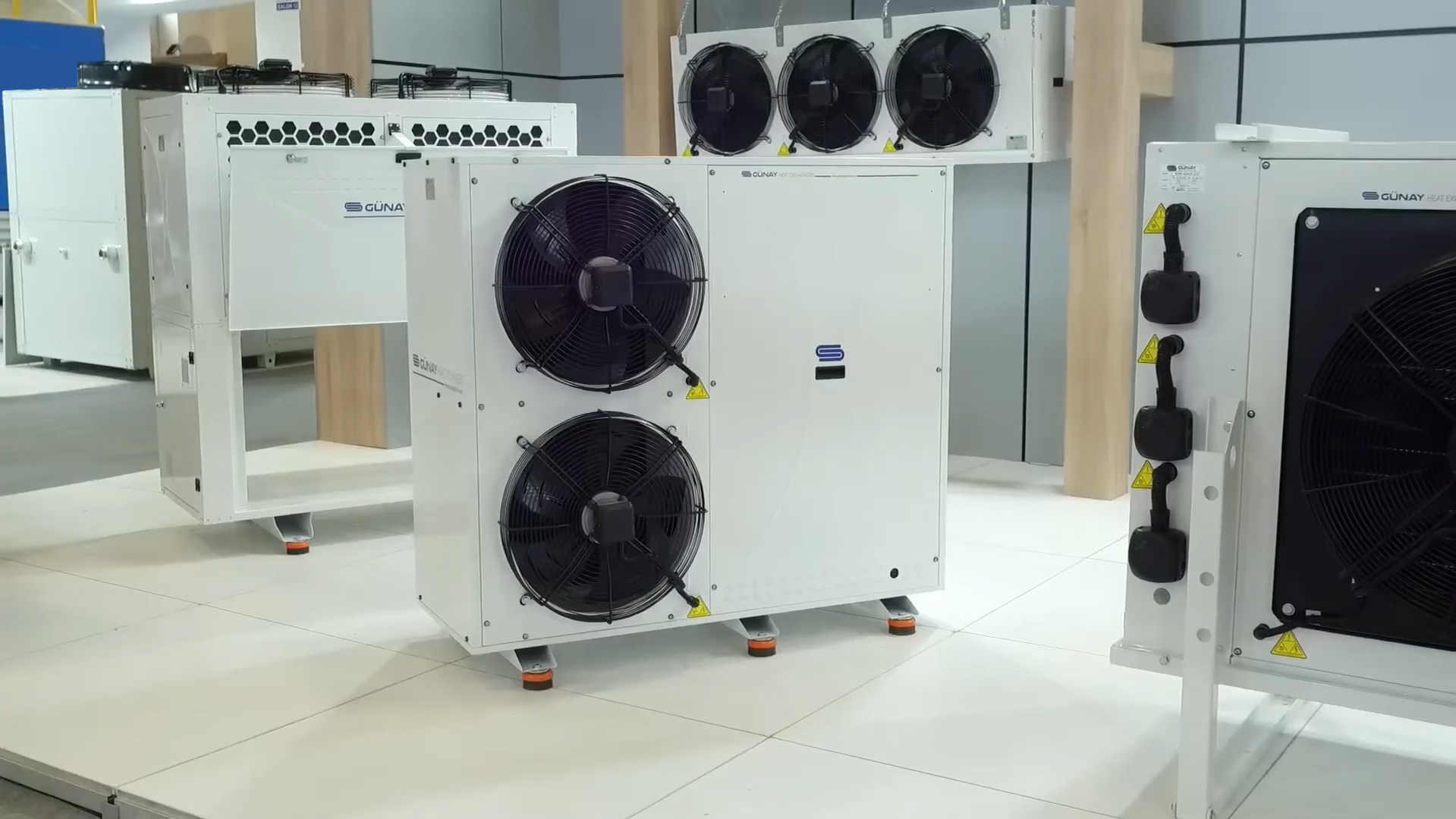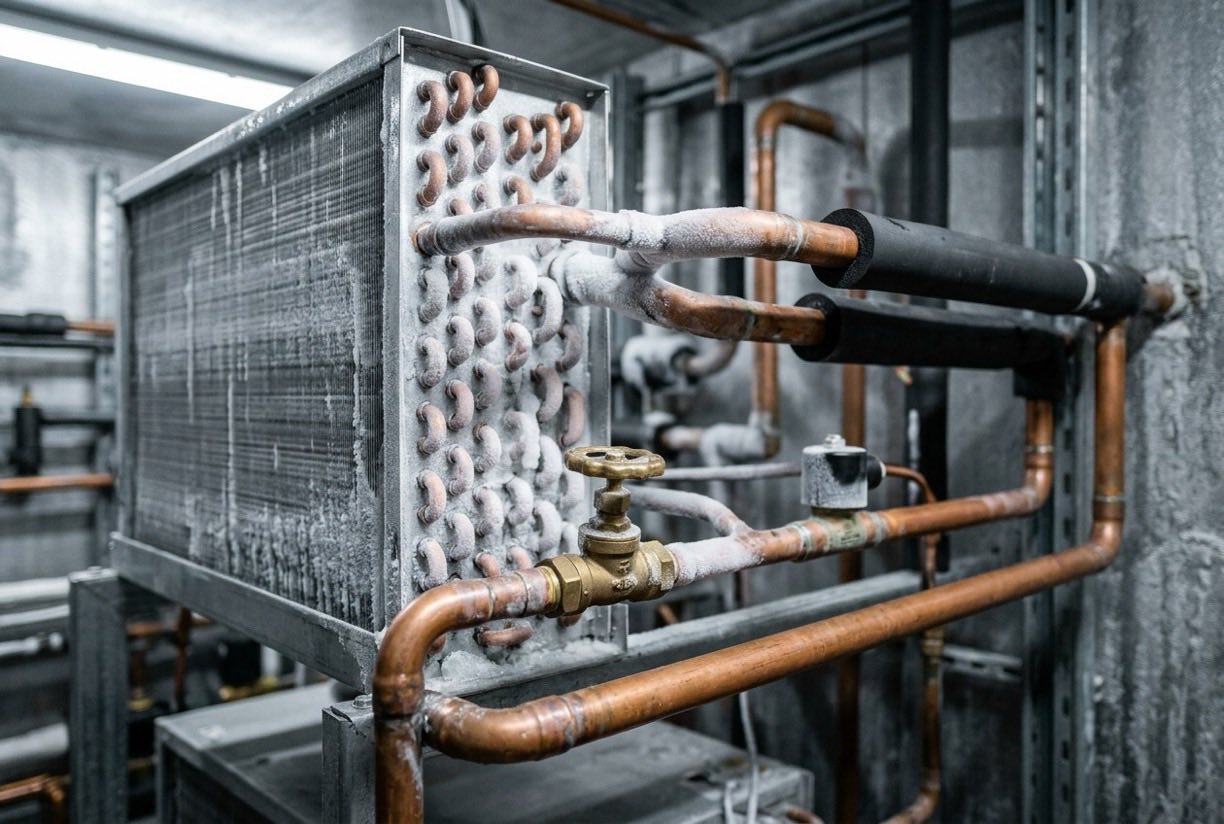
Frost on the evaporator surface reduces heat transfer and pushes the cold room temperature above its target. The most common way to melt it is an electric heater. Hot gas defrost takes a different route: it sends hot refrigerant gas from the compressor into the evaporator to melt the frost from inside. This article explains how the method works, how it differs from electric defrost, and when it should be considered.
Table Of Contents
- How Does Hot Gas Defrost Work?
- How Does It Differ From Electric Defrost?
- When Should Hot Gas Defrost Be Preferred?
- What Should Be Considered In System Design?
- How Are Commissioning And Control Carried Out?
- Frequently Asked Questions
How Does Hot Gas Defrost Work?
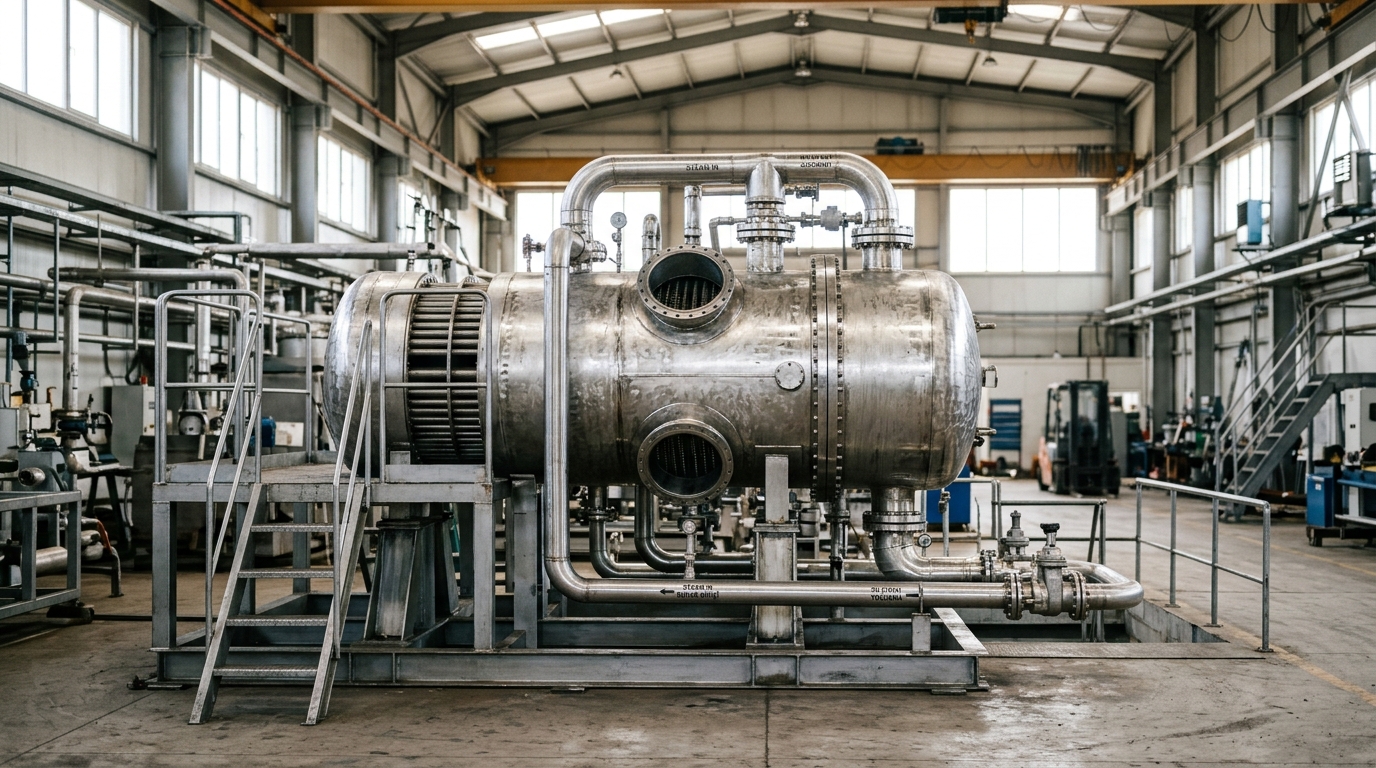
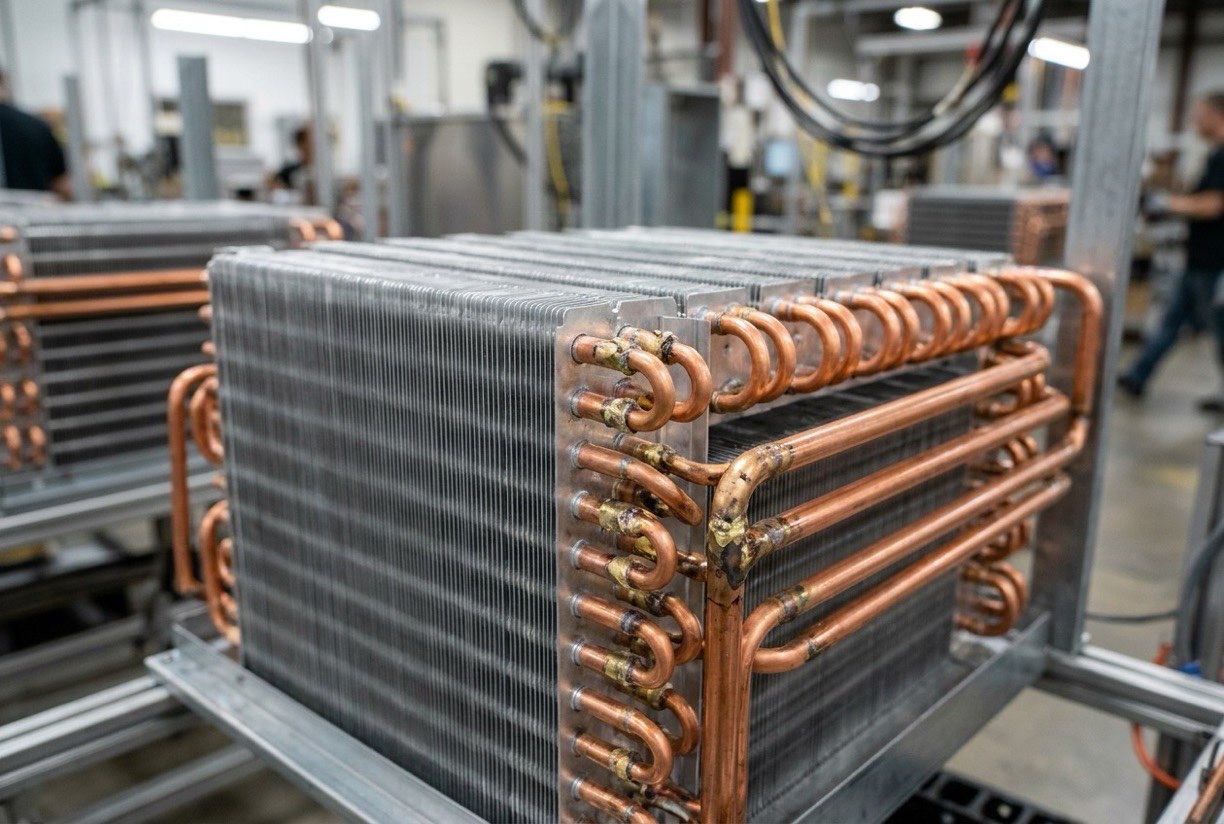
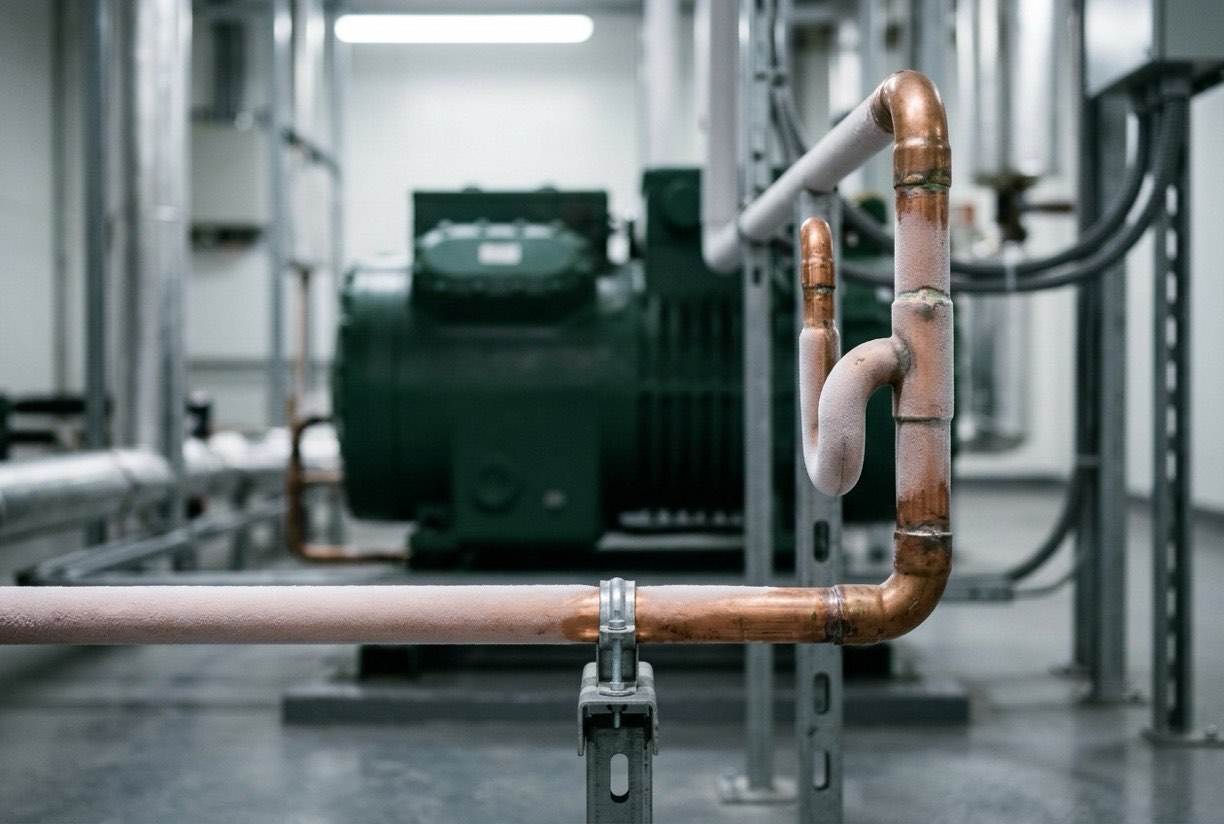
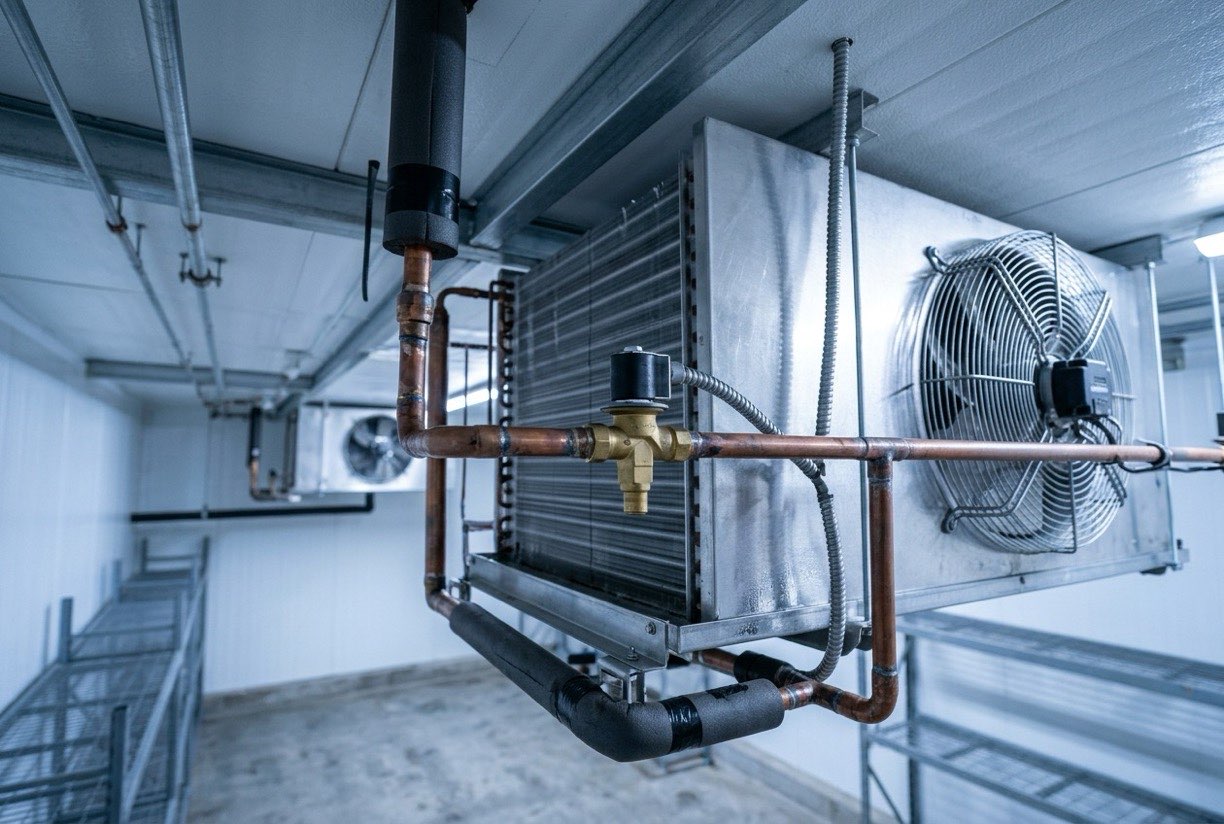
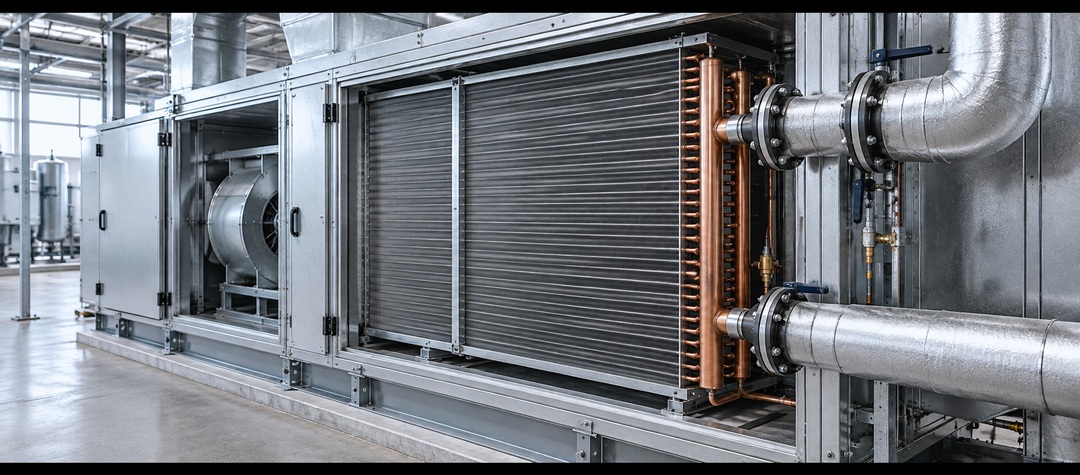
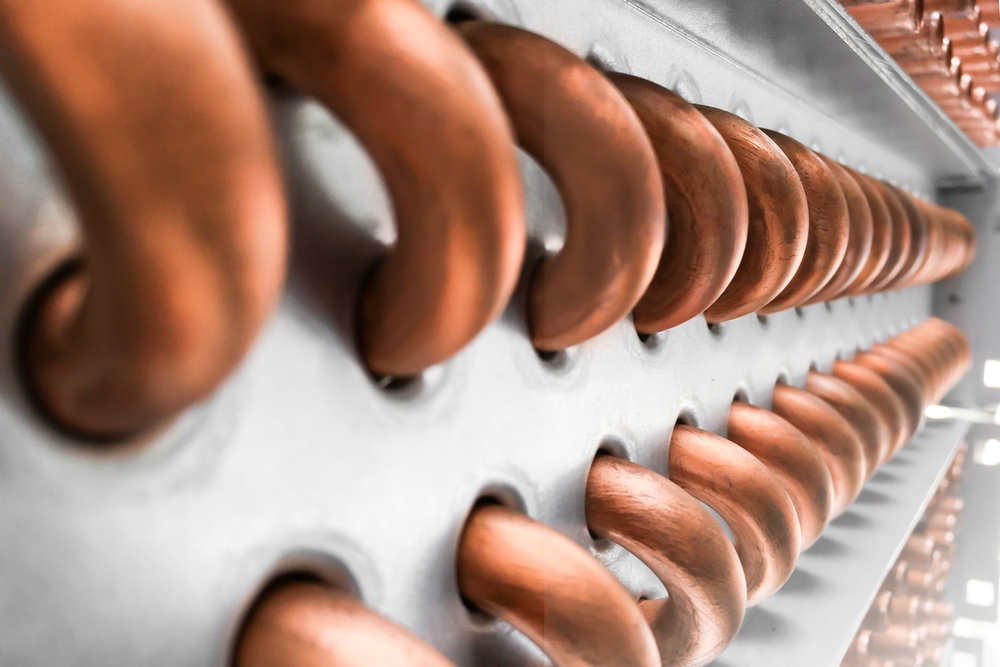
In hot gas defrost, high-temperature refrigerant gas leaving the compressor is sent to the evaporator through a bypass line, outside the normal liquid path. The gas condenses inside the evaporator, heating the frost layer from within until it melts.
The condensed refrigerant returns to liquid and continues through the rest of the system. Valves and temperature sensors manage this cycle during defrost, and the refrigeration circuit briefly switches to defrost mode.
When defrost starts, the control system first stops the evaporator fans and closes the flow in the liquid line. This sequence ensures that the refrigerant enters the evaporator only as gas. If the fans kept running, the energy of the hot gas would be spread into the room instead of the frost, and melting would take longer.
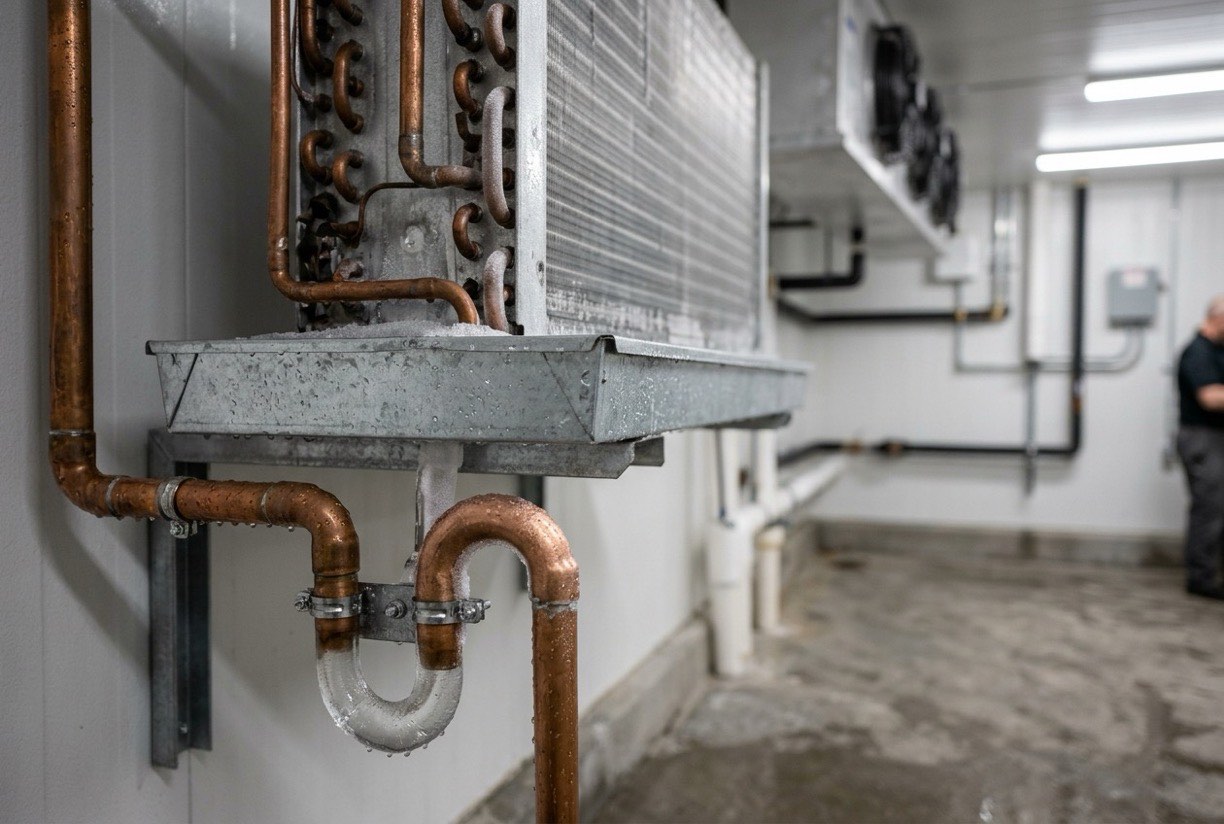
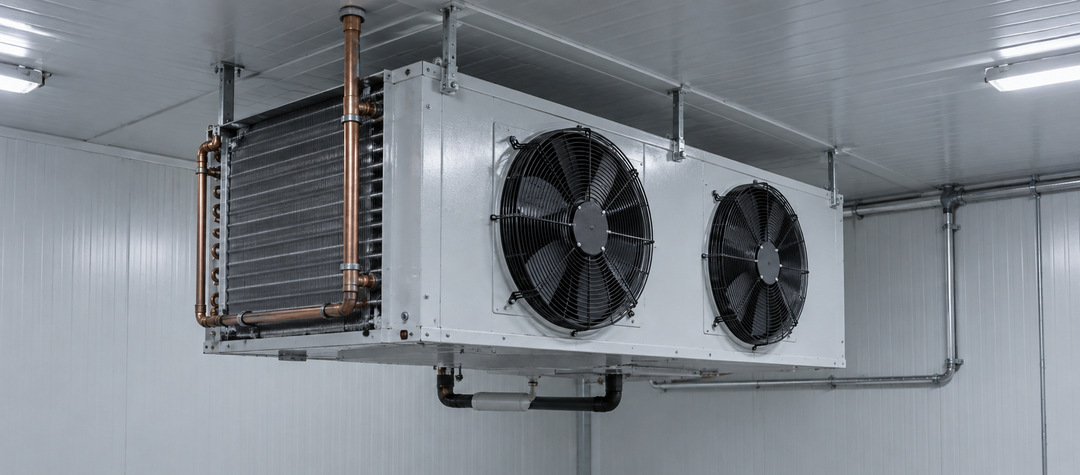
As the frost layer begins to melt, the water on the evaporator surface drains toward the drain pan below. Water that leaves the pan quickly is the most important factor in reducing re-freezing on the fins after defrost ends. For this reason, the drain path should stay open throughout the whole defrost cycle, not only at the moment of melting.
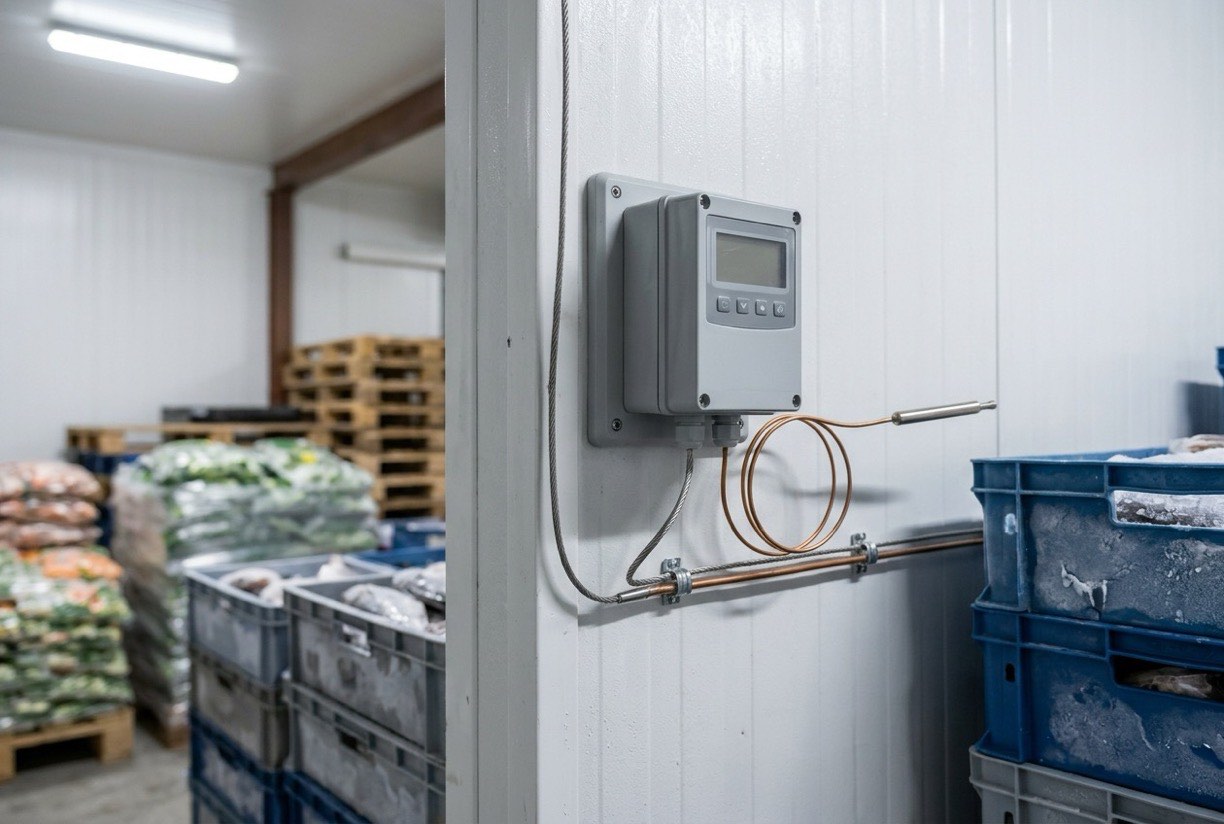
Defrost termination is usually based on the evaporator surface temperature rather than on a fixed timer alone. When the surface reaches a preset value, the system returns to cooling mode. This approach avoids unnecessary heating after the frost has already melted and limits temperature swings in the cold room.
Once defrost is finished, the evaporator fans are not switched on immediately. A short fan delay allows the water remaining on the fins to drain into the pan and lets the surface partly dry. This delay prevents water thrown off the wet coil from creating humidity and new frost inside the room.
The most sensitive point of the method is keeping the balance between liquid and gas throughout defrost. The gas leaving the evaporator must be fully vaporised so that liquid does not reach the compressor and cause liquid slugging. This condition is achieved only when control valves and temperature sensors work together.
How Does It Differ From Electric Defrost?
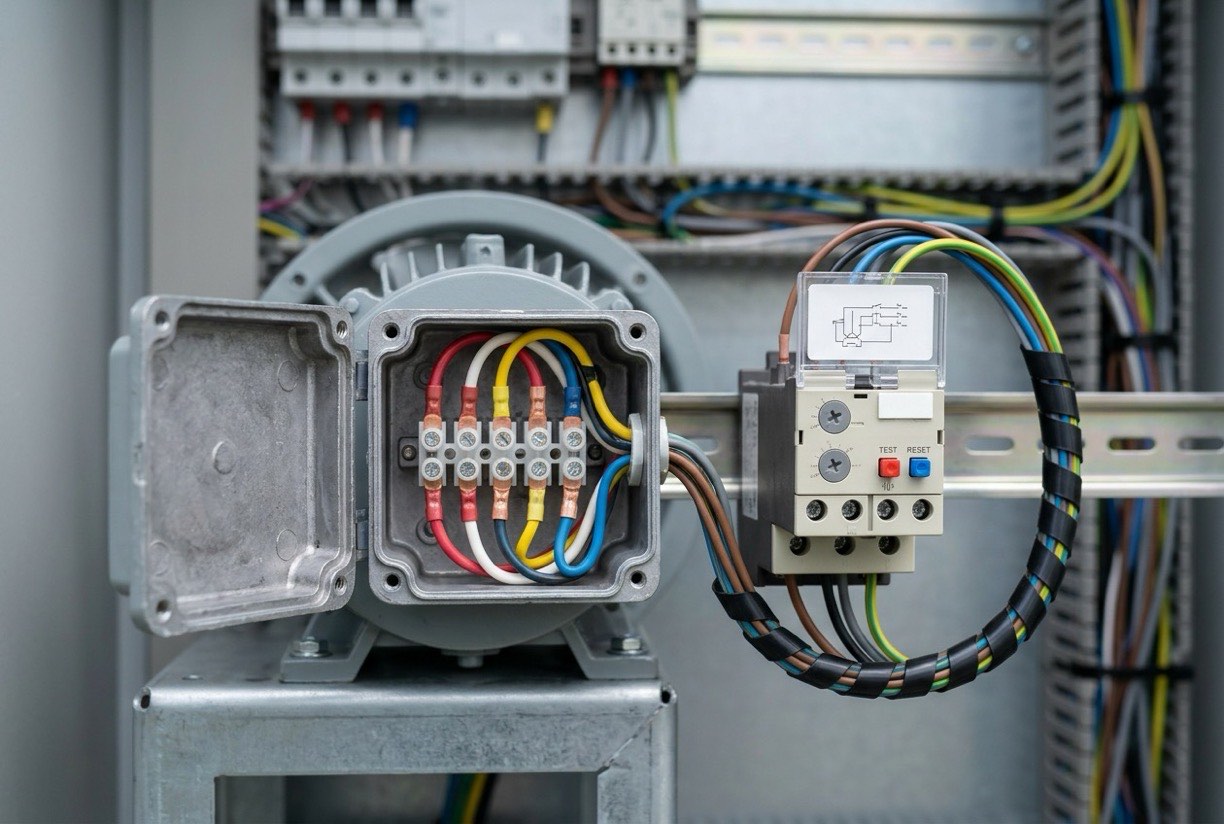
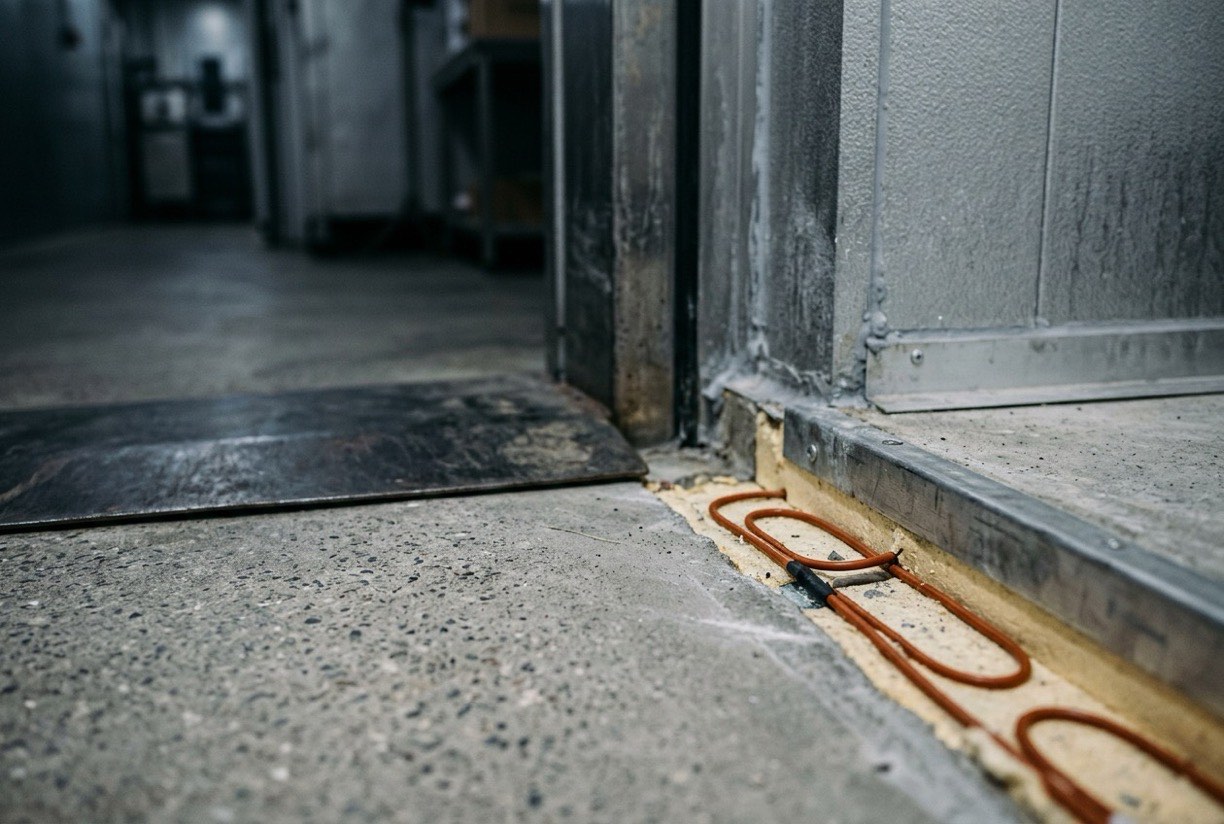
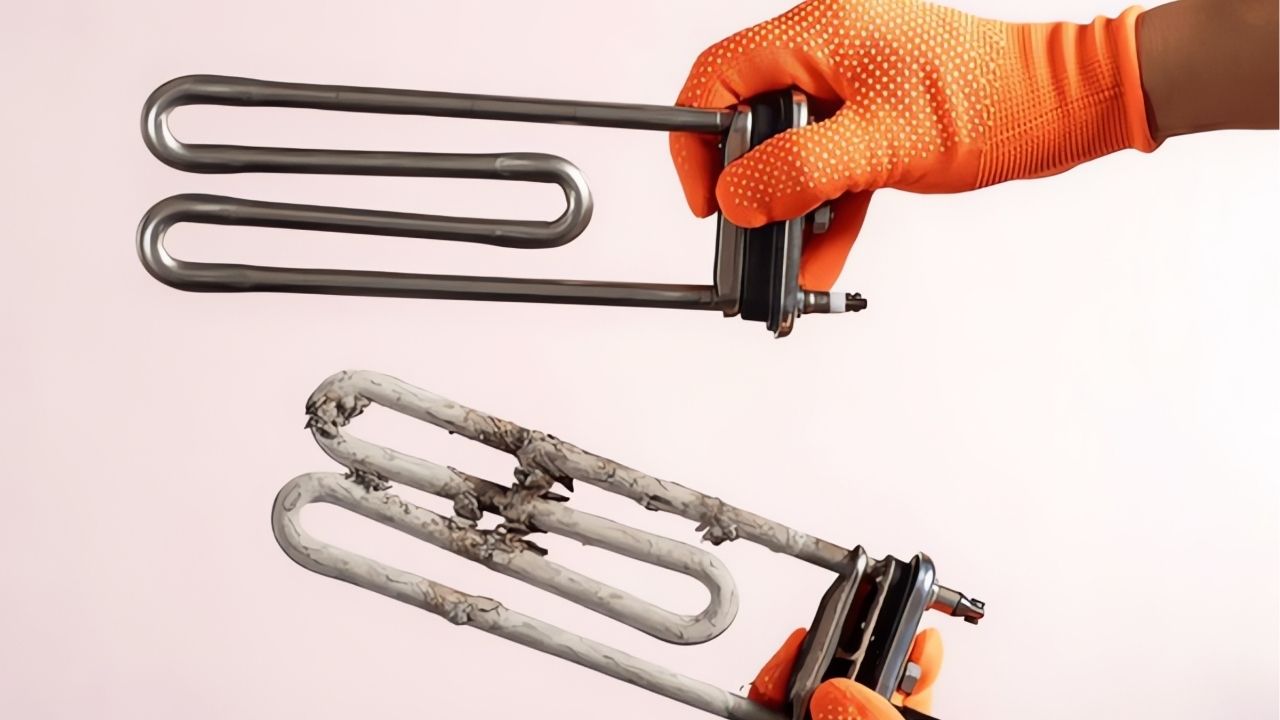
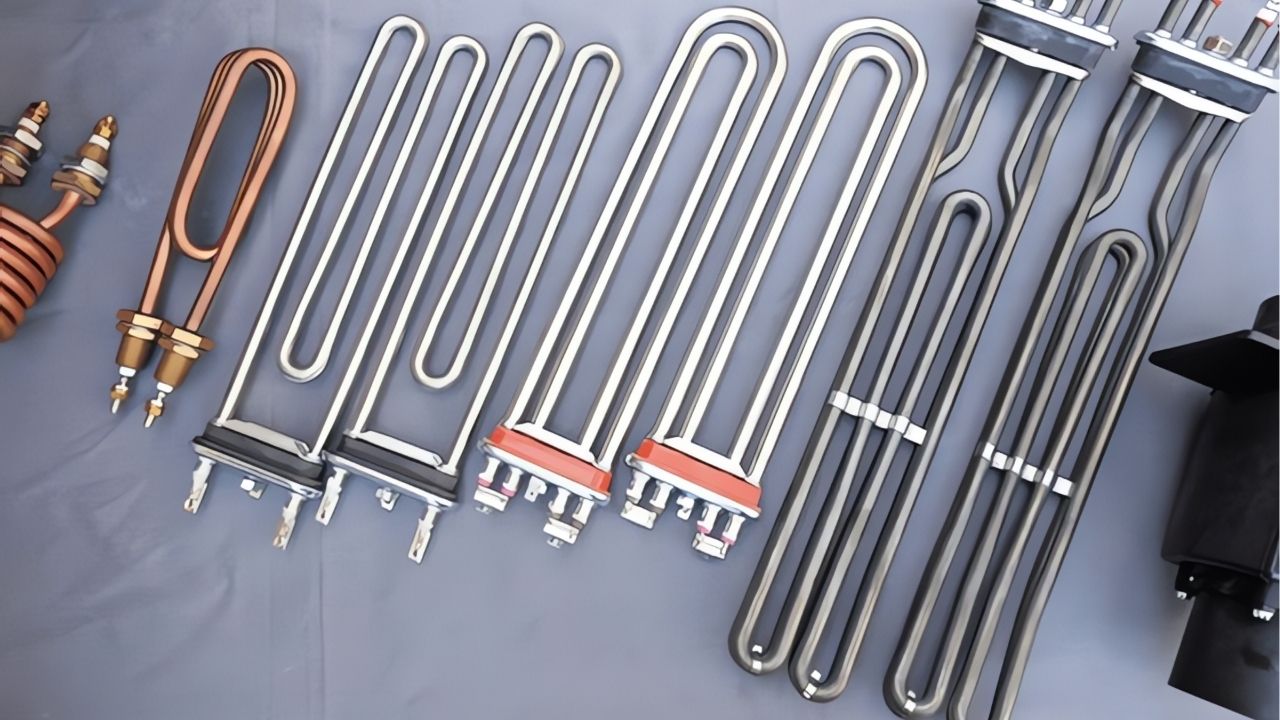
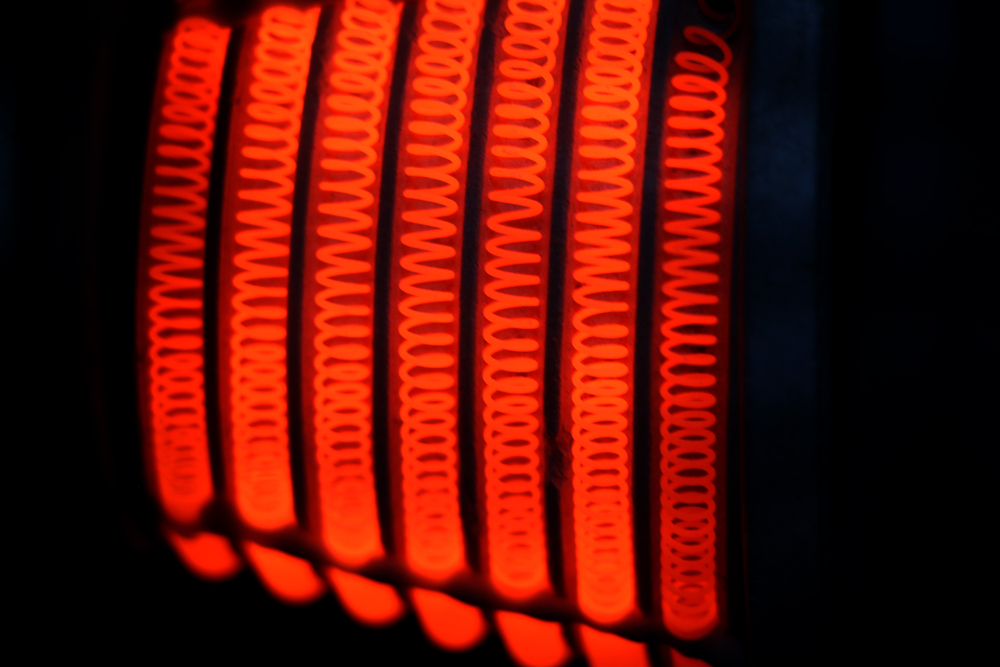
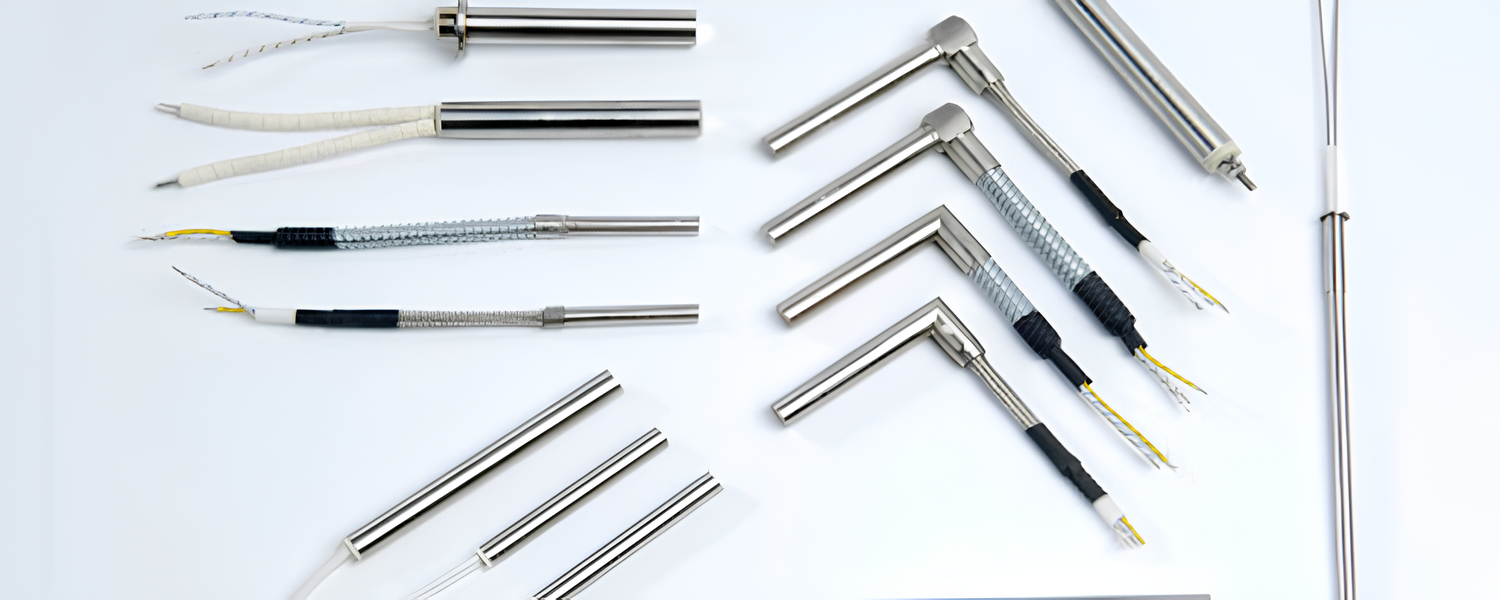
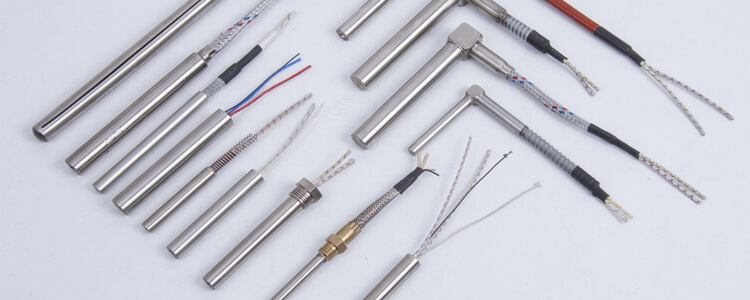
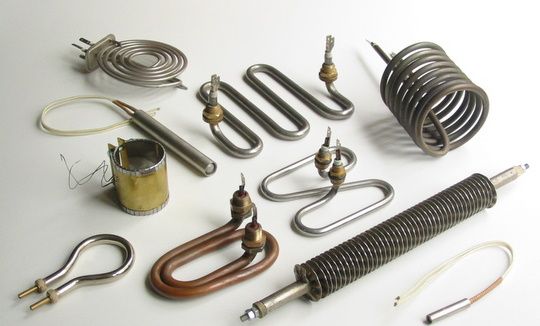
In electric defrost, frost melts from the heat of resistance heaters mounted on the evaporator. In hot gas defrost, the heat source is the system's own hot gas, and no separate heater switches on. This difference affects energy use and the heat released into the cold room.
Part of the heat from an electric heater enters the cold room and adds to the cooling load. Hot gas defrost can reduce this extra load, but the method has its own piping and control requirements.
In electric defrost, the resistance heaters add a significant heat load to the cold room while they are on. Part of their power melts the frost, but part of it spreads into the air and the room. The energy effect therefore depends not only on the heater rating but also on how often and how long the defrost runs.
In hot gas defrost, no separate heater is used during the defrost period. The heat source is the hot gas produced by the compressor, and most of that energy is used to melt the frost. However, the system must rebuild its pressure and temperature balance when it returns to cooling, and controlling this transition properly is one of the key technical points separating the two methods.
When the two methods are compared, maintenance needs should be considered alongside energy use. Electric heaters and their connection cables can wear over time and need periodic inspection. In a hot gas circuit, regular checks of the valves, the bypass line and the sensors are the main priority. Which method causes fewer problems also depends on the maintenance culture of the facility and how easily service staff can reach the equipment.
The initial cost is another difference. Electric defrost offers a simpler installation for most small and medium facilities. Hot gas defrost needs more planning because of piping and control equipment. When comparing the two, the commissioning process should be weighed alongside the running cost.
When Should Hot Gas Defrost Be Preferred?
Hot gas defrost is considered in facilities where the heat load is significant and defrost frequency is high. Rooms with high humidity load and systems running several evaporators are good candidates for evaluating this method.
In small systems with a single evaporator, electric defrost is often sufficient because of its simpler installation and lower initial cost. The choice should weigh the heat load, defrost frequency, and investment budget together.
Facilities where hot gas defrost is preferred usually evaluate several criteria together. The most important include a room temperature that does not frequently drift away from its target, a relatively balanced load profile, and a high defrost frequency on the evaporator. Under these conditions, reducing the amount of defrost heat released into the cold room supports the overall efficiency of the system.
Storage facilities where product quality is sensitive to temperature fluctuations also belong in this evaluation. Where a short rise in temperature could affect the product, it is important to minimise how much of the defrost effect reaches the room. The issue is especially visible in rooms with frequent door openings and rapid product intake.
High humidity loads should also be considered. In humid environments, frost builds up faster on the evaporator and the defrost frequency increases. As the number of defrosts grows, the total heat load of the electric method also grows, and in this case hot gas can become a more meaningful alternative.
Even so, the same result does not apply to every facility. Because the method requires piping, valves and control equipment, it can be difficult to apply later in an existing system. The decision should not rest on an energy calculation alone; it should be taken together with the age of the facility, the maintenance infrastructure and the investment plan.
What Should Be Considered In System Design?
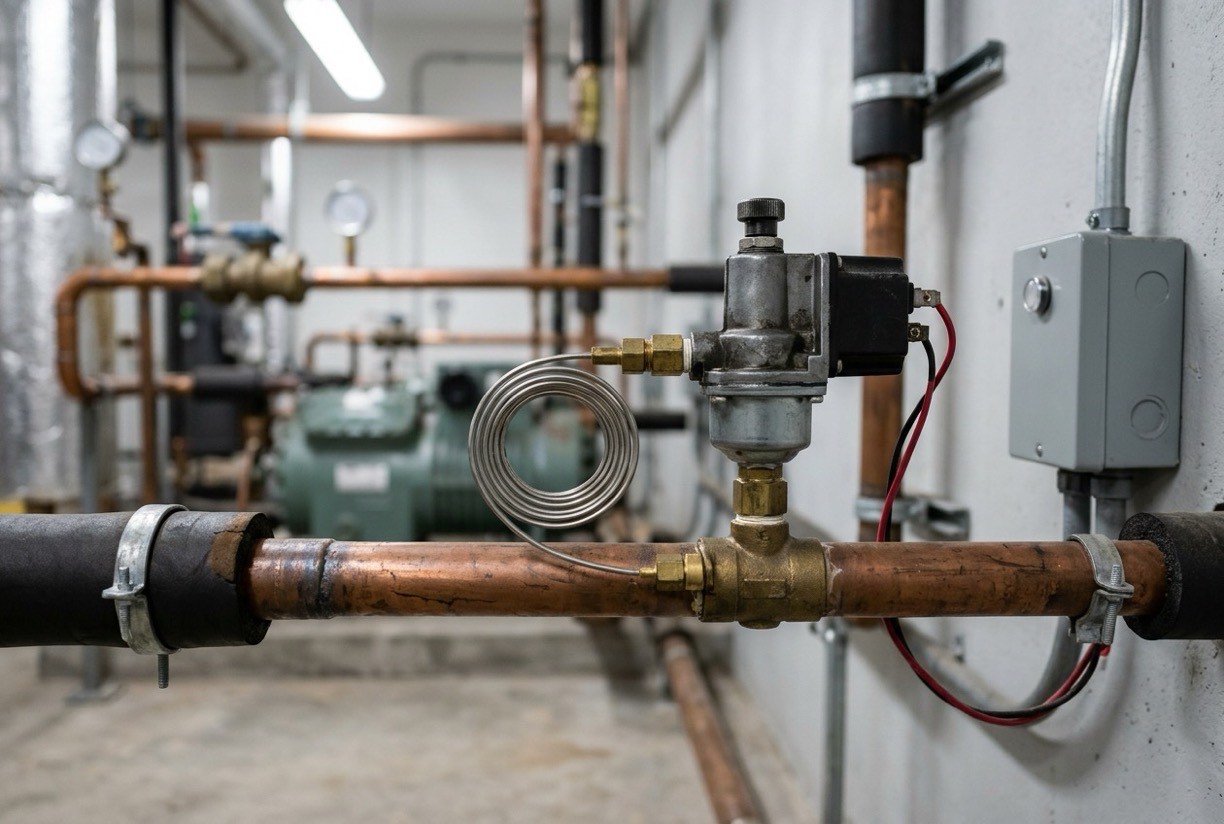
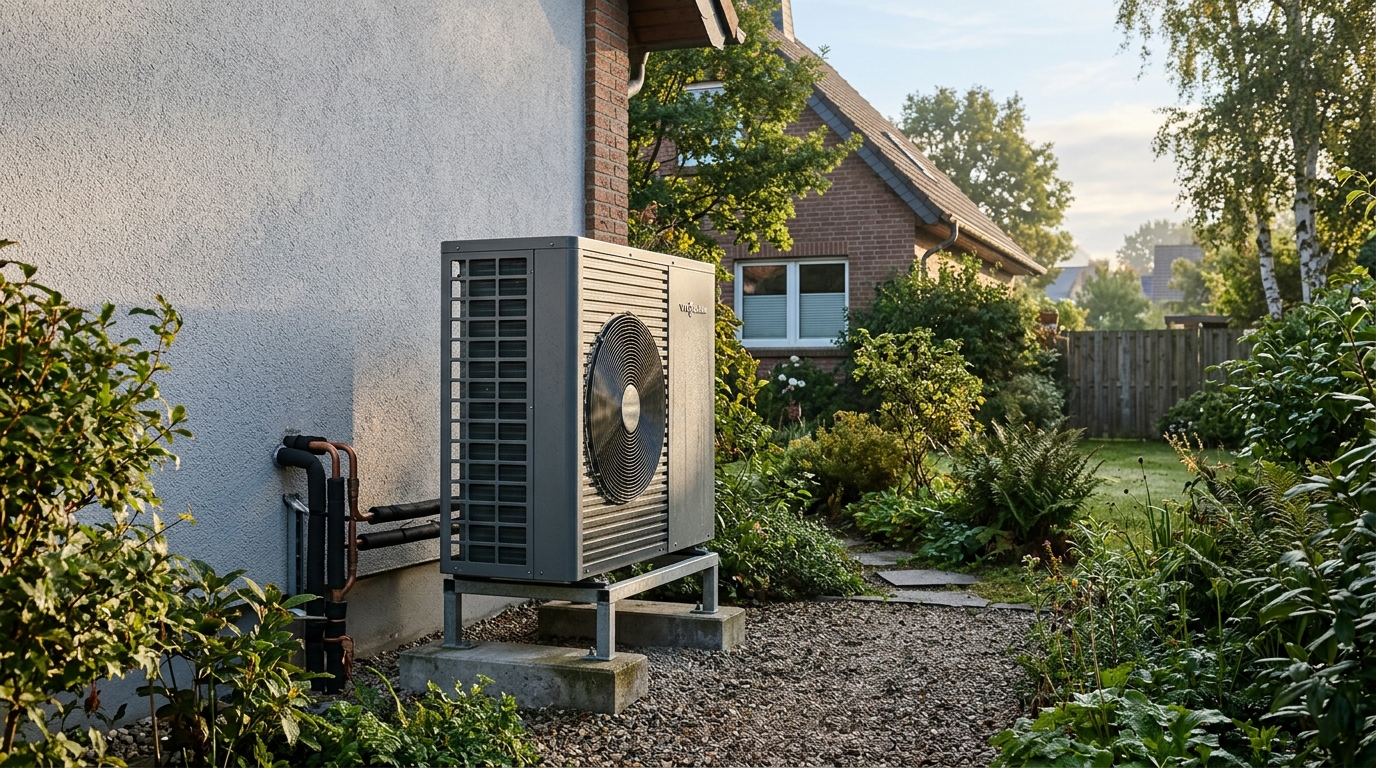
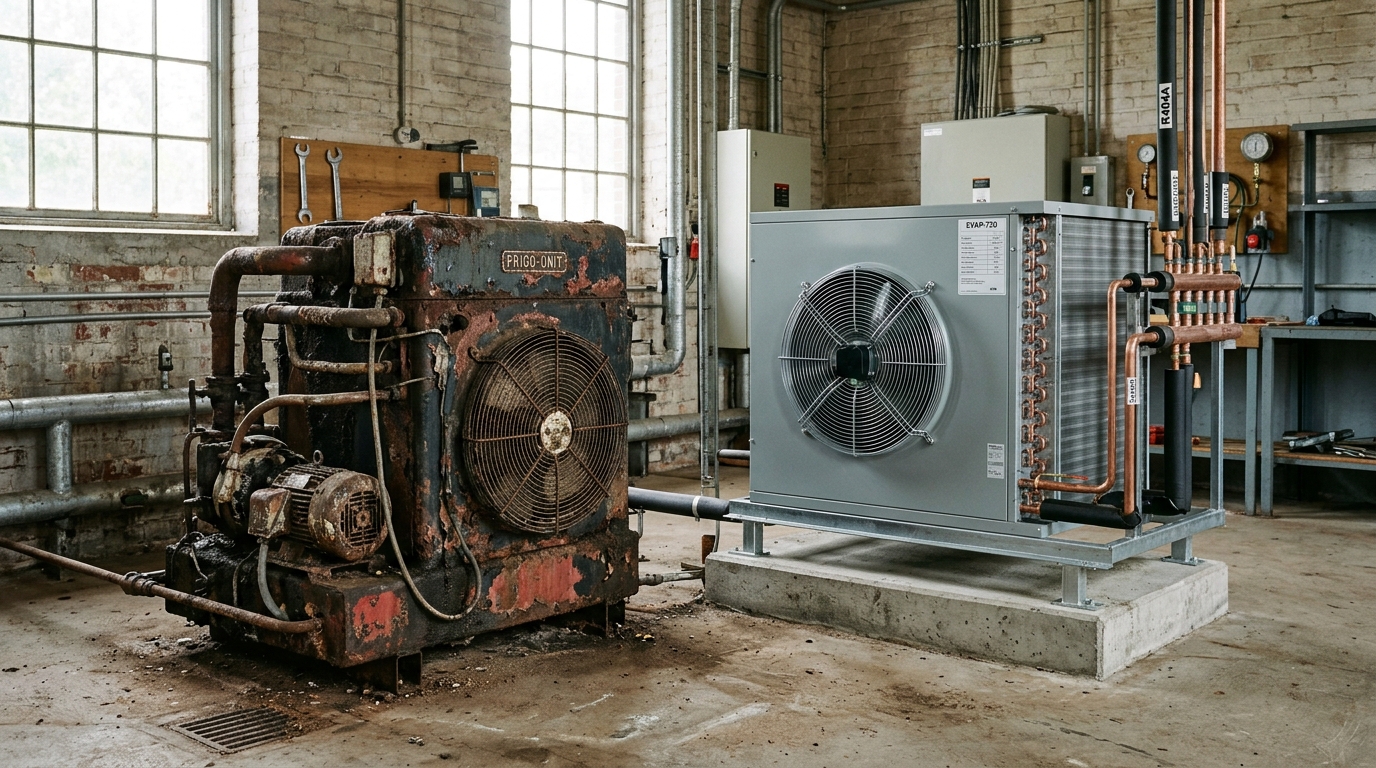
Hot gas defrost depends directly on the system design. The size of the bypass line, the distribution of gas across the evaporator, and the control of returning liquid should be planned at the start of the project. These elements are difficult to add later.
- Bypass line and valves: Sizing should follow the system capacity.
- Liquid return: Liquid return to the compressor during defrost must be prevented.
- Drain pan: It should be designed so that melted water leaves before it refreezes.
The drainage layout at the evaporator outlet should also be planned in detail during design. If the melted water produced during defrost does not flow properly through the drain line, it refreezes and starts a new build-up of ice. Heating the drain line and building the trap correctly are therefore integral parts of the project.
Measures that limit liquid return are also needed to protect the compressor. The position of an accumulator or similar separating device can help restrict liquid reaching the compressor. When the system schematic is drawn, the positions of this device and the valves should be set with the direction of flow during defrost in mind.
In systems with several evaporators, the ability to manage the defrost of each evaporator separately increases design flexibility. This prevents the whole system from entering defrost at the same time and reduces the temporary drop in cooling capacity. Such a control architecture should be set up together with a proper engineering calculation.
In the design, the relationship between the diameter of the bypass line, the capacity of the valves and the distribution of gas is also important. When the gas spreads evenly over the whole fin surface of the evaporator, the frost melts at a similar rate in every zone. If the distribution is uneven, some zones melt while others stay iced, and the defrost takes longer.
How Are Commissioning And Control Carried Out?
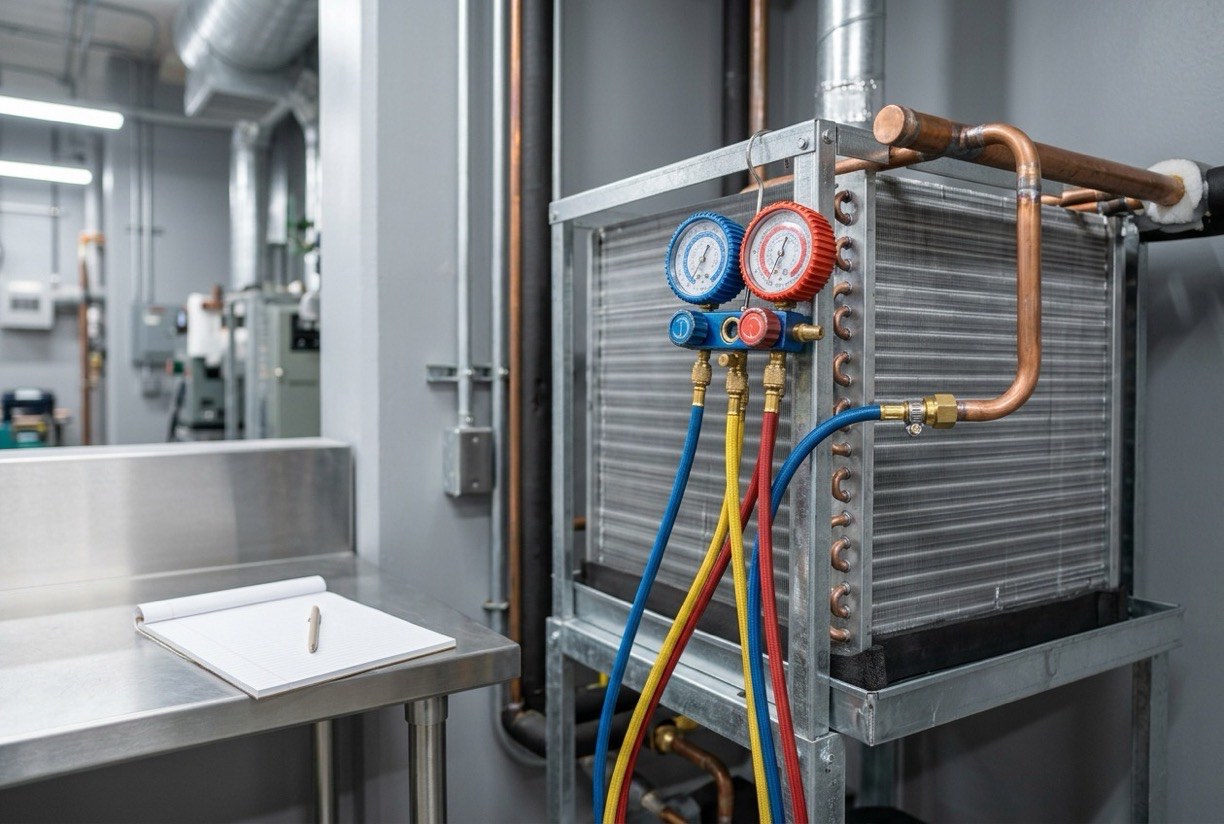
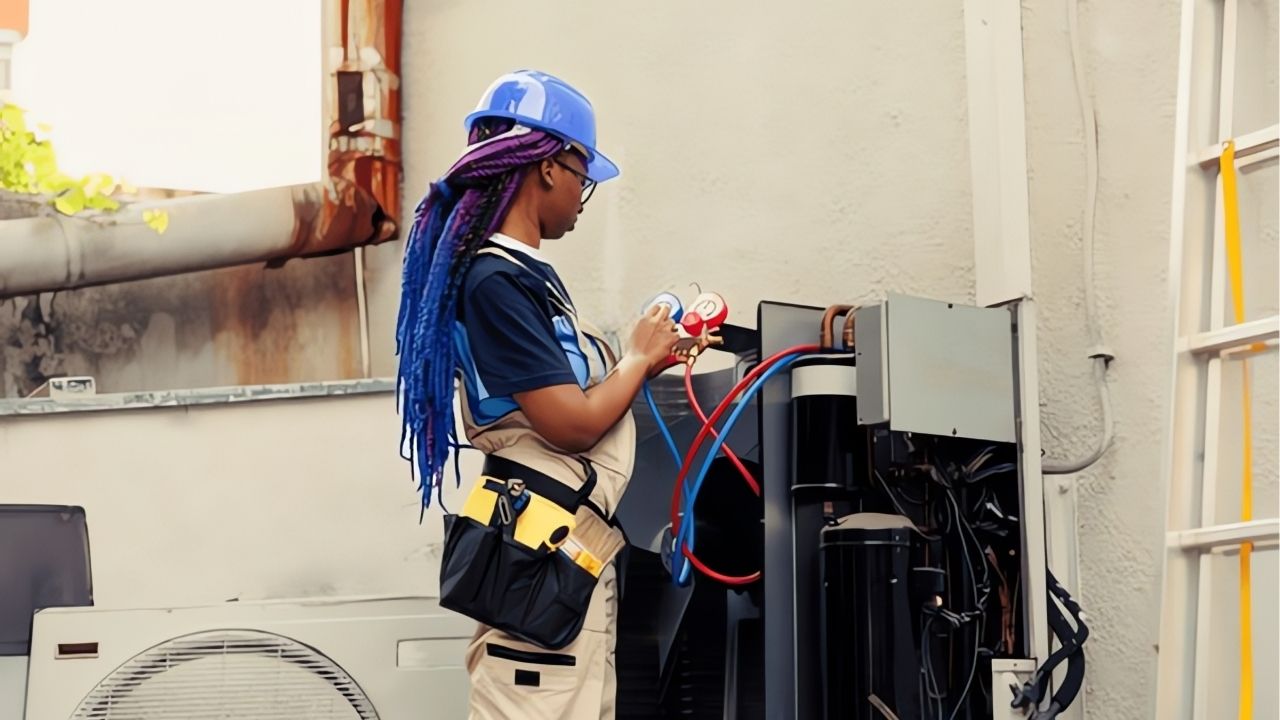
During commissioning, the defrost start and end conditions, temperature sensors, and time relay settings should be checked. The first defrost cycles should be observed to confirm that the duration is adequate.
After defrost, it should be verified that the evaporator is fully dry and that the refrigeration cycle returns normally. When you share your project data, the Günay Soğutma technical team can evaluate the evaporator and defrost method with you.
One of the most neglected points during commissioning is the condition of the drain pan and the trap after defrost. If water remains in the pan or the trap is blocked, ice can form again in the next cycle. Checking these points visually during the first start-up prevents later problems.
The number and duration of defrost cycles should be recorded in the control system. These records show whether the timing setting is unnecessarily long or short. After the data has been monitored for a few days, the temperature termination threshold and the fan delay can be fine-tuned.
During commissioning, it should also be checked that the evaporator surface temperature sensor is in the correct place. If the sensor does not make good contact with the fins, or if it is exposed to the direct effect of the airflow, it can cause incorrect termination. The sensor position should be verified against the layout diagram recommended by the manufacturer.
After commissioning is complete, the operating staff should be told how defrost mode appears, which alarms are normal, and which need intervention. This information helps the system be used correctly over the long term and reduces unnecessary service calls.
Frequently Asked Questions
Can hot gas defrost be used in every cold room?
No. The method depends on the system design and compressor configuration. Its suitability should be assessed together with the technical team preparing the installation.
Does hot gas defrost save energy?
It can lower the cooling load by reducing the use of an extra heater. The gain depends on the system design and defrost frequency, so it should be calculated for each project.
How is the defrost duration determined?
The duration depends on the amount of frost and the thermal capacity of the evaporator. Temperature-terminated control, instead of a fixed time, prevents unnecessarily long defrost cycles.
How much does the cold room temperature rise during hot gas defrost?
No single value can be given. The rise depends on the length of the defrost, the size of the evaporator, the amount of frost and the load of the room. In a correctly designed and controlled system, the rise is usually short and kept within limits. The expected value for a project should be determined by a calculation made with the technical team.
Can hot gas defrost be retrofitted to an existing electric defrost system?
In some cases retrofitting is possible, but the bypass line, valves, control board and sensors may need to be replaced together. The operating limits of the compressor and the evaporator should be checked against manufacturer data before any retrofit. The condition of the existing piping directly affects the cost of the retrofit.
Does hot gas defrost affect oil return?
Because flow and temperature change during defrost, the return of oil to the compressor can also be affected. For this reason the oil balance and the liquid control should be monitored in the period after defrost. A detailed assessment of this topic should be made together with the team that designed the system.
How is the compressor protected during defrost?
Protecting the compressor requires preventing liquid return, using separating elements such as an accumulator, and setting the defrost start and end conditions correctly. The level of protection needed depends on the compressor type and the capacity of the system.